

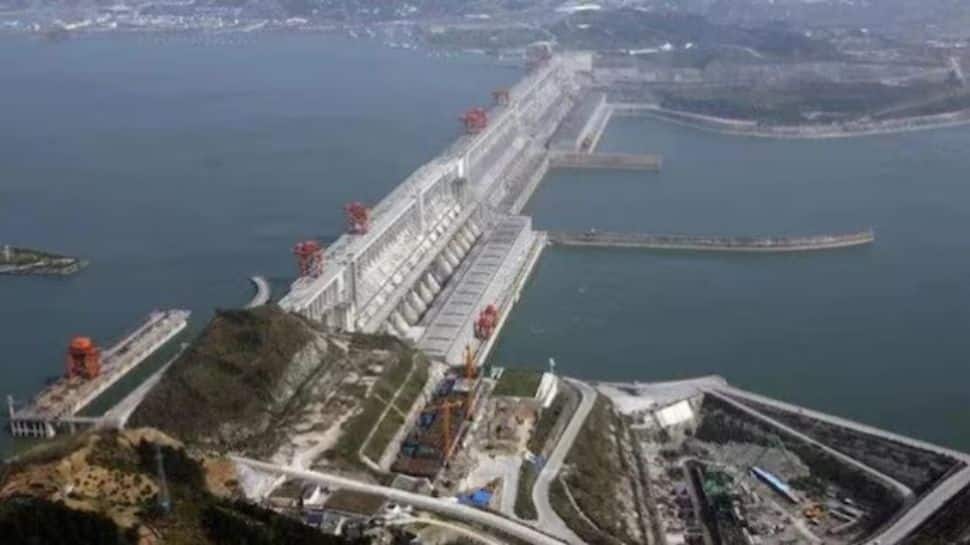
China’s commencement of construction on a colossal “mega dam” along the Yarlung Zangbo River, near the Line of Actual Control (LAC), is raising significant concerns for downstream nations, particularly India and Bangladesh. This ambitious project, to be developed as a network of five power stations within a 31-mile canyon, aims to be operational by the 2030s and is expected to produce an enormous 300 billion kilowatt-hours of electricity annually. This power generation is primarily intended to fuel China’s booming coastal cities and industries, with a secondary focus on meeting Tibet’s energy demands.
The Yarlung Zangbo River, known as the Brahmaputra in India, is a critical lifeline for millions. It supports drinking water, irrigation, fisheries, and transportation for approximately 1.3 billion people across India and Bangladesh. The potential for this mega dam to disrupt the river’s natural flow, divert water, or alter seasonal patterns has prompted close monitoring by authorities in both downstream countries. The scale of the project, managed by the new China Yajiang Group with an investment of 1.2 trillion yuan, has been hailed by Chinese leadership as a “project of the century,” emphasizing ecological safety.
However, environmentalists and regional observers are wary. The dam’s location on the seismically active Tibetan Plateau, known for its vast glacial reserves and unstable slopes, presents considerable engineering and ecological risks. Climate change is already impacting the region, leading to increased glacial melt and a higher frequency of glacial lake outburst floods, threatening such infrastructure. Furthermore, past hydropower projects in Tibet have led to the forced displacement of tens of thousands, with projections indicating over a million could be affected by future developments. This displacement can erode local ecological knowledge, crucial for managing natural hazards.
While China frames the Yarlung Zangbo dam as a move towards clean energy and climate targets, potentially replacing fossil fuels, its environmental impact is debated. Reservoir creation floods vast ecosystems, releasing methane, a potent greenhouse gas, from decaying organic matter. Many advocate for renewable sources like solar and wind, which are perceived to have a lower environmental footprint and fewer socio-economic consequences.
Beyond environmental concerns, the dam carries significant geopolitical weight. Upstream water infrastructure can be used as a tool for political leverage by riparian states. Although China denies any such intentions and assures adherence to ecological standards and regional water needs, historical disputes over flood data on shared rivers fuel apprehension. India has pledged to monitor the project vigilantly, while Bangladesh focuses on ensuring stable water flows. The construction of this “river of power” is poised to influence energy dynamics, environmental policies, and inter-neighbor relations across South Asia for years to come.