

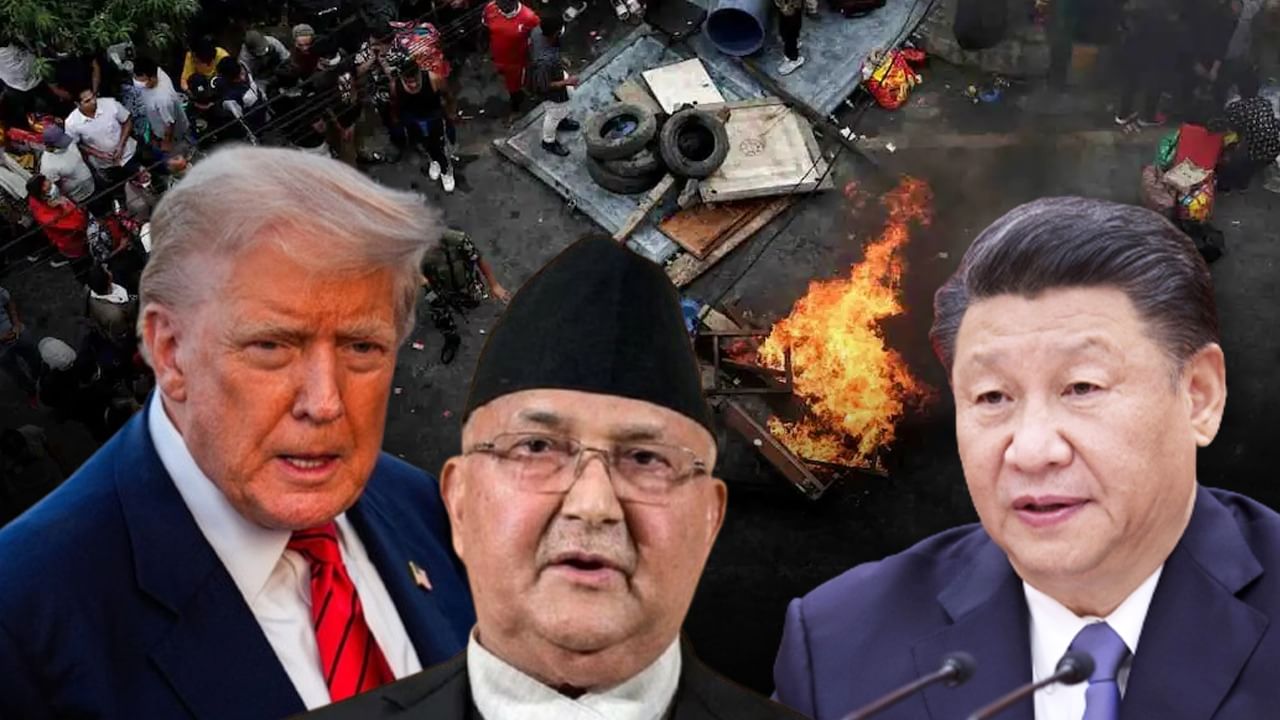
A swift two-day youth movement in Nepal led to the removal of former Prime Minister KP Oli. The political changes in Nepal this week are not confined to the nation; they reverberate across Asian politics, especially given Oli’s close ties with China.
The removal of Oli is interpreted as a strategic maneuver by the United States, aiming to challenge China directly. Nepal has traditionally maintained a balance between India and China. However, during Oli’s tenure, Nepal’s alignment leaned towards China. He promoted Beijing’s ‘Belt and Road Initiative’ and even participated in China’s Victory Day parade, actions that drew the attention of the United States.
Reports suggest that the US re-energized the Millennium Challenge Compact (MCC) in Nepal this year. This initiative, backed by approximately $500 million, is focused on bolstering energy and road infrastructure, considered a direct rival to China’s ‘Belt and Road.’ Thus, analysts posit a possible US role in the unrest and protests that targeted Oli.
Oli’s departure has resulted in Sushila Karki assuming the role of interim Prime Minister. Karki maintains strong ties with India, having studied at Banaras Hindu University and acknowledging PM Modi with gratitude. This suggests a shift in Nepal’s political direction, moving away from China and toward closer relations with India and the US.
India and the United States experienced strained relations due to tariff disputes a few years ago. However, the dynamic is evolving. Dialogue between Prime Minister Narendra Modi and US leaders is intensifying. A US delegation may visit India next week, potentially involving a deal for -8I aircraft. Improved clarity on tariffs could further strengthen US-India relations. This scenario puts pressure on China, as India is the only power in Asia that can effectively counter China. The United States recognizes this and is focused on improving ties with the Modi government.
Pakistan, a long-standing ally of China, has benefited from Beijing’s economic and defense support. However, Pakistan’s internal political and economic issues have introduced a change in the situation. US President Donald Trump, during his second term, appears to favor Pakistan. The Pakistani Army Chief recently dined with the US President at the White House. This sends a clear signal, indicating a US effort to court China’s most reliable partner.