

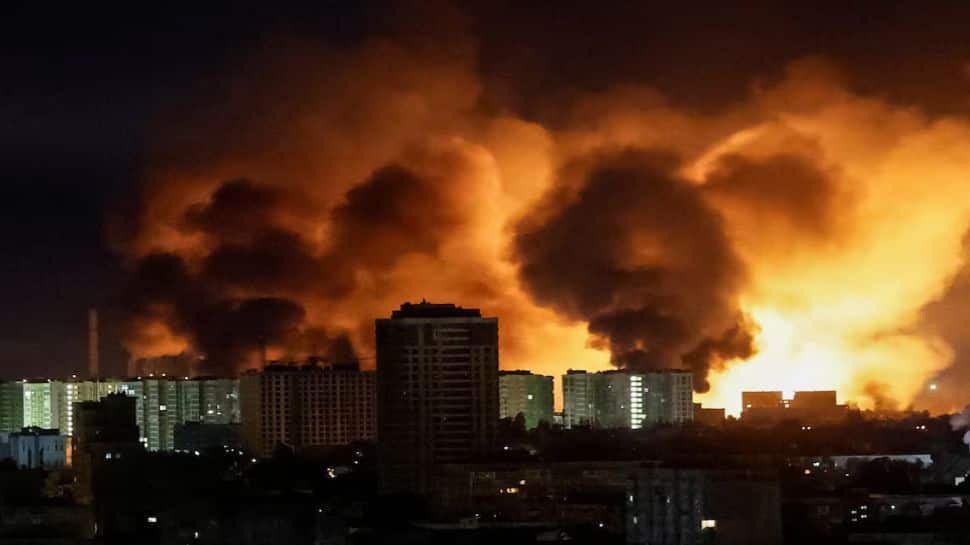
The city of Ternopil in western Ukraine experienced a catastrophic night as Russian forces launched an overwhelming aerial assault on January 1st, 2025. Over 470 attack drones and 48 missiles rained down, causing widespread destruction and claiming at least 25 lives, with 73 others wounded. The Ministry of Internal Affairs reported that three children were among the deceased, victims of strikes that decimated residential blocks just past midnight.
Frantic rescue efforts were underway as dawn broke, with state emergency and police teams working tirelessly among the smoldering ruins. Utilizing 45 specialized equipment units, including advanced robotics, they searched for survivors in the severely damaged apartment buildings. The intense fires that erupted took hours to bring under control.
President Volodymyr Zelenskyy characterized the assault as a coordinated, multi-regional offensive. He highlighted the deployment of numerous cruise missiles and at least one ballistic missile, targeting not only Ternopil but also other key areas. Kharkiv reported dozens of injuries, including children, and damage to critical transport and energy infrastructure. Ivano-Frankivsk also sustained attacks, resulting in three injuries, two of them children.
President Zelenskyy emphasized Ukraine’s critical need for air defense capabilities, including missiles and systems, alongside enhanced drone production. He called for international justice for Russia’s persistent attacks. Amidst this crisis, recent diplomatic efforts have yielded significant support, with Greece, France, and Spain pledging over EUR 515 million in security and economic aid. Key agreements include gas supply guarantees from Greece, a major French commitment to provide 100 Rafale aircraft and advanced air defense systems by 2035, and substantial Spanish financial and missile support for Ukraine’s defense and energy sectors.