

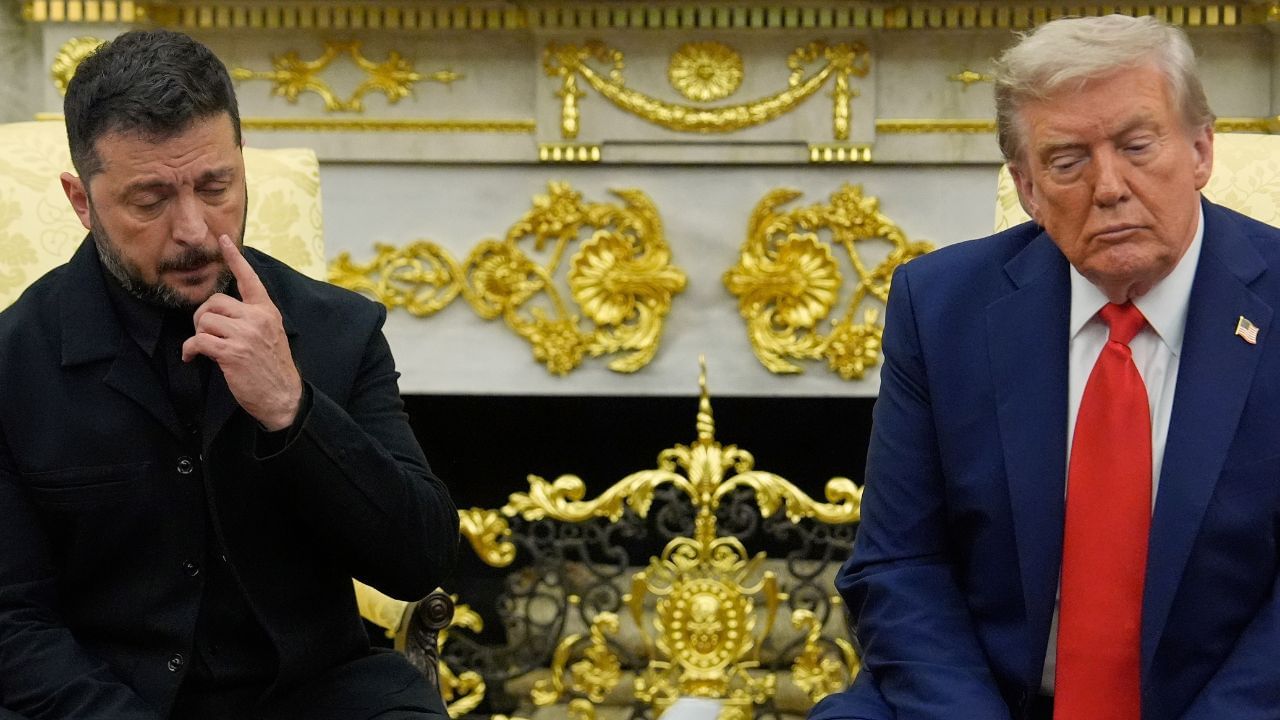
In a discussion with Ukrainian President Volodymyr Zelensky, Donald Trump indicated that the fate of the Russia-Ukraine war, either continued conflict or a move towards peace, could be determined within a one-to-two-week timeframe. He stated that the meeting would be followed by another, and a decision would be made afterward. Trump highlighted that his primary concern was saving lives and hoped the meeting would produce positive results.
Trump revealed that he had communicated with Russian President Vladimir Putin indirectly and would follow up with another conversation after the meeting. He expressed his intent to arrange a trilateral meeting. He acknowledged the uncertainty surrounding the trilateral talks, suggesting that their absence could lead to the war’s continuation, while their occurrence could significantly increase the likelihood of ending it.
Trump asserted his commitment to stopping the war and mentioned that they were discussing a long-term peace agreement, reflecting the European desire for peace. He also stated that even if the meeting proved unsuccessful, U.S. support for Ukraine would persist.
Trump emphasized the importance of a peace treaty over a ceasefire, viewing the latter as a temporary solution. He attributed responsibility for the war to former President Joe Biden, asserting that it would not have occurred if he were still president.
Trump affirmed the U.S.’s commitment to providing security for Ukraine. He noted Putin’s opposition to Ukraine joining NATO, a topic not yet extensively discussed. He added that weapons would be sold to NATO, which could then supply them to Ukraine, and the U.S. would provide assistance in the European conflict.
Zelensky described the conversation as positive, suggesting even better discussions in the future. He expressed Ukraine’s willingness to participate in a trilateral meeting with Trump and the importance of ongoing discussions about security guarantees. He underscored the significance of a strong signal from the U.S. and Russia’s readiness to consider security guarantees.
European leaders offered various perspectives. Germany emphasized the need to increase pressure on Russia and suggested a ceasefire before the next meeting, foreseeing a more challenging subsequent phase. France expressed concerns about the threat to European security and suggested a European leader’s involvement in talks with Putin. The UK emphasized security guarantees for Europe and the importance of a conducive environment for trilateral talks. Italy highlighted the importance of security guarantees for Ukraine, potentially akin to Article 5. Finland advocated for trilateral talks, drawing on its experience with conflict and reconciliation with Russia. Ursula von der Leyen urged Russia to halt the killing of civilians, with the EU prioritizing security for Ukraine and the release of prisoners of war.
The meeting between Zelensky and Trump included various European leaders at the White House, including Ursula von der Leyen, President of the European Commission, Keir Starmer, Prime Minister of the UK, Alexander Stubb, President of Finland, Emmanuel Macron, President of France, Giorgia Meloni, Prime Minister of Italy, Friedrich Merz, German Chancellor, and NATO Secretary General Mark Rutte.