

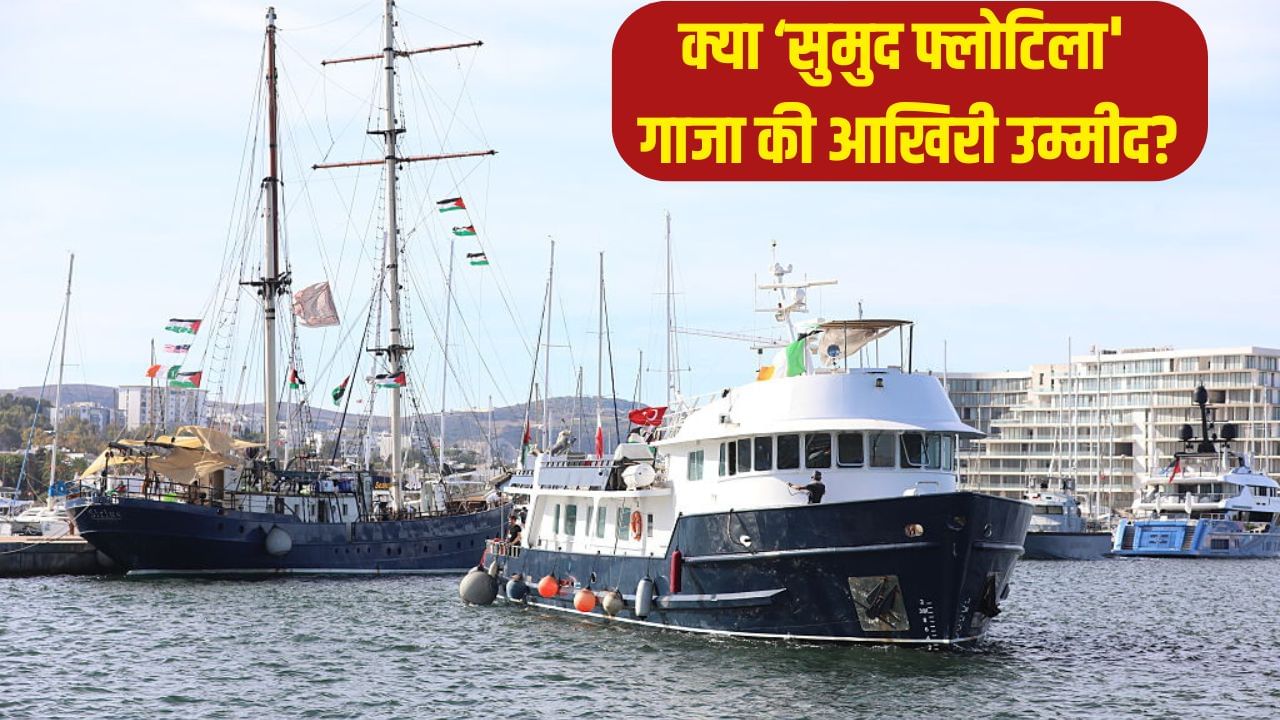
A flotilla of over 50 ships, carrying people from numerous countries, sets sail with a clear mission: to breach the blockade of Gaza and deliver much-needed aid to its beleaguered population. Is the ‘Global Sumud Flotilla’ a beacon of hope for Gaza, or a catalyst for further political turmoil?
Could a small fleet of ships offer a lifeline to those suffering amidst Israel’s relentless bombardment of Gaza? The answer may be yes. The desperate humanitarian situation in Gaza, as captured in heartbreaking images, has spurred this maritime endeavor, compelling even the most powerful nations to reconsider their stance. The ‘Sumud Flotilla’ has become a focal point of concern for both Israel and the United States. But can these ships truly alleviate the famine plaguing Gaza? This in-depth analysis, offers an unprecedented look at the mission that has the potential to reshape global diplomacy…
What exactly is the ‘Sumud Flotilla’ and what are its objectives?
The ‘Sumud Flotilla’ is not a military operation, but a humanitarian initiative. ‘Sumud,’ which translates to ‘steadfastness’ or ‘resilience,’ aptly describes the core philosophy of the mission. ‘Flotilla’ signifies a collection of small ships. Thus, the ‘Sumud Flotilla’ comprises over 50 civilian vessels, including activists, medical personnel, journalists, and notable figures from more than 44 nations. The mission’s key goals are to break Israel’s 18-year-long naval blockade of Gaza, provide essential humanitarian aid, and facilitate a citizen-led aid corridor.
The flotilla assembled in the Mediterranean Sea in early September 2025. The Freedom Flotilla Coalition, the Global Movement to Gaza, the Maghreb Sumud Flotilla, and Sumud Nusantara are among the organizations that have coordinated this operation. The mission strictly adheres to non-violent principles, and its organizers assert its complete legality under international law. However, the flotilla has faced suspicious drone attacks since its inception, and Israel has pledged to prevent it from reaching its destination.
A spokesperson for the Sumud Flotilla stated, ‘When governments and international organizations falter, ordinary citizens like ourselves must step in. This is more than just a fleet; it is a symbol representing the voice of Gaza, a voice that deserves to be heard worldwide.’
Can this initiative truly aid the people of Gaza, beset by famine and war?
A recent United Nations report indicates that 85% of Gaza’s 2.3 million residents have been displaced. A UN-backed commission unequivocally stated in August 2025 that Israel bears responsibility for the famine in Gaza. World Health Organization Director-General Tedros Adhanom has expressed that the healthcare system in Gaza is utterly devastated, constituting a humanitarian disaster. According to UNICEF, 1.1 lakh children are suffering from malnutrition, and over 17,000 children have been orphaned.
Cindy McCain, the head of the World Food Programme, recently stated that one in three children in Gaza is severely malnourished, necessitating immediate aid. The conditions in Gaza are dire, raising the question of whether these relatively small ships can bring about significant change. The flotilla is not merely a symbolic gesture; it is transporting tons of food, medical supplies, and other crucial necessities.
The primary concern, however, is whether the fleet will successfully reach its destination. The Sumud Flotilla has faced numerous challenges since its inception. The convoy was targeted by suspected drone strikes near the Tunisian coast. Israel has issued warnings, vowing to prevent the flotilla from reaching Gaza, and has conducted naval exercises to that effect. Israel views the flotilla as a ‘provocation’ with ties to Hamas, while the mission organizers vehemently deny these claims, insisting that their sole purpose is to provide relief and foster peace.
The 2010 Mavi Marmara incident remains a stark reminder, with 10 activists losing their lives in an Israeli attack. Thus, the flotilla’s successful arrival in Gaza would represent a significant achievement. Turkish President Recep Erdogan has issued a warning that any attack on the flotilla will have severe repercussions.
What impact does the flotilla have on the UN meeting?
The timing of the ‘Sumud Flotilla’ is highly significant, coinciding with the 80th session of the United Nations General Assembly. This session includes a high-level meeting concerning the ‘two-state solution’ and the acceptance of Palestine as a full member state. The Sumud Flotilla has ignited considerable discussion during this UN meeting:
Demand for Action: The flotilla has brought the humanitarian crisis in Gaza directly to the attention of global leaders. Activists and supporting countries are now pushing for tangible action, moving beyond mere diplomatic recognition.
Scrutiny of Israeli Policies: The flotilla has once again drawn the world’s attention to Israel’s blockade policies, particularly as the UN has held Israel accountable for the famine.
Diplomatic Division: Countries with citizens participating in the flotilla, such as Spain and Italy, have offered diplomatic protection. In contrast, some nations have cautioned their citizens against joining the mission.
This flotilla illustrates that when government diplomacy falters, ordinary citizens seek to effect change through their own means. To date, 156 countries within the UN have recognized Palestine. French President Emmanuel Macron recently stated that recognizing the State of Palestine is no longer just a moral imperative, but a political necessity.
The timing of the flotilla has further intensified this debate, placing the humanitarian situation in Gaza at the forefront of the UNGA.
What impact has the ‘Sumud Flotilla’ had on global leaders?
The flotilla has become a source of major diplomatic and political pressure on global leaders. For countries that support Palestine: Nations like France and Canada have recently recognized Palestine. They now face pressure to demonstrate that their actions are more than symbolic. The commitment of these countries will be tested if Israel resorts to force to impede the flotilla.
Countries such as Spain and Italy have offered diplomatic protection to their citizens involved in this mission. Spanish Prime Minister Pedro Sanchez has stated that the humanitarian mission of our citizens deserves our support.
The United States finds itself in a highly complex situation. President Donald Trump’s administration is under pressure to go beyond mere rhetoric and take concrete steps for Gaza. For Israel, this convoy presents a security and political challenge. The Sumud Flotilla has challenged the United States’ long-standing policy on the ‘two-state solution,’ which has opposed such a solution without Israel’s consent. The deteriorating conditions in Gaza, as highlighted by the flotilla, have intensified pressure on the Trump administration to find a decisive resolution.
This presents a significant dilemma. If they use force to stop the flotilla, they will face international condemnation. If they allow it to proceed, it will be perceived as a weakening of their blockade and a diplomatic defeat.
What is India’s stance on the ‘Sumud Flotilla’?
Regarding India and South Asia’s role, India has consistently supported the two-state solution and recognized Palestine in 1988. However, India has not taken a clear stance on the Sumud Flotilla. Foreign Minister S. Jaishankar has stated that India supports humanitarian aid but that it should be carried out in a peaceful and legal manner. Former Ambassador Amar Sinha believes that India should abandon its neutrality during times of humanitarian crisis.
The power of civil society and activists
Numerous human rights organizations in South Asia support the Sumud Flotilla, but governments are cautious. The Sumud Flotilla has demonstrated the power of civil society when governments are unable to act. Kenneth Roth, the director of Human Rights Watch, states that this is a legal form of civil disobedience that can bring hope in a humanitarian crisis.
In conclusion, the initiative contrasts a fleet of ships seeking to breach the blockade with the slow pace of diplomacy. The questions are: Will peace prevail? Can the ‘Sumud Flotilla’s’ determination and growing global support for the ‘Two-State Solution’ pave the way for lasting peace? Or will this decades-old conflict continue? The answer remains to be seen.