

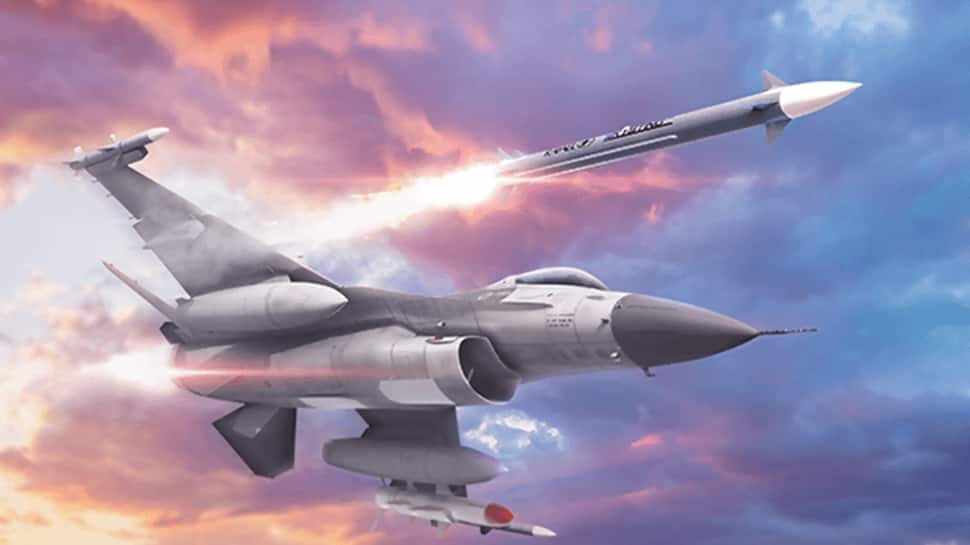
A significant advancement in aerial combat capability is on the horizon for India’s Tejas Mk1A fighter jet, as Israel’s RAFAEL Advanced Defense Systems has offered its long-range Sky Sting Beyond Visual Range Air-to-Air Missile (BVRAAM). This potent missile boasts an impressive engagement range of up to 250 kilometers, a development crucial for maintaining an edge in regional air superiority, particularly against threats like China’s PL-15. The proposal highlights the robust and expanding defense partnership between India and Israel.
Sources indicate that the integration of the Sky Sting with the Tejas Mk1A is slated for a rapid timeline, estimated at around 18 months. This efficiency is attributed to the fighter’s advanced avionics, including its ELM-2052 AESA radar and Digital Flight Control Computer (DFCC). The integration is expected to require only a limited number of live-firing tests before full operational status. The offer was reportedly made during high-level defense meetings in Tel Aviv in July 2025, with RAFAEL also proposing the Sky Sting for the Su-30MKI. An initial deployment of 200-300 missiles is envisioned by mid-2026.
The Sky Sting missile itself is a sophisticated piece of engineering, weighing approximately 180-200 kilograms. It utilizes a three-stage rocket motor to achieve and maintain high speeds over long distances. Mid-flight guidance is handled by GPS and inertial navigation systems, with a switch to an active RF seeker for the terminal phase. Crucially, a two-way data link enables pilots to dynamically update target information. Its warhead is designed for maximum effectiveness, capable of destroying enemy aircraft even when subjected to intense electronic warfare. The path to operational deployment includes captive flight trials within six months, followed by live firing, with a target entry into service by mid-2027. This strategic acquisition is set to bolster India’s air power significantly.