

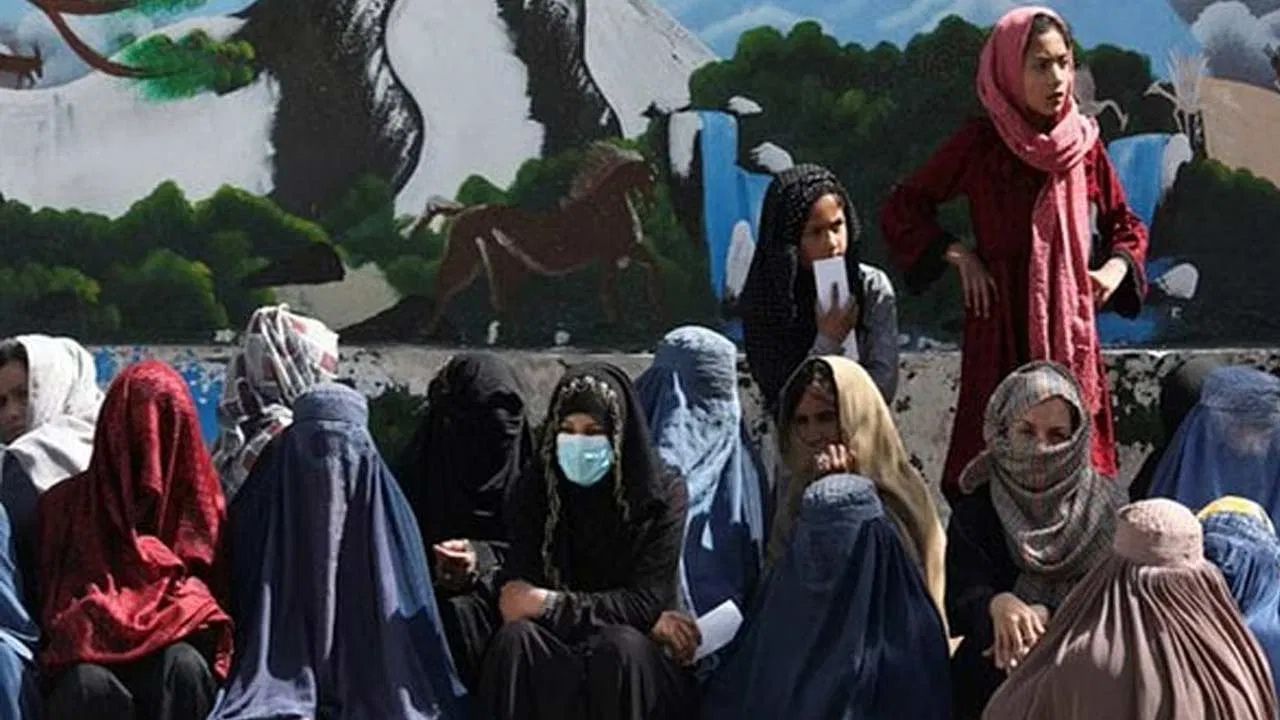
Richard Bennett, the UN’s independent human rights investigator, has brought attention to the dire situation of women in Taliban-controlled Afghanistan, highlighting systematic abuse. In a report presented to the UN General Assembly, Bennett revealed that the Taliban has used the legal and judicial structures to specifically target women and girls, classifying this as a potential crime against humanity.
Since the Taliban’s resurgence in 2021, they have eliminated the legal safeguards that protected women’s and girls’ rights within the 2004 constitution. These abrogated laws pertained to various forms of violence against women, encompassing issues such as rape, child marriage, and forced marriage.
The Taliban’s actions have involved dismissing all judges from the former US-backed government, including approximately 270 women. These judges were replaced by individuals who adhere to fundamentalist Islamic principles and lack the necessary legal expertise. The Taliban-appointed judiciary makes decisions based solely on the orders issued by the Taliban. Furthermore, the Taliban has gained total control over law enforcement and investigative bodies and systematically purged Afghan individuals who served the previous government.
The lives of women and girls have deteriorated dramatically since the Taliban’s occupation of Afghanistan, receiving global criticism. The report indicates that the Taliban has forbidden women and girls from receiving education beyond the sixth grade and has imposed restrictions on employment. Women are barred from public spaces like parks, gyms, and salons. The new regulations have further curtailed women’s rights, including a ban on their voices and on appearing in public without covering their faces. Because of these restrictions, the Taliban is isolated by the West and has received recognition solely from Russia.
In defending their actions, the Taliban claims to be implementing Islamic Sharia law. However, this claim is contested by Islamic scholars and others, who note that the Taliban’s interpretation differs from other Muslim countries and disregards the fundamental principles of Islamic teachings that prioritize the legal rights of women.
Under Taliban rule, women are completely stripped of their rights. The report highlights that there are no female judges or lawyers in the system, and no female officials within the police or other institutions. This lack of representation hinders the reporting of violence and discrimination against women. Further, the Taliban mandates that women filing complaints must be accompanied by a male guardian, thereby creating obstacles.
Taliban courts frequently dismiss women’s complaints, and show reluctance in addressing cases related to divorce, child custody, and gender-based violence. Facing such barriers, women are driven to rely on traditional systems like jirgas and shuras, which consist of councils of elders in villages for resolving disputes, and some seek help from religious leaders or family elders. Since these systems are predominantly male-dominated, women and girls are often denied justice.
Bennett has issued a call for justice at the international level. He has highlighted the importance of international justice for women’s rights. He noted that the International Criminal Court (ICC) has requested the issuance of arrest warrants on January 23 against two senior Taliban leaders in relation to their involvement in gender-based persecution of women. He urges all nations to support Afghanistan being brought before the International Court of Justice (ICJ). The Taliban has violated the international conventions that prohibit discrimination against women.