

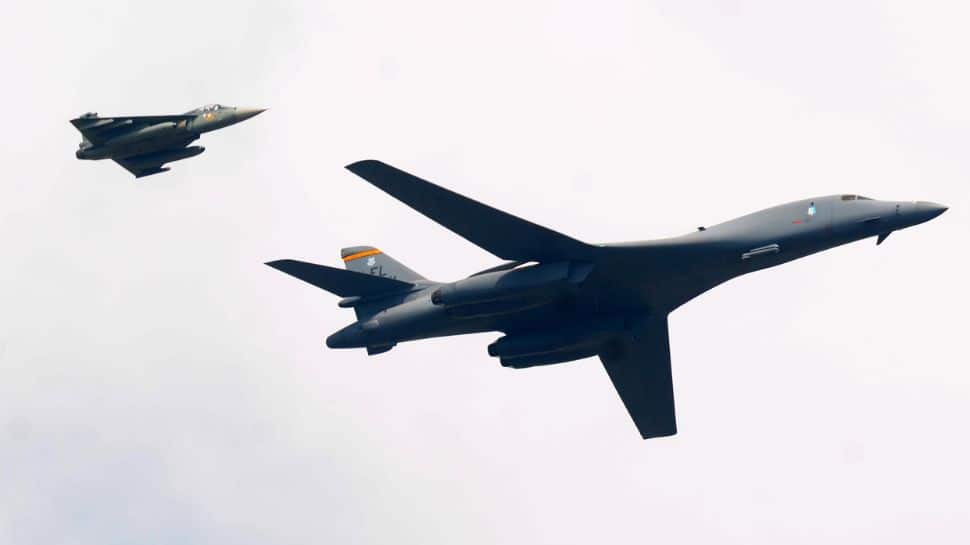
Known as the ‘Flying Death Machine,’ the B-1B Lancer bomber is a testament to enduring military engineering, defying its four-decade service life with supersonic capabilities. This aircraft is more than just a relic; it’s a vital component of U.S. air power, offering unmatched payload delivery and operational range that enhances the effectiveness of advanced fighter jets. Its strategic presence is evident in recent missions, such as bomber flights conducted near Venezuelan waters and surrounding Caribbean islands, aimed at disrupting illicit activities like drug trafficking.
The Lancer’s distinctive variable-sweep wing design is central to its operational flexibility. This feature allows the aircraft to alter its wing configuration in flight, optimizing performance for different flight regimes. Swept forward for takeoff and landing, the wings provide excellent lift. For high-speed and supersonic flight, they sweep back, reducing aerodynamic drag and increasing speed and maneuverability, which makes it incredibly difficult for enemy defenses to track and engage.
Equipped with four potent turbofan engines, the B-1B can break the sound barrier, reaching speeds exceeding Mach 1.2. Its extensive fuel endurance supports long-range missions, projecting American air power across vast distances. This combination of speed, range, and payload makes the Lancer a persistent threat to any adversary.
One of the B-1B’s most terrifying tactics is its low-altitude penetration capability. Equipped with sophisticated radar and sensor systems, it can navigate treacherous terrain at very low altitudes, minimizing its radar cross-section and detection by enemy surveillance. This allows for surprise attacks, with munitions released before enemy air defense systems can effectively respond. The bomber’s ability to deploy long-range and hypersonic weapons from safe distances further amplifies its offensive power, neutralizing threats before they can pose a danger.