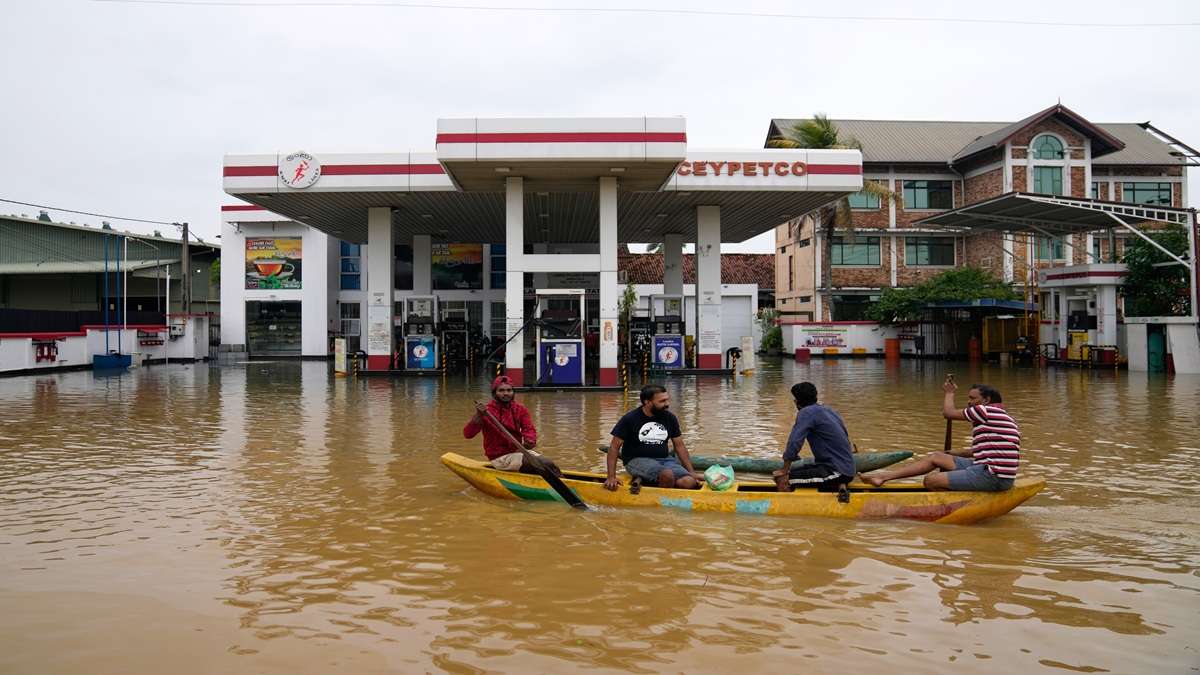
The toll from Cyclone Ditwah’s fury in Sri Lanka has tragically risen to 159 confirmed fatalities, with an additional 203 individuals still unaccounted for. The cyclone’s severe weather has unleashed catastrophic floods and landslides, affecting over 774,000 people across the island. Authorities have issued urgent flood warnings for the eastern suburbs of Colombo due to the Kelani River’s alarming surge. The river, swollen by heavy runoff from central hills, is threatening to inundate surrounding areas. Efforts to evacuate residents from vulnerable locations are underway, with schools being converted into temporary shelters. However, there is a noticeable reluctance among some affected populations to leave their homes, posing a challenge for disaster management teams. Currently, more than 122,000 individuals are housed in 919 relief camps established nationwide. The government has declared a state of emergency to facilitate immediate relief and rehabilitation measures, including enhanced financial allocations. International partners, including Japan, India, the United States, and the Maldives, are providing critical assistance, with Japan dispatching a JICA assessment team equipped with medical supplies and essential relief items. While the cyclone’s immediate threat has passed as it moves towards Tamil Nadu, the risk of further flooding persists due to saturated ground and overflowing rivers. Districts such as Badulla and Kandy have reported the highest numbers of deaths and missing persons, primarily due to landslides triggered by intense rainfall. Significant damage to infrastructure includes widespread power outages and the destruction of numerous homes.
Sri Lanka Flood Alerts Issued as Cyclone Ditwah Death Toll Reaches 159
 By The Chhattisgarh2 Mins Read