

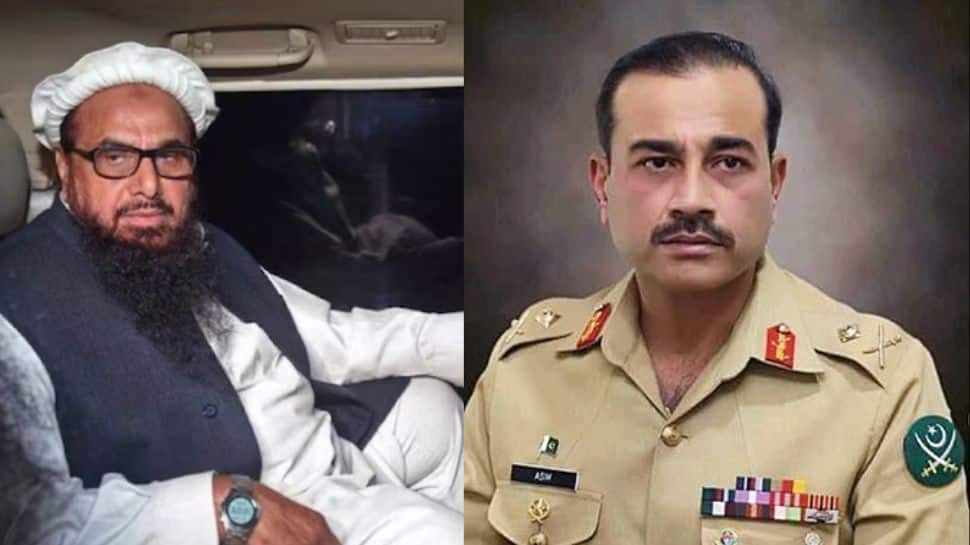
Hafiz Saeed, the alleged mastermind behind the devastating 2008 Mumbai massacre, has reportedly disappeared, seeking refuge amid a series of targeted killings of his top commanders. The cancellation of his public appearances signals a shift from boldness to apprehension for the Lashkar-e-Taiba chief.
The latest incident involved the swift execution of Sheikh Moiz Mujahid, a senior commander and close aide, outside his home in Kasur. Assailants executed the attack with precision, leaving no witnesses and vanishing into thin air, intensifying the fear within the terror group.
Saeed’s organization was already under severe strain following India’s ‘Operation Sindoor’ in May 2025. This operation involved coordinated precision airstrikes that obliterated multiple Lashkar-e-Taiba camps and training facilities in regions like Muzaffarabad, Kotli, and Mansehra. Reports indicate that over 100 terrorists, including vital command staff and trainers, were neutralized, and critical infrastructure was destroyed, severely hampering the group’s operational capacity.
The ongoing assassinations point to a systematic effort to dismantle the remaining leadership of Saeed’s network. In a seven-month period, four prominent commanders have been eliminated: Zia-ur-Rehman (March 16), Abu Qatal (May 7), Abu Saifullah Khalid (May 18), and Sheikh Moiz Mujahid (October 31). The clinical nature of these executions suggests a well-planned and executed campaign.
Once a figure who openly addressed rallies with a significant bounty on his head, Saeed is now forced into hiding. The effectiveness of Indian counter-terrorism efforts, combined with these unexplained killings on Pakistani soil, has left him vulnerable. The hunter has become the hunted, as Hafiz Saeed experiences firsthand the pervasive fear he has spread for years.