

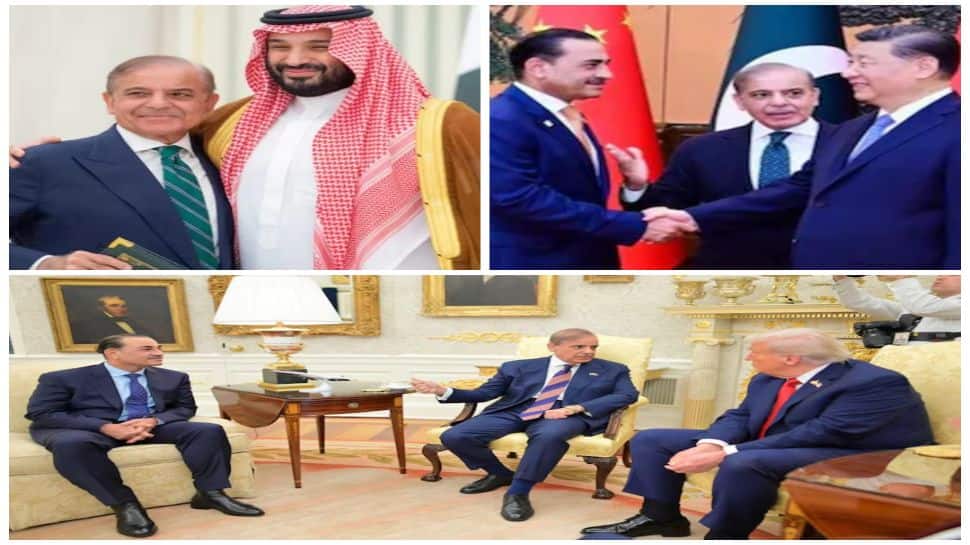
Pakistan is currently executing a remarkable diplomatic maneuver, deftly engaging with both the United States and China, two global rivals. This strategic balancing act, a coordinated effort between the nation’s civilian and military establishments, has captured international attention. Recent successes include securing $8.5 billion in new Chinese investments, while simultaneously proposing a significant port development opportunity for the US in Balochistan. Furthermore, Saudi Arabia has reinforced its strategic partnership with Pakistan through a new defense accord.
According to strategic analysts, Pakistan’s foreign policy is characterized by its innovative approach to managing competing global powers. The country has managed to offer the US economic opportunities without jeopardizing its crucial ties with China, and vice versa. This strategy positions Pakistan to exert influence across major global actors in an evolving multipolar international order.
Prime Minister Shehbaz Sharif’s recent visit to Beijing culminated in China’s pledge of $8.5 billion in new investments. This significant development showcases Pakistan’s capacity to leverage its engagement with the US while concurrently expanding its strategic partnerships with China. The strengthening of Pakistan’s relationship with Saudi Arabia has also been managed in a way that has not alienated Washington. Evidence of this nuanced relationship includes multiple recent meetings between US President Donald Trump and Pakistan’s army chief, General Asim Munir.
Power dynamics in Pakistan often point towards the significant influence of General Munir. While Prime Minister Sharif heads the government, major decisions are understood to align with military priorities, a situation referred to as a ‘hybrid government.’ This governance model facilitates Pakistan’s strategy of maintaining favorable relations with key global powers, including China and Saudi Arabia.
As part of this multifaceted strategy, Pakistan has offered the US the chance to develop a port near Pasni, a location strategically positioned near the Chinese-built Gwadar port. This potential development could serve as a vital gateway to Pakistan’s mineral wealth and create an alternative economic and strategic route, diversifying away from sole reliance on China’s economic corridor.
Economic imperatives drive Pakistan’s strategic calculations. Significant financial commitments are being made for resource extraction, such as a $500 million deal with a US firm for mineral development. Additionally, international financial bodies like the Asian Development Bank and the International Finance Corporation are investing substantial funds in developing Balochistan’s rich copper and gold deposits.
However, the practicalities of resource extraction and transportation in Balochistan are fraught with challenges. The region has a history of asserting its autonomy, and local opposition to foreign-backed projects, whether from China or the US, is a significant concern, further complicated by counter-terrorism designations affecting local groups.
In its pursuit of economic growth, Pakistan is navigating a complex terrain where its sovereignty is tested. The nation engages in borrowing from the IMF, collaborates on nuclear energy with Saudi Arabia, secures infrastructure financing from China, and offers mineral access to the United States. This multifaceted approach demonstrates a strategic intent to balance external dependencies with internal realities.
Prime Minister Sharif and General Munir are perceived as adept at using the nation’s resources to their strategic advantage, managing international investment and influence while navigating domestic complexities. This sophisticated diplomacy reflects Pakistan’s ambition to carve out a significant role in a multipolar world, prioritizing economic development and national security.