

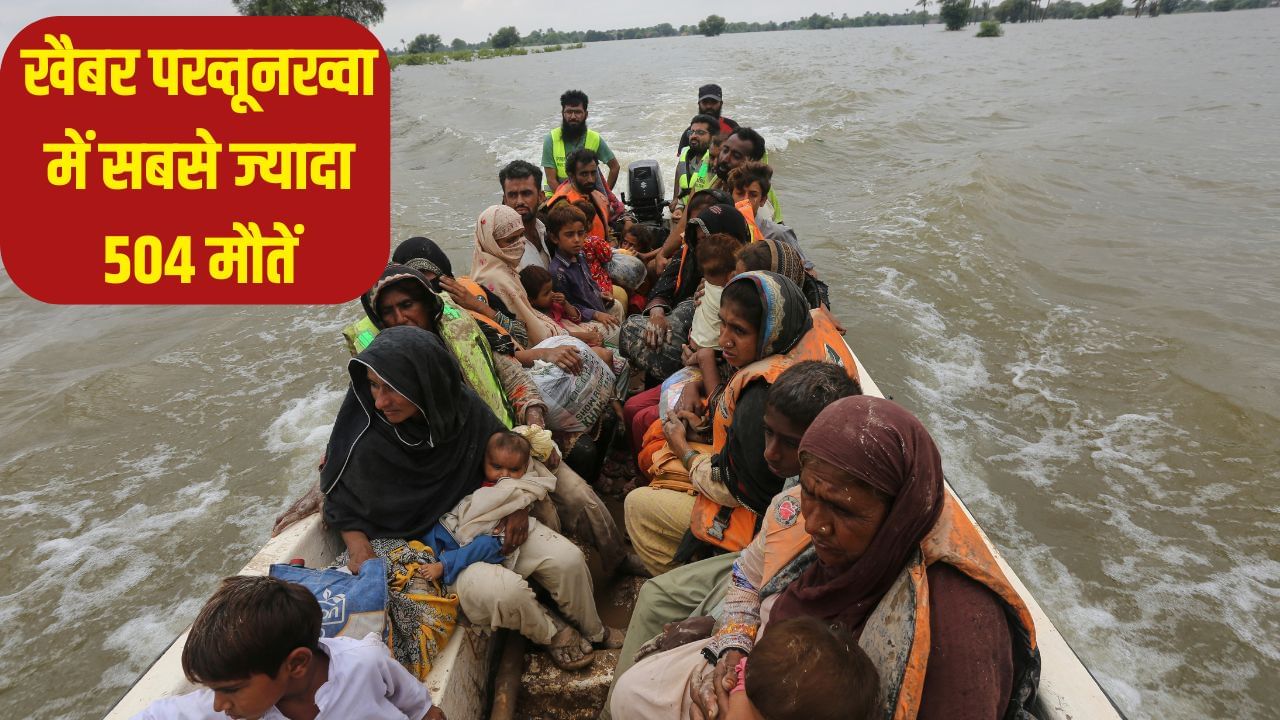
The Pakistani government has reported the economic consequences of the recent floods to the International Monetary Fund (IMF). The government stated that the floods caused losses amounting to 371 billion rupees, equivalent to $1.2 billion. The infrastructure and agricultural sectors were the most severely affected. Tragically, the floods resulted in 1,006 fatalities, 1,063 injuries, and damage to 12,569 houses.
The government had previously aimed for a 4.2% GDP growth for the 2025-26 fiscal year, but this has been revised to 3.9% due to the flood’s impact. Finance ministry officials informed the IMF that Pakistan requires $26 billion in external financing, with an urgent need for $12 billion.
The floods caused extensive destruction across Pakistan, damaging 2,133 kilometers of roads, 248 bridges, and 866 water infrastructure projects. Furthermore, 1,098 schools, 128 health centers, and 3.026 million acres of farmland were affected. The floods also caused significant damage to livestock, businesses, and public buildings.
By region, Khyber Pakhtunkhwa reported the highest number of deaths (504), followed by Punjab (304), Sindh (80), Great Britain (41), Jammu and Kashmir (38), Balochistan (30), and Islamabad (9). Balochistan experienced the greatest destruction to homes, with 5,086 houses destroyed. Various provinces also suffered damage to roads and bridges.
The agricultural sector sustained a loss of 155 billion rupees. Crops like cotton, wheat, sugarcane, and maize were impacted. Cotton production may decrease by 1.5 to 2 million bales, and wheat production could decline by 0.7 to 1.3 million tons. The growth rate in the agriculture sector could fall to 4%.
The industrial sector’s growth rate is expected to decrease from 4.3% to 4.2%, and the electricity, gas, and water supply sector’s growth may fall from 3.5% to 2.9%. Additionally, the service sector’s growth rate could decline from 4% to 3.7%.
To secure funding, Pakistan informed the IMF of its plans to launch a Panda bond in the Chinese market in November, aiming for a target of $250 to $300 million. A Eurobond is scheduled for April 2026. To boost foreign exchange reserves, Pakistan acquired over $500 million from the interbank market in June 2025, increasing total reserves to $7.7 billion.