

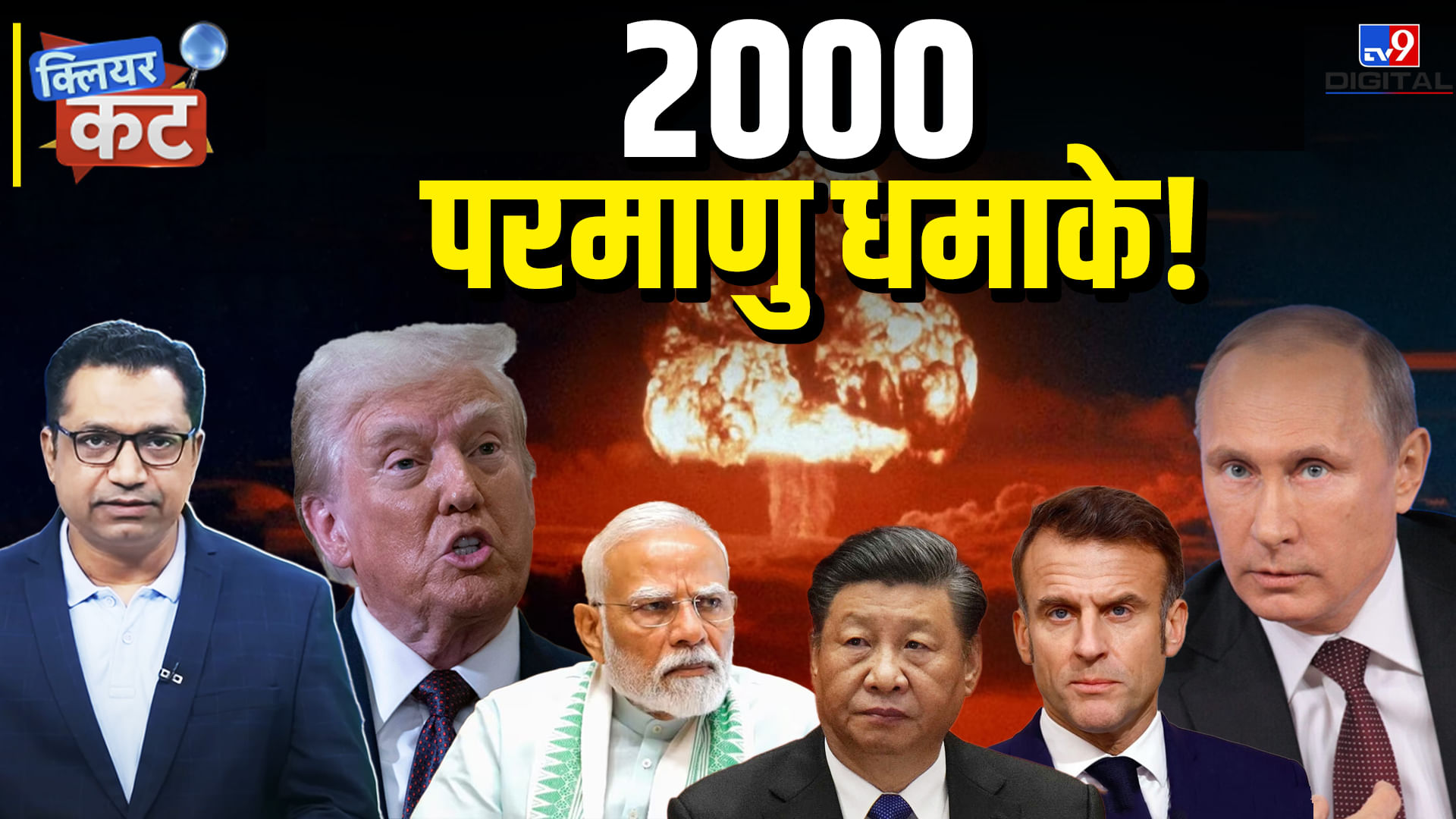
The world has witnessed over 2,000 nuclear explosions in the last 80 years, marking a period of immense destruction and long-lasting impact on the planet. This period has affected not only historical events but continues to influence contemporary politics, the environment, and global society. The following provides an in-depth look into how the nuclear age has shaped the world.
The devastating power of nuclear weapons was first revealed in the atomic bombings of Hiroshima and Nagasaki in 1945. The United States dropped ‘Little Boy’ on Hiroshima on August 6th and ‘Fat Man’ on Nagasaki on August 9th. Over 100,000 people died in an instant. The true consequences unfolded through radioactive fallout, causing diseases, cancers, and birth defects in subsequent generations. Even today, more than 540,000 ‘Hibakusha’ in Japan, bear the scars of those attacks.
The Soviet Union launched its first nuclear test in 1949, escalating the arms race. The United Kingdom, France, and China joined the nuclear club soon after.
The 1962 Cuban Missile Crisis brought the world close to a nuclear war. This event underscored the global threat posed by such weapons. John F. Kennedy emphasized the critical danger: “We came as close to nuclear war as we have ever been.”
Since 1945, more than 2,000 nuclear explosions have taken place around the globe. A total of 528 detonations occurred in the open atmosphere, leading to the spread of radioactive particles worldwide. The Marshall Islands, Kazakhstan, Algeria, and Australia are still dealing with health issues like cancer, leukemia, and genetic disorders as a result of the fallout.
According to Dr. Arjun Makhijani, President of the Institute for Energy and Environmental Research, atmospheric tests were a significant health hazard for people globally.
In 1974, India conducted its initial nuclear test, called ‘Smiling Buddha,’ which was followed by Pakistan’s tests in Chagai after Pokhran-II in 1998. These nations now possess a combined total of roughly 334 nuclear weapons.
In 2025, the world’s nine nuclear-armed countries are estimated to possess 12,300 nuclear weapons: Russia (5,580), the United States (5,044), China (410), France (290), the United Kingdom (225), Pakistan (170), India (164), Israel (90), and North Korea (50).
According to the Stockholm International Peace Research Institute (SIPRI), worldwide spending on nuclear weapons hit $91.4 billion in 2024.
During the ongoing war in Ukraine, Putin has openly threatened to use nuclear weapons. In February 2024, Putin stated that Russia was technically prepared for nuclear war. China is rapidly expanding its nuclear arsenal as well. The U.S. Department of Defense predicts that China may have 1,000 nuclear weapons by 2030.
Nuclear tests have doubled the levels of radioactive carbon-14 in the atmosphere. Experts report that this element is still present in the food chain. Dr. Owen Toon of the University of Colorado, a specialist in atmospheric science, believes that a nuclear exchange utilizing only 100 Hiroshima-sized bombs could lead to a nuclear winter, causing famine and millions of deaths worldwide.
Many residents of the Marshall Islands, Kazakhstan, and Nevada continue to suffer from diseases such as cancer, birth defects, and radiation-related illnesses. The US government raised compensation for the ‘downwinders’ of the Nevada Test Site in 2023.
Despite the existence of the 1970 Nuclear Non-Proliferation Treaty (NPT), modernization of nuclear weapons continues. Rafael Grossi, the Director General of the International Atomic Energy Agency (IAEA), notes that nuclear disarmament is now both a political and a moral responsibility.
The Treaty on the Prohibition of Nuclear Weapons (TPNW), which came into effect in 2021, has not been joined by the main nuclear powers. Nations like India and Pakistan have adopted a ‘minimum deterrence’ approach, but the arms race shows no sign of slowing down.
The world stands at a critical juncture, as nuclear weapons technology continues to develop and global demands for disarmament increase. Spending on nuclear weapons worldwide in 2024 exceeded $100 billion, and the combination of artificial intelligence (AI) with nuclear weapons raises new dangers. According to a recent report by SIPRI, the use of AI with nuclear weapons could increase the possibility of nuclear war through errors or cyberattacks.
United Nations Secretary-General António Guterres recently stated that complete disarmament is the only way to eradicate the insane and self-destructive shadow of nuclear destruction.
The Hibakusha of Hiroshima and Nagasaki, the victims of the Marshall Islands, and peace activists around the world continue to warn that humanity can never be safe while nuclear weapons exist. Beatrice Fihn of the Nobel Peace Prize-winning ICAN urges each new generation to consider, ‘Will we force our children to live under the shadow of nuclear weapons?’
Although complete elimination of nuclear weapons is challenging, it is not impossible. It requires global political will, technical controls, transparency, and an informed civil society. The dream remains unfulfilled until the most powerful nations take the lead. However, millions of scientists, leaders, and ordinary citizens continue to advocate for change. This unified pressure could be the greatest force for future change.