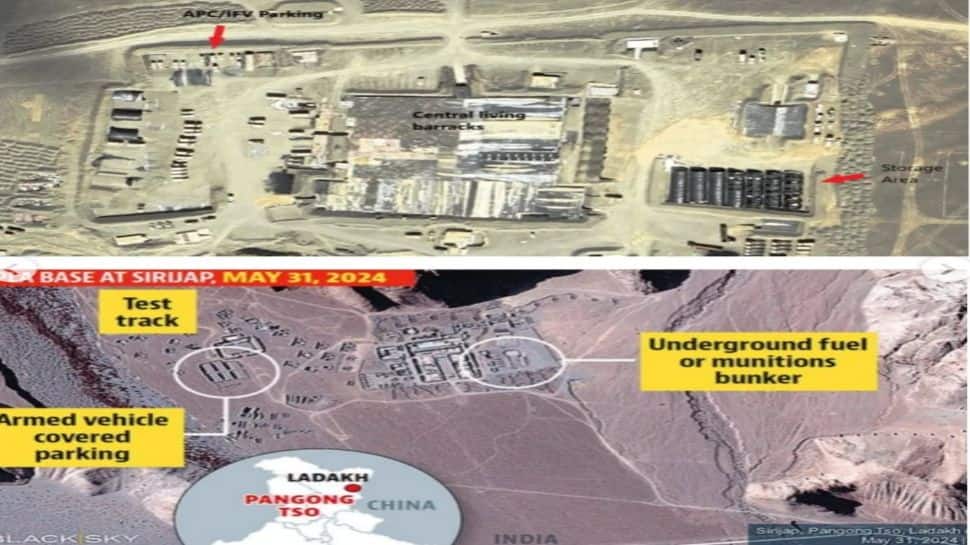
Satellite intelligence has unveiled alarming new construction by China along its border with India, with two prominent missile bunker sites detected near the strategic Pangong Lake area. These fortified structures, located in China’s western Tibet Autonomous Region, are positioned in close proximity to sensitive stretches of the India-China frontier. Experts interpret these facilities as being prepared to deploy the HQ-9 surface-to-air missile system, a key component of the People’s Liberation Army’s (PLA) air defense network. The HQ-9, known for its long-range capabilities, can neutralize a variety of aerial targets, including aircraft, drones, and ballistic missiles. The presence of these bunkers suggests China is strengthening its air defense grid and projecting power further across the LAC. The bunkers are equipped with features such as retractable roofs, suggesting an effort to conceal and protect valuable missile launchers. Satellite imagery indicates that these sites are not temporary but are being developed into permanent bases, complete with underground command facilities, ammunition storage, and living quarters. This strategic placement could allow China to significantly extend its ‘anti-access and area denial’ (A2/AD) zone, posing a direct challenge to Indian air power. The architectural style of these bunkers bears a striking resemblance to those China has previously constructed in disputed territories in the South China Sea, hinting at a standardized military engineering approach. This ongoing construction near Pangong Lake adds to the growing concerns over China’s persistent militarization of the Himalayan border.