

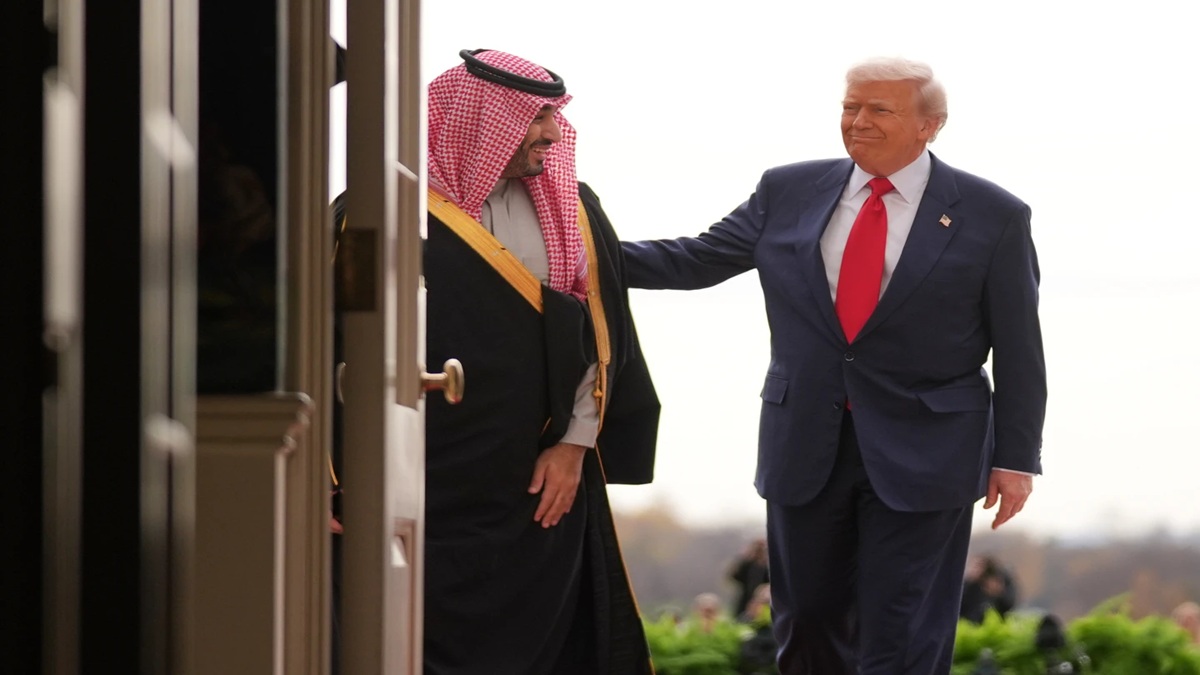
Saudi Crown Prince Mohammed bin Salman made a significant appearance at the White House, engaging in high-level talks with President Donald Trump. The meeting was notable for its display of personal rapport, substantial economic announcements, and crucial defense discussions, including a potential F-35 fighter jet sale. Trump focused on Saudi Arabia’s economic contributions, largely setting aside questions regarding human rights.
The centerpiece of defense discussions was the U.S. President’s support for supplying advanced F-35 aircraft to Riyadh. Trump expressed confidence that Israel’s security concerns regarding military parity would be adequately managed. Israel has indicated a potential non-objection to the sale, provided that Saudi Arabia formally embraces normalization through the Abraham Accords. Crown Prince Mohammed affirmed Saudi Arabia’s interest in joining the accords but emphasized the prerequisite of a defined path toward a two-state solution. The visit also saw progress on other security matters, such as civilian nuclear pacts.
This visit was the Crown Prince’s first to the White House since the 2018 killing of journalist Jamal Khashoggi, an event U.S. intelligence implicated him in. President Trump deflected direct questioning on the matter, describing Khashoggi as a figure of controversy and stating the Crown Prince’s lack of involvement. Prince Mohammed characterized the incident as a difficult period for Saudi Arabia, asserting that corrective measures and investigations had been completed to prevent recurrences. Trump also briefly lauded Saudi Arabia’s human rights advancements, particularly in areas concerning women.
The reception for MBS was marked by a clear display of personal connection between him and President Trump, including warm greetings and guided tours of the White House. Trump’s remarks highlighted their long-standing relationship. On the economic front, the Crown Prince announced a dramatic increase in Saudi financial commitments to the U.S., raising the figure from $600 billion to $1 trillion. These projected investments are anticipated to flow into critical areas like AI development and large-scale collaborative ventures, signaling a robust economic partnership.