

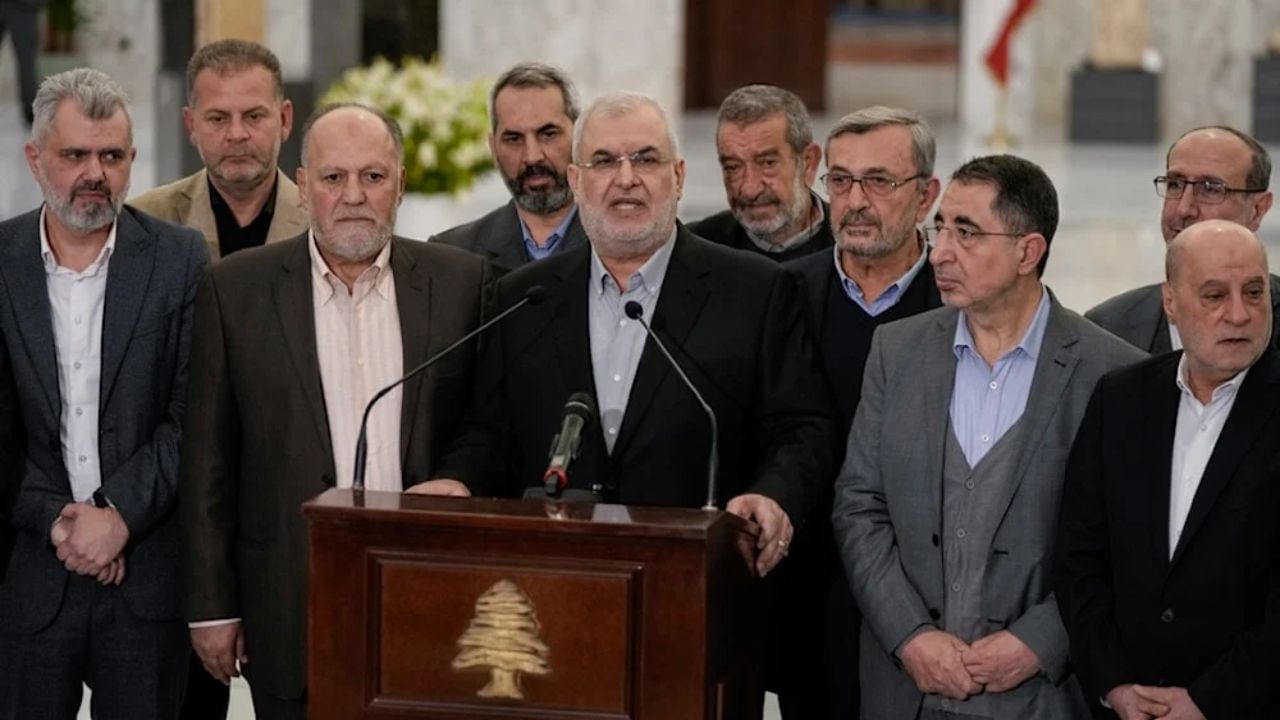
The Lebanese political landscape is strained as Israel and the United States intensify their push for Hezbollah’s disarmament. The Lebanese government, succumbing to this pressure, passed a parliamentary law targeting the group’s arsenal. This move has ignited tensions, raising concerns about a potential return to civil conflict within Lebanon.
Mohammad Raad, a key figure in Hezbollah’s parliamentary group ‘Loyalty to the Resistance,’ indicated that the US and Israel are driving these demands, likely due to shifting geopolitical circumstances. He sees the resistance’s very existence as a source of their discomfort.
Raad cautioned that disarming the resistance could destabilize Lebanon, potentially shifting the focus from the Lebanon-Israel conflict to internal strife. Public displays of support for Hezbollah are now evident across Lebanon, fueling anxieties about national peace and stability. The potential for civil war looms if the decision to disarm isn’t reconsidered.
Raad emphasized the government’s capacity to administer the country, but questioned its ability to withstand external threats. He highlighted the role of the resistance’s weaponry in safeguarding Lebanon since 1982, contributing to its liberation and national security. The balance of power, a deterrent against external aggression, is at risk.
Hezbollah officials perceive relinquishing arms as equivalent to surrendering their dignity. They view the Lebanese government’s actions as both precipitous and perilous, warning about the adverse effects of undermining domestic harmony.
“To surrender our arms is akin to forfeiting our honor,” said Raad. “Surrendering arms is suicide, and we have no intention of self-destruction. Let us ask the army if they are ready to surrender their weapons, which represent their honor. Will they invite the world to betray us by handing over their weapons? If we relinquish our weapons, who will defend our sovereignty and our country?”