

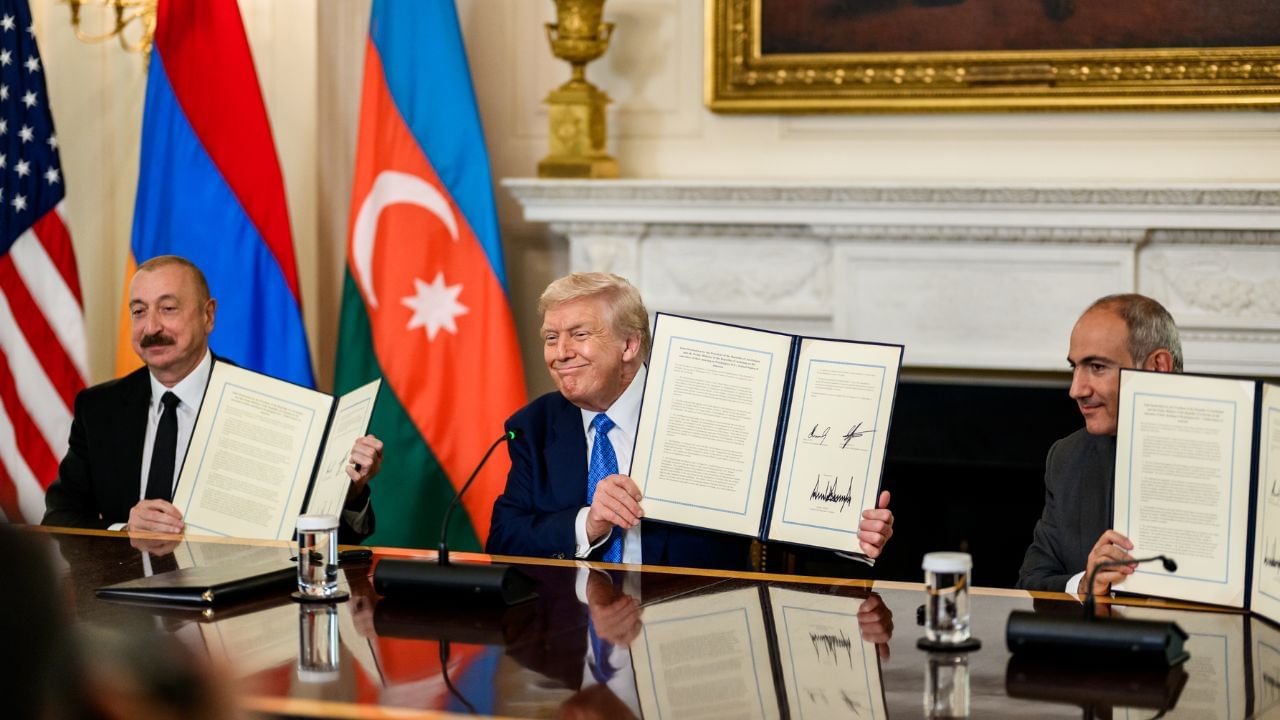
Iran has announced it will obstruct the proposed corridor in the Caucasus region that is part of the peace agreement between Azerbaijan and Armenia, which the United States mediated. While the agreement has been praised by other regional actors for its potential to bring lasting peace, it is a cause for concern for Iran.
Ali Akbar Velayati, a top advisor to Iran’s Supreme Leader, said on Saturday that Tehran would stop the initiative, ‘with or without Russia.’ This initiative includes Armenia, with which Iran shares a strategic alliance, but the ceasefire brokered by Trump could strain this relationship.
The United States and Turkey have been seeking to establish a trade corridor in the Caucasus for some time, which would allow them to bypass Iran. Velayati, in reference to the transportation corridor in the peace agreement, said that “this route will not become a gateway for Trump’s mercenaries; it will become their graveyard.” He has characterized the plan as a ‘political betrayal’ that undermines Armenia’s territorial integrity.
The agreement, finalized at the White House on Friday, includes special U.S. development rights for a route through Armenia that will connect Azerbaijan to Nakhchivan, which is an Azerbaijani exclave that borders Turkey, a Baku ally. This autonomous republic is situated on the Trans-Caucasian plateau and is surrounded by Armenia, Iran, and Turkey.
Iran opposes the proposed Zangezur corridor in the Trans-Caucasus because it threatens its geopolitical, strategic, and economic interests. Its construction could cut off its direct contact with Armenia, its important ally. This would weaken Iran’s regional access. Furthermore, Iran’s territory has been a vital route for recent trade and movement between Azerbaijan and Nakhchivan. The corridor would bypass this route, which would reduce Iran’s strategic and economic influence in the South Caucasus.
Iran also worries that the corridor could increase the military presence of the U.S. and NATO on its northern borders, which it views as a threat to its national security. Ali Akbar Velayati, an advisor to Iran’s Supreme Leader, has called it a ‘geopolitical conspiracy’ and has called for stopping it at all costs.