

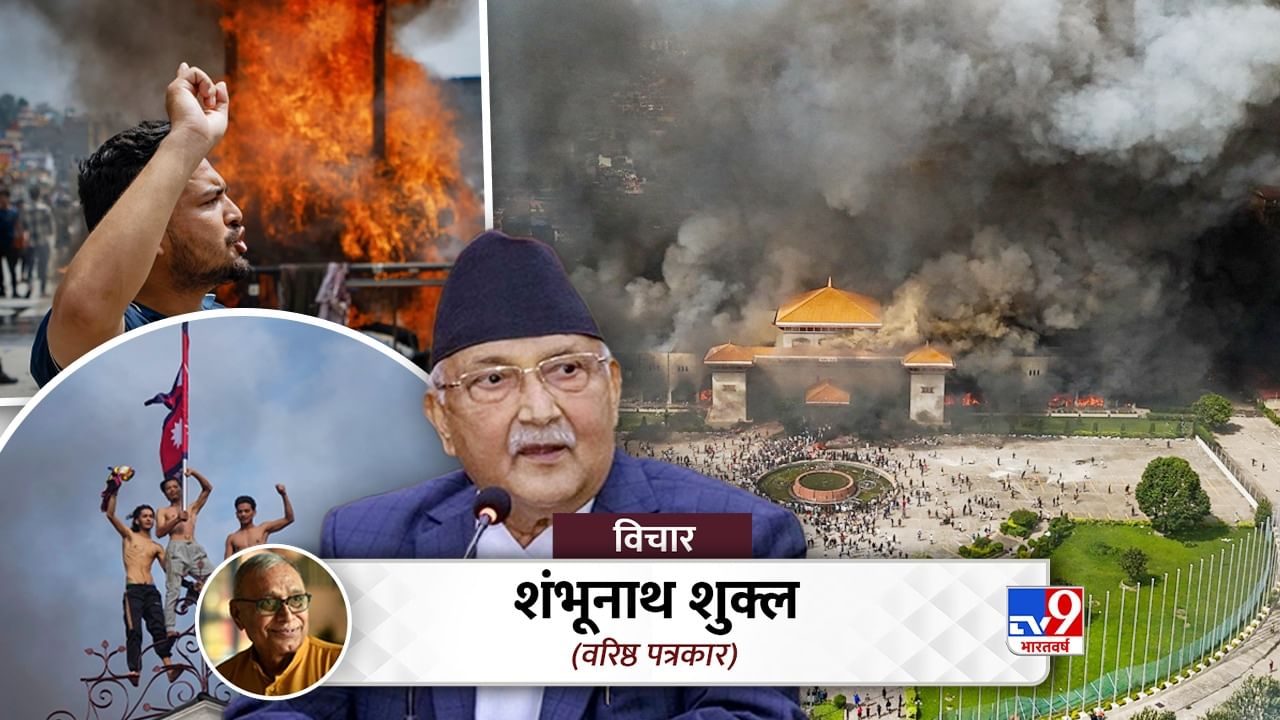
The Nepalese government under KP Sharma Oli faced a crisis, failing to gauge the public sentiment accurately. This unrest wasn’t new, having festered for years before erupting. The result was a violent clash on September 8th, with protesters breaching security and entering the parliament. The aftermath included casualties from police action, the burning of the parliament, and the killing of a former prime minister’s wife.
Prime Minister Oli escaped, evacuating with ministers by helicopter. The public’s anger was rooted in government corruption, exacerbated by a social media ban.
Several ministers were targeted by angry citizens. Former PM Jhalanath Khanal’s home was set ablaze, resulting in his wife’s death. Another former PM, Sher Bahadur Deuba, was assaulted, and his wife was also hurt. Finance Minister Vishnu Poudel was attacked, while Oli’s residence and the presidential house were also set on fire. The parliament fire raged uncontrolled, accompanied by looting, and the Singh Durbar also burned. Nepal was in a state of rebellion, with the army and police unable to maintain order, leading to Oli’s resignation.
Oli’s inability to govern was attributed to corruption, frequent government changes, and strained relationships with India due to increasing ties with China, particularly over the Lipulekh border dispute. This shift, along with the marginalization of the Madhesi community, fueled the unrest.
The current protest is being led by Balen Shah, the young mayor of Kathmandu, a Madhesi himself, who is expected to take on a temporary leadership role. Nepal’s strategic position as a buffer between India and China also makes it relevant to the US. The Oli government’s pro-China stance and alleged corruption, including the awarding of contracts to relatives, were key factors.
Over the last four years, corruption has led to overthrows in countries close to India: Afghanistan (2021), Sri Lanka (2022), Bangladesh (August 2024), and now Nepal. All these nations share characteristics of small size, high unemployment, and widespread corruption. China and the US have been active in these countries.
The situation in Libya in 2011 mirrored Nepal’s unrest. Muammar Gaddafi, who ruled for 42 years, was overthrown by youth using social media. His oppressive policies and corruption sparked the revolt.
Small nations struggle with political stability due to a lack of public trust in leaders, which enables corruption and unemployment. The recent example of Bangladesh, where Sheikh Hasina’s government was overthrown due to alleged corruption involving family members and political rivals. The former government’s inability to control the new government’s inability to manage corruption or public anger.