

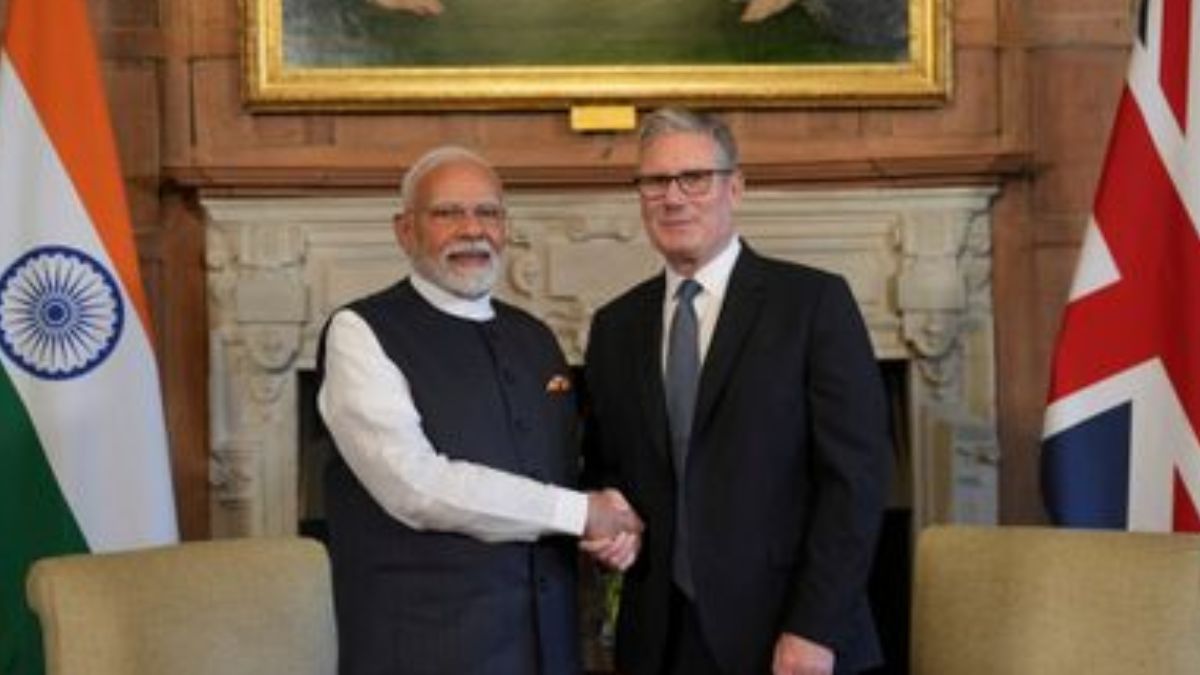
The signing of the India-UK Free Trade Agreement (FTA) was lauded by Prime Minister Narendra Modi as a landmark achievement, signifying a major step forward in the bilateral relationship. The Prime Minister, speaking alongside UK Prime Minister Keir Starmer, emphasized the economic opportunities and increased market access that the agreement will provide for both nations. He also acknowledged the welcoming reception he experienced during his official visit.
“Today marks a historic day in our bilateral relationship,” stated PM Modi, acknowledging the Comprehensive Economic and Trade Agreement’s conclusion after considerable effort. The FTA was signed during the visit of PM Modi, facilitating greater trade in goods and services. He further highlighted that the agreement serves as a foundation for shared prosperity.
Key Indian sectors, including textiles, footwear, gems and jewellery, seafood, engineering goods, agricultural products, and processed foods, are poised to gain improved access to the UK market. Similarly, the UK will gain access to its products, such as medical devices and aerospace components, at more competitive prices in India. The trade deal aims to reduce or eliminate tariffs to boost trade, making products from each nation more competitive in the other’s market. The target is to achieve USD 120 billion in trade by 2030.
The FTA is expected to bolster sectors such as textiles, leather, footwear, sports goods, toys, marine products, gems and jewellery, engineering goods, auto parts, engines, and organic chemicals. India’s Commerce and Industry Ministry confirmed that the FTA ensures comprehensive market access across all sectors, impacting all of India’s export interests. India will benefit from tariff eliminations on almost all tariff lines, creating substantial opportunities for increased bilateral trade.
The UK government confirmed that India’s tariffs on UK products will drop significantly. UK businesses selling to India will find it easier to do so, from soft drinks to medical devices. British whisky producers will benefit from reduced tariffs, giving them an advantage in the Indian market.