

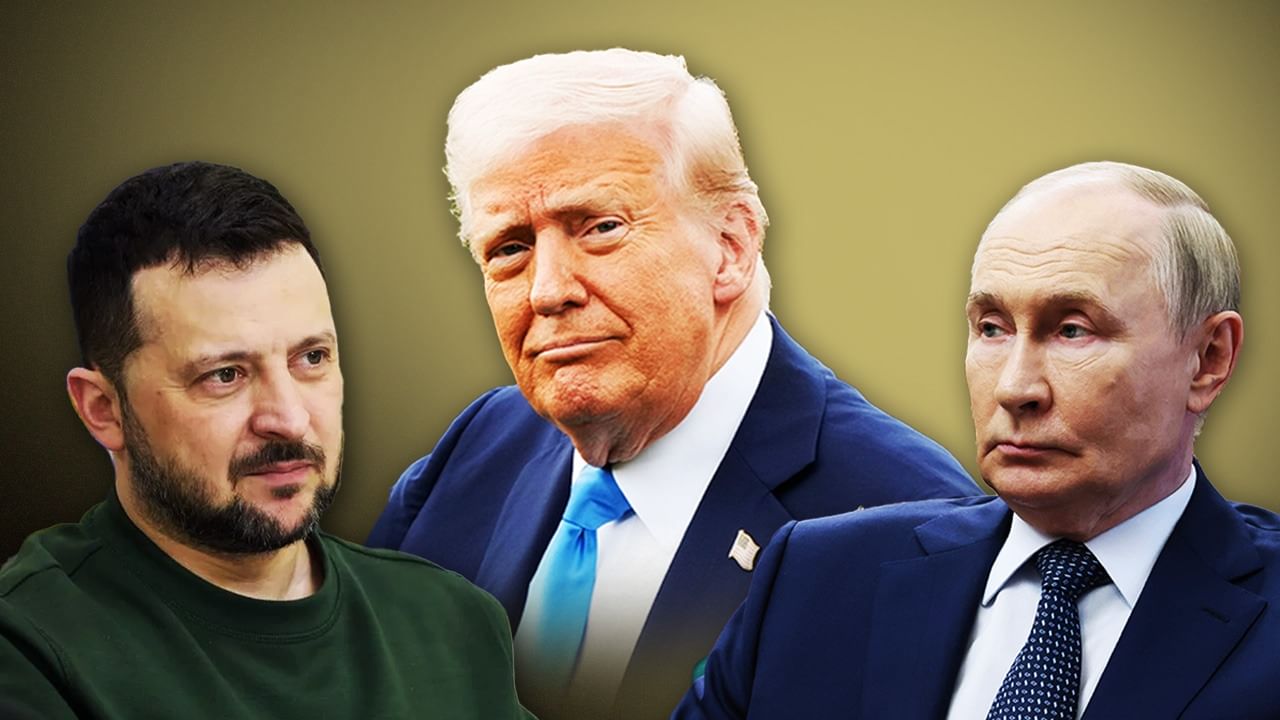
The impending meeting between Donald Trump and Volodymyr Zelenskyy is of immense significance, with the potential to impact not just Ukraine, but the entire European continent. Prior to the meeting, Trump is reported to have begun applying pressure on Zelenskyy, raising questions about the outcome.
Given the high stakes, Trump is expected to use strategies like offering incentives, issuing threats, or applying pressure in an effort to influence Zelenskyy. Trump has already begun to apply pressure on Zelenskyy before the meeting.
Trump has placed the final decision in Zelenskyy’s hands but has also warned of potential consequences. He has indicated that if Zelenskyy does not agree to Putin’s terms for a ceasefire, Russia may seize more Ukrainian territory, similar to the annexation of Crimea. Putin has previously stated that even without a ceasefire, he intends to maintain control over regions such as Luhansk, Donetsk, Zaporizhzhia, and Kherson. This situation raises questions about the available options for the United States should an agreement fail to materialize.
One potential scenario is that the United States might choose to stay uninvolved in the conflict, reminiscent of its early positions in World War I and World War II. The US may adopt a neutral stance until the war expands to include Europe. In such an event, the US could then potentially align with the victorious side.
America’s involvement in both World War I (1917) and World War II followed a period of non-intervention. The US declared war on Germany in 1917, three years after the start of World War I. In World War II, the US entered the conflict against Japan nearly two years after it began, joining the Allied forces. In both cases, the United States emerged victorious. However, the reasons for America’s involvement were specific to each war. The strategy may have been to support the stronger party.
Now, the question is whether the United States would back Russia or Europe if the Ukraine war were to spread across Europe. This decision will depend on an analysis of the economic and military strengths of the involved parties.
The world is hoping for peace to come out of this White House meeting. However, the chances of this happening are slim, because of European actions. There is a possibility that the Ukrainian conflict will broaden. France and the UK have already created a post-ceasefire plan. The countries are making plans to establish a reassurance force in Ukraine.
European countries have agreed with France and the UK’s decision.
Zelenskyy might ask Trump to assure that he would have security after a ceasefire. But Putin is not likely to agree to have a reassurance force placed in Ukraine. NATO has already put reassurance forces in nine Eastern European countries. This reassures the allied nations of their safety.
The reassurance force is placed in Estonia, Latvia, Lithuania, Poland, Finland, Bulgaria, Hungary, Romania, and Slovakia. The militaries of four nations border the northwest of Russia. The Polish border is near Belarus, which is friendly with Russia. Romania and Bulgaria are near the Black Sea. This means that Ukraine is the only area where NATO soldiers are not near the Russian border. Putin will never agree to send the reassurance force to this area.
Europe only has one option. That option is to keep supplying Ukraine with arms. This will keep Russia in the war. Europe is preparing to do so. It is being claimed that Ukraine is now making the long range cruise missile Flamingo.
Ukraine says it is their own missile, but the technology probably came from Europe. This will give Ukraine the capability to attack Russia up to 3000 km without Europe being blamed.