

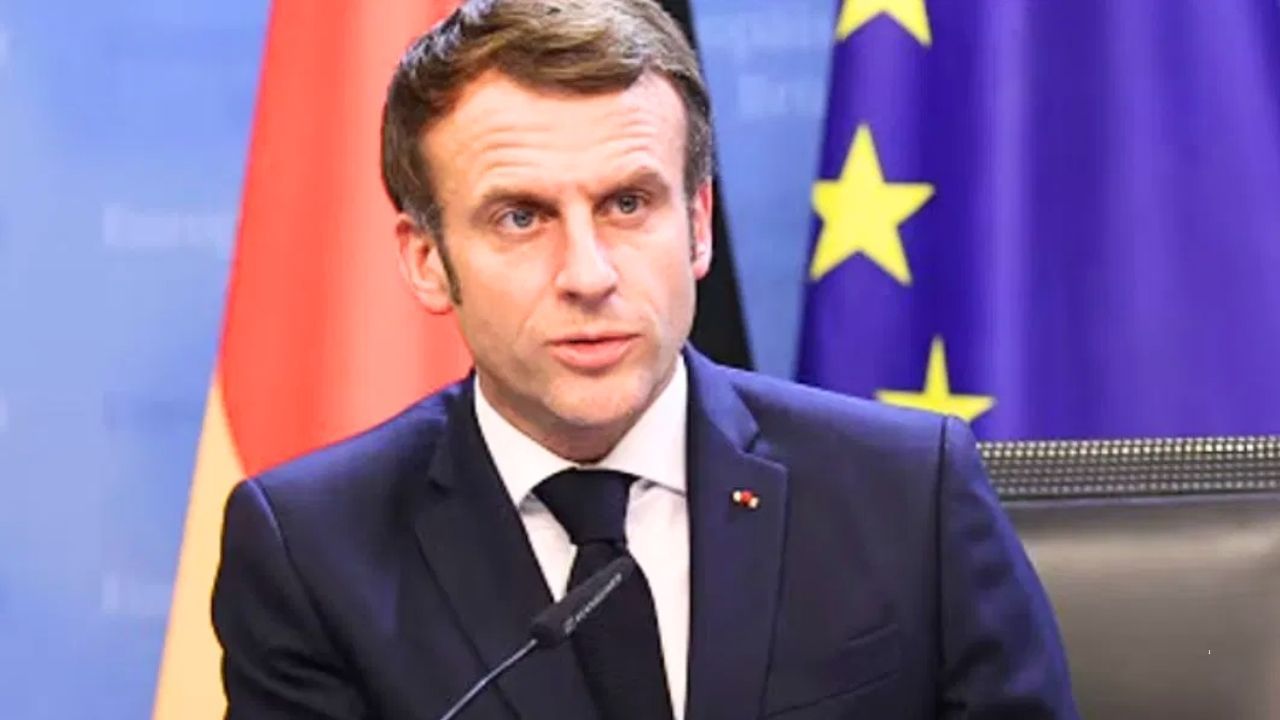
In a significant move, French President Emmanuel Macron declared France’s formal recognition of Palestine as a state. This announcement aligns with recent recognitions from the United Kingdom and Canada, reflecting a growing international trend. The decision was made during a UN conference co-chaired by France and Saudi Arabia, which sought to strengthen backing for a two-state solution to the Israeli-Palestinian dispute. Macron’s declaration was applauded by over 140 leaders present at the UN General Assembly. He emphasized France’s historical commitment to peace in the region. While the practical implications of this recognition might be limited, especially given the ongoing conflict in Gaza and the expansion of Israeli settlements in the West Bank, the symbolic weight is considerable.
The announcement was made at the start of the meeting, where numerous world leaders were expected to speak. Palestinian President Mahmoud Abbas was unable to attend, as he and other Palestinian officials were denied US visas. The UN Secretary-General António Guterres underscored the right of Palestinians to statehood, which contrasts with the stance of the Israeli government, which believes statehood would benefit Hamas. The UK, Canada, Australia, and Portugal have also recognized Palestine, with expectations that other countries will follow suit. Although around three-quarters of the UN already recognize Palestine, major Western nations had previously resisted, asserting that recognition should be contingent on negotiations with Israel. The Palestinians have welcomed these steps, hoping they will contribute to their future independence.
Israeli Prime Minister Benjamin Netanyahu’s government has opposed the move, claiming that it would benefit Hamas. Israel has hinted at possible unilateral actions in response, including annexation of parts of the West Bank. UN Spokesperson Stéphane Dujarric stated that efforts toward a two-state solution should continue despite Israeli actions. Netanyahu is expected to discuss Israel’s reaction with President Donald Trump. The Trump administration also opposes the growing recognition of a Palestinian state. The Palestinian political landscape is fragmented, with Abbas’s internationally recognized Palestinian Authority governing parts of the West Bank. France and Saudi Arabia have proposed a phased plan, supported by the UN General Assembly, for a reformed Palestinian Authority to administer the West Bank and Gaza with international support. Israel views the Palestinian Authority as not fully committed to peace and accuses it of inciting extremism. Hamas has signaled a potential acceptance of a state based on the 1967 borders.
Peace negotiations between Israel and Palestine, mediated by the US, stalled due to the outbreak of violence and the expansion of settlements. Supporters of the two-state solution say that without a Palestinian state, Israel will be forced to choose between the current situation of military occupation and unequal rights for Palestinians, or a bi-national state without a Jewish majority.