

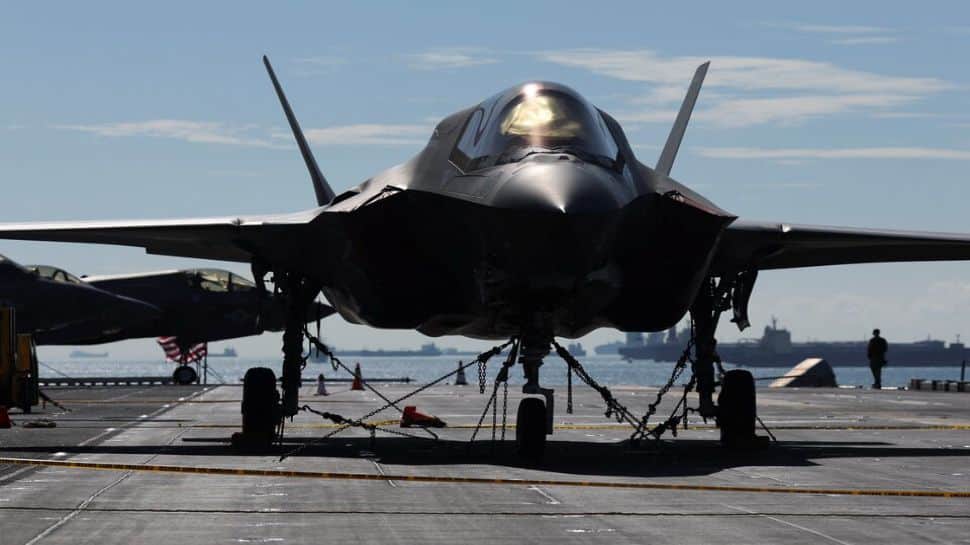
The Lockheed Martin F-35 Lightning II, a paramount example of modern aerial combat technology, has again captured global attention. Recent discussions were ignited by President Trump’s contemplation of selling this highly classified stealth fighter to Saudi Arabia. The F-35 is renowned for its superior capabilities and deeply protected technological secrets, which the United States carefully disseminates only to a select group of allied nations that meet stringent security and policy requirements. This selectivity means that while demand is high, actual recipients are few.
The F-35 program operates under a complex web of international rules and security protocols. Even long-standing partners like Israel are subject to specific limitations concerning the aircraft’s operational parameters. As the pinnacle of American airpower, the F-35 integrates unmatched stealth characteristics with advanced, secured technological systems, making it a coveted asset worldwide.
A significant barrier to F-35 acquisition is the presence of Russian S-400 air defense systems. The United States has a firm policy against selling the F-35 to countries that host this Russian military hardware. This was starkly demonstrated when Turkey, despite its NATO membership, faced severe repercussions, including removal from the F-35 program and forfeiture of its planned purchases, after acquiring the S-400.
Concerns about Chinese technological infiltration also dictate F-35 sales policies. Washington’s distrust of Chinese technology, particularly Huawei’s role in 5G networks due to espionage fears, influences its decisions. This apprehension has led to scrutiny of potential risks associated with F-35 deployments in countries with significant Chinese technological infrastructure, impacting sales discussions with nations like the UK and the UAE.
Regional military balance is another key consideration, particularly in the Middle East. The US is legally obligated to preserve Israel’s ‘qualitative military edge,’ a commitment that shapes its defense sales, granting Israel access to the F-35. Consequently, other regional players like Qatar, UAE, and Egypt have been excluded, though Saudi Arabia’s recent interest might herald a new era.
Strategic vulnerabilities, such as susceptibility to espionage, also prevent F-35 sales. Nations like Taiwan, facing intense intelligence operations from China, are deemed too high-risk for acquiring such sensitive technology, thereby keeping their requests on hold.
While President Trump has actively promoted the sale of F-35s to Saudi Arabia, citing the strategic importance of the relationship, Pentagon officials have voiced concerns. Intelligence assessments suggest a risk of sensitive F-35 technology being compromised through Saudi channels, potentially benefiting China’s military advancements, such as its J-20 stealth fighter.
The F-35 Lightning II, developed by Lockheed Martin, represents the most expensive weapons program in US history. Its high per-flight-hour operating costs underscore the financial commitment required for its maintenance and deployment, reinforcing its status as a premier, yet costly, military asset.
For India, acquiring the F-35 presents a complex equation. While the US has offered a potential pathway through Foreign Military Sales, the astronomical costs, demanding maintenance, and stringent limitations on technology transfer pose significant challenges. India must weigh the prestige of operating the F-35 against its practical and financial implications.