

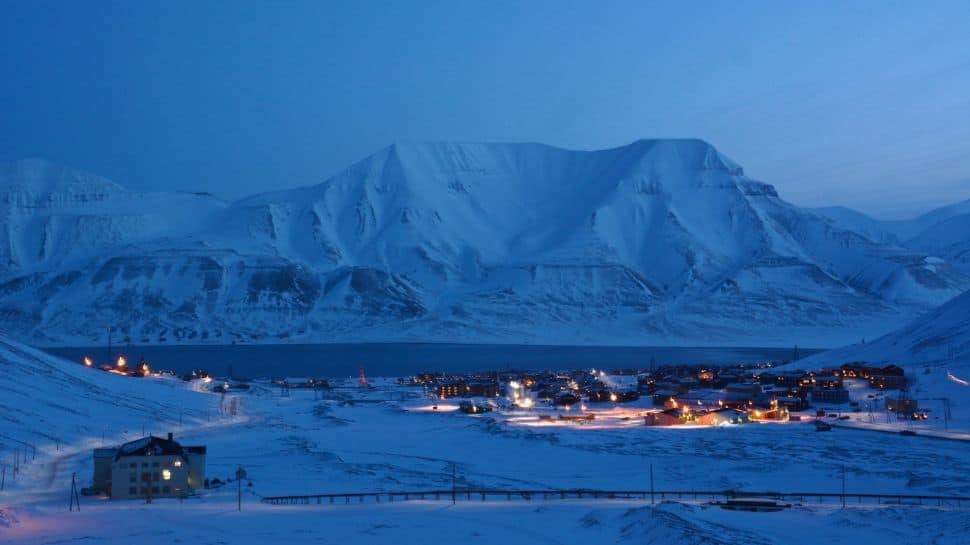
Life at Alert, Canada’s northernmost permanently inhabited settlement, is defined by extreme conditions, most notably its staggering 136-day polar night. Situated a mere 817 kilometers from the North Pole on Ellesmere Island, this vital military and research hub is plunged into darkness from October 13th until February 27th each year. During this extended period, artificial lighting is the sole source of illumination, profoundly impacting the circadian rhythms of its inhabitants. Accompanying the perpetual night are brutal temperatures that frequently dip below -40°C, making the already isolated environment even more formidable.
The phenomenon of the polar night is not unique to Alert. Other regions also face weeks or months without daylight due to Earth’s axial tilt. Norway’s Svalbard and Jan Mayen archipelago endures approximately 111 days of darkness. Tromsø, Norway, known as the ‘Gateway to the Arctic,’ experiences 49 days without sunrise. In Alaska, Utqiaġvik (formerly Barrow) sees 65 days of continuous night. Russia’s Murmansk contends with about 40 dark winter days. Greenland’s Ilulissat is enveloped in twilight for weeks starting in late October. The most extreme case is the South Pole Station in Antarctica, where the sun is absent for almost half the year, from March to September, highlighting the dramatic impact of Earth’s tilt on polar regions.