

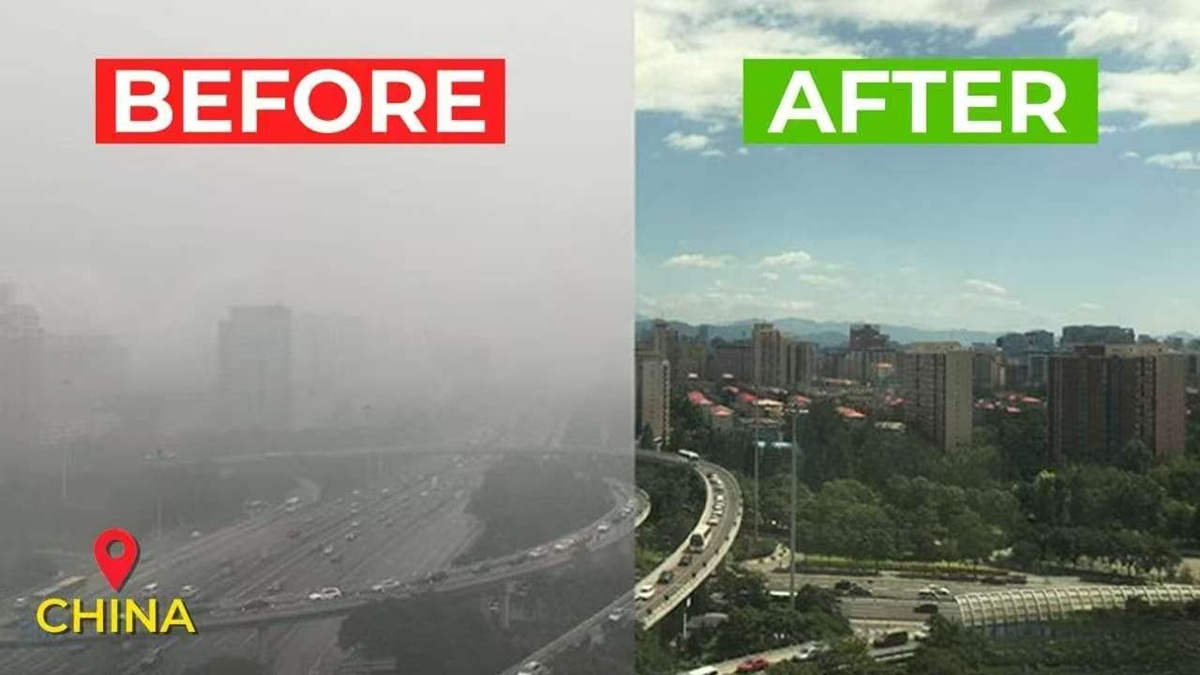
As Delhi once again succumbs to a thick blanket of winter smog, the recurrent problem fueled by agricultural stubble burning, vehicle exhaust, industrial emissions, and road dust demands urgent solutions. This familiar cycle of deteriorating air quality mirrors the challenges Beijing confronted just a decade ago. Once infamously known as the world’s smog capital, Beijing has since implemented sweeping policy changes and invested heavily, leading to a remarkable recovery in its air quality. China has now extended an offer to share its successful pollution control experience with India.
Beijing’s turnaround was driven by a series of aggressive interventions. Facing extremely high levels of nitrogen dioxide, which contributed to widespread respiratory illnesses and premature deaths, the Chinese government enacted tough measures. These included taking vehicles off the road, temporarily closing factories, and introducing much stricter emission standards. In 2013, China unveiled a five-year action plan to combat pollution, prioritizing the growth of electric mobility, promoting bike-sharing services, and diverting heavy truck traffic from populated areas. This extensive effort reportedly involved an investment of approximately $270 billion, with a clear focus on long-term sustainable development and public health protection.
The impact on Beijing’s air quality has been substantial. Research indicates that pollution levels in the city decreased by 42.3% between 2013 and 2021. Experts credit this success to a combination of diligent monitoring, unwavering policy enforcement, and significant financial backing. The environmental improvements in Beijing also contributed to a moderate global reduction in pollution during this timeframe.
China’s innovative approach to financing environmental initiatives was particularly noteworthy. The World Bank recognized China’s ‘Innovative Financing for Air Pollution Control in the Jing Jin Ji region’ as a pioneering model that integrated green finance with energy policy. This program, structured using the ‘Program for Results’ methodology, was designed to align with action plans for pollution control and national development goals, aiming to cut pollution through improved energy efficiency and the promotion of clean energy.
Regional cooperation, a critical factor in Beijing’s success, is equally vital for Delhi. Investigations into Beijing’s air quality revealed that pollutants often drifted in from surrounding provinces, especially during winter. This pattern closely resembles Delhi’s predicament, where stubble burning in states like Punjab and Haryana significantly exacerbates winter smog. While Delhi faces ongoing contributions from urban emissions, traffic, and dust, the seasonal impact of crop burning is profound. The Supreme Court’s repeated calls for stronger action on stubble burning from both the central and state governments highlight the need for coordinated efforts. Without this, Delhi’s pollution challenge remains intractable.
Beijing’s journey offers valuable insights for Delhi, emphasizing the effectiveness of stringent enforcement and unified governance. Although India’s financial capacity for such large-scale interventions might differ, its National Clean Air Programme, initiated in 2019, represents a significant step. The program targets a 20-30% reduction in particulate pollution by 2024, relative to 2017 levels.
China’s proactive offer to share its expertise is a significant development. A Chinese Embassy representative stated that China, having successfully tackled its own severe smog issues, is prepared to share its path to clearer skies, expressing optimism for India’s progress. This willingness stems from China’s own long and challenging battle to achieve visible environmental improvements.