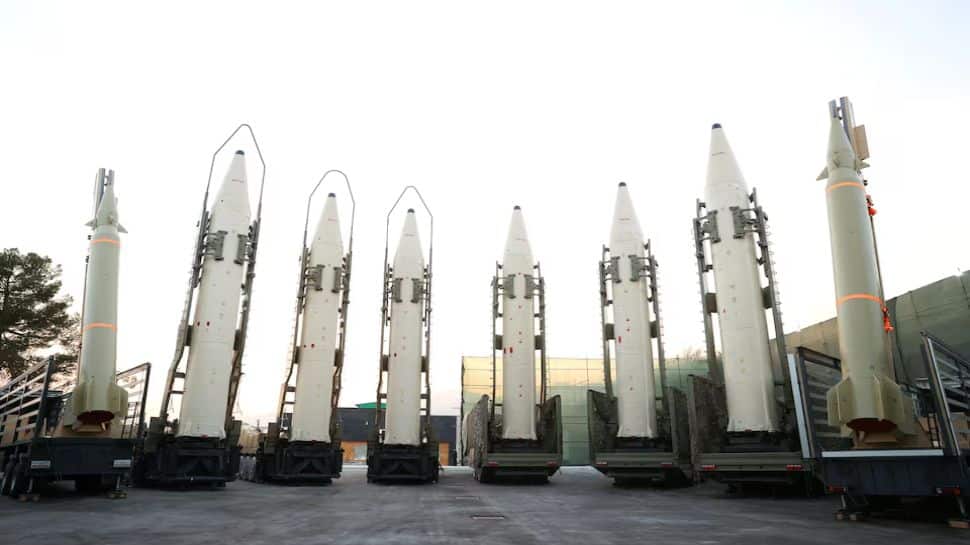
In a major crackdown on Iran’s burgeoning missile and drone programs, the United States has levied sanctions against 32 individuals and organizations spanning seven countries. The targeted entities, located in nations such as India, China, the UAE, and Turkiye, are accused of facilitating Iran’s acquisition of critical components for its weapons development. The State Department highlighted that these networks are instrumental in supplying the Islamic Revolutionary Guard Corps (IRGC) with the means to produce advanced weapons, including sophisticated drones and long-range ballistic missiles. These sanctions are a direct consequence of the US enforcing renewed United Nations sanctions, reimposed after Iran’s continued non-compliance with its nuclear commitments. Prohibited by UN Security Council resolutions are the transfers of weapon technologies, crucial components, and dual-use items that could bolster Iran’s missile and nuclear ambitions. The US administration is calling on all nations to vigorously uphold these obligations, urging them to intercept the flow of restricted materials into Iran and to actively disrupt its proliferation efforts. The sanctioned operations are described as intricate global schemes utilizing commercial fronts to move prohibited technologies. This latest round of sanctions is a continuation of the long-standing US strategy to contain Iran’s military advancements and is specifically aligned with directives to block Iran’s access to the foreign suppliers and resources that fuel its asymmetric warfare capabilities. The US Treasury has placed these designations under executive orders concerning weapons proliferation and terror financing. The US government is resolute in its pursuit of Iran’s illicit procurement networks, promising to utilize all available tools to dismantle them.
Cracking Down on Iran’s Weaponry: US Sanctions 32 Global Entities
 By The Chhattisgarh2 Mins Read