

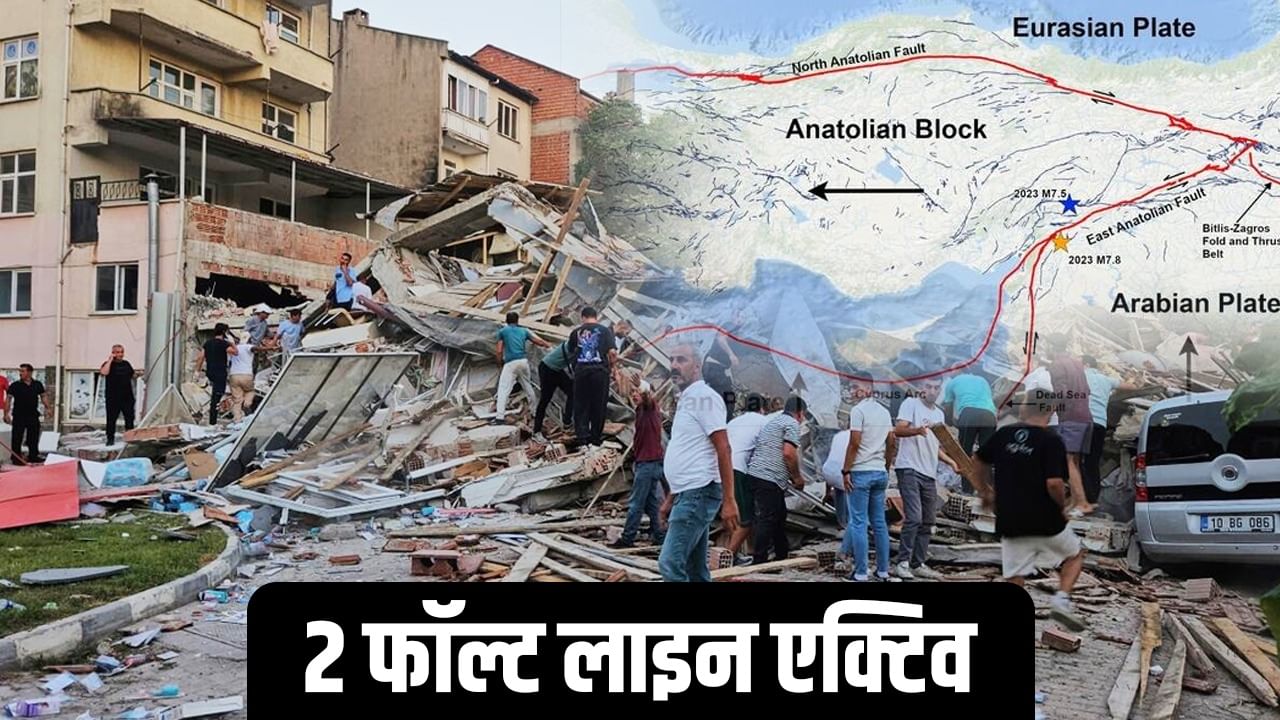
Turkey is enduring another period of intense seismic activity. Numerous earthquakes have been felt across the nation, with a significant number occurring in rapid succession. Over the last two days, Turkey has registered 879 earthquakes, both minor and major, translating to an average of 18 tremors every hour. The first notable earthquake, which registered 6.6 on the Richter scale, was recorded in the Balikesir province on August 10th. This initial event was followed by hundreds of aftershocks. 120 tremors were measured between 3-4 in magnitude, while 17 reached between 4-5 in intensity. The focal point of the quakes lies 11 km below ground level, with the majority of tremors registering below a magnitude of 3.
The Turkish government, through its Ministry of Home Affairs, has issued guidance urging the public to stay calm while exercising caution. Authorities have confirmed one fatality from the earthquakes, with no further casualties reported. The seismic activity has caused the collapse of 16 buildings across 68 villages, leading to the arrest of a construction contractor linked to the affected structures.
Turkey’s susceptibility to frequent earthquakes is a result of its geographical position at the intersection of the Anatolian, Eurasian, and Arabian tectonic plates. Any movement or interaction within these plates can cause tremors. Moreover, the presence of two active fault lines, namely the North Anatolian Fault and the East Anatolian Fault, amplifies the potential for seismic events.
Historical data shows that Turkey has been struck by 13 major earthquakes over the past 85 years, resulting in approximately 120,000 deaths. The 2023 earthquake caused a devastating loss of life with 50,000 fatalities, prompting the Turkish government to prioritize the strengthening of building codes and construction practices.