

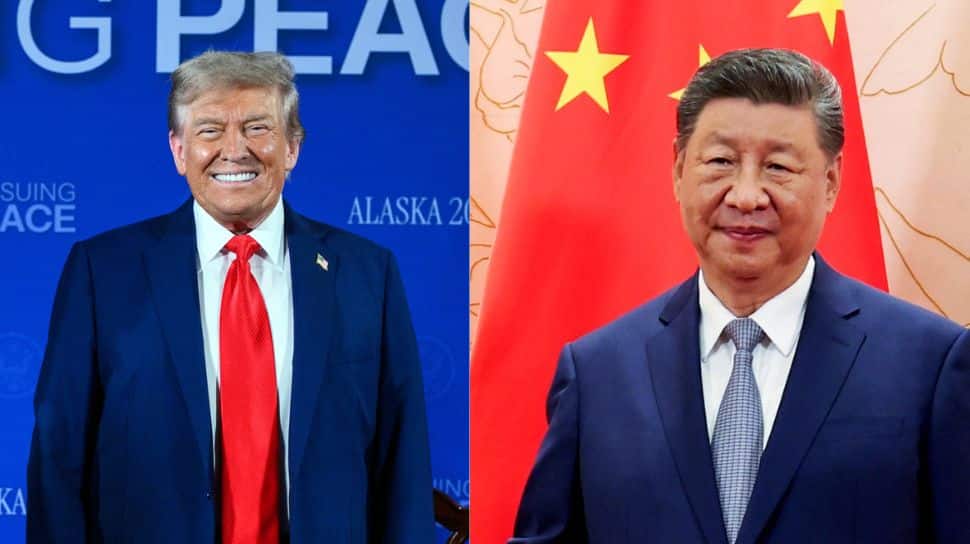
In a significant escalation of the US-China trade war, President Trump has declared a 100% tariff on all Chinese imports, scheduled to take effect on November 1, 2025. This aggressive tariff aims to counter China’s recent move to restrict exports of rare earth elements, crucial minerals used in high-tech manufacturing.
Beijing’s decision to tighten controls on rare earths, materials where it holds a dominant global processing position, has been met with a strong rebuke from Washington. These minerals are indispensable for everything from advanced military equipment and next-generation smartphones to wind turbines and electric vehicle motors. China’s expanded restrictions, covering the entire production chain, were characterized by President Trump as “a moral disgrace.”
The newly announced 100% tariff will be applied on top of existing tariffs, substantially increasing the cost of goods originating from China. This could lead to a sharp rise in prices for American consumers, impacting sectors ranging from electronics and apparel to household goods. The move also raises questions about the future of US-China economic relations and the potential for further decoupling.
Following the tariff announcement, President Trump expressed doubt about the possibility of meeting with Chinese President Xi Jinping, citing Beijing’s “very hostile” actions. However, he later softened his stance, indicating that diplomatic engagements were still possible, though the landscape has dramatically shifted. China’s Ministry of Commerce defended its rare earth policies as necessary for national security, a rationale familiar to US trade policy in the semiconductor sector.
The situation is increasingly being viewed as economic warfare, with both the US and China weaponizing their strategic advantages. The US seeks to counter China’s control over critical minerals, while China faces US restrictions on advanced technologies. The upcoming November 1 deadline signals a critical juncture for global supply chains and international trade relations.