

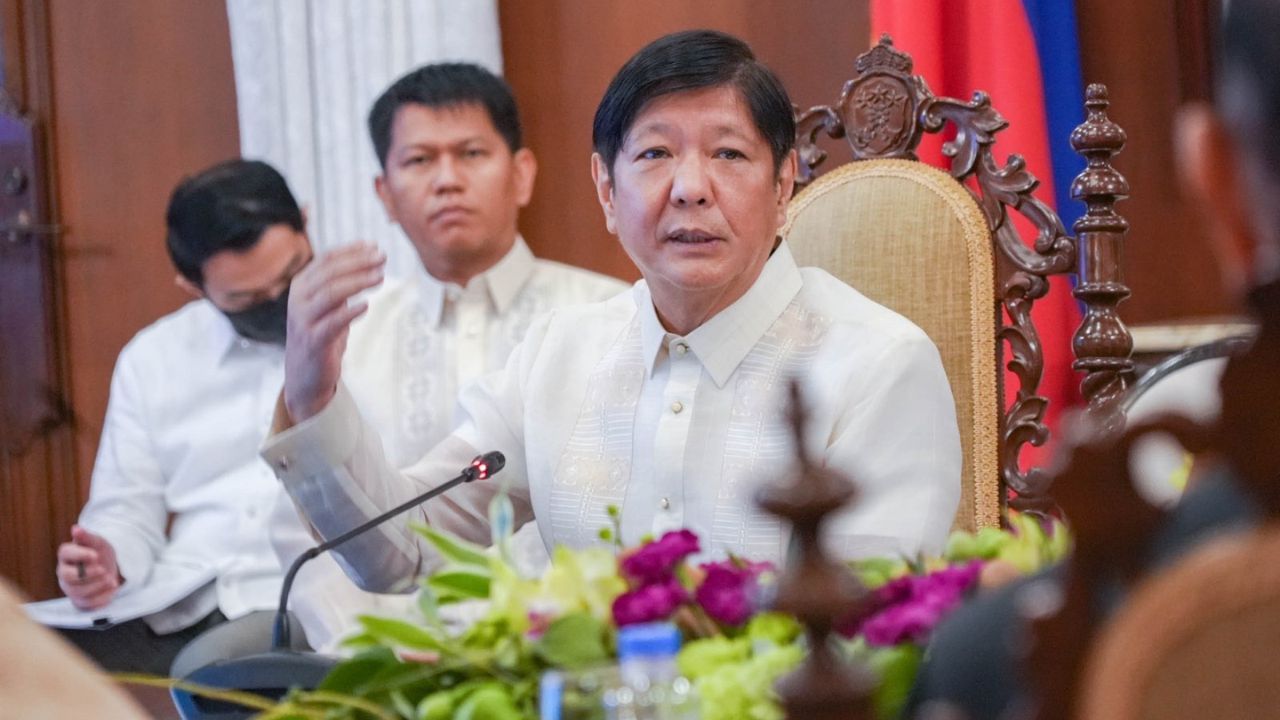
China has expressed strong disapproval of Philippine President Ferdinand Marcos Jr.’s recent comments made during his visit to India. The controversy arose from Marcos’s response to a question in New Delhi, where he affirmed that the Philippines would support Taiwan in the event of a war. This stance has drawn sharp criticism from China, with officials accusing the Philippines of acting recklessly.
The Chinese Foreign Ministry’s spokesperson asserted that Taiwan falls under China’s internal affairs, viewing Manila’s statements as an attempt to destabilize the situation, with potential repercussions.
During the interview in New Delhi, Marcos clarified that if the United States and China were to engage in a conflict over Taiwan, the Philippines would be obligated to participate. He emphasized the importance of defending their territorial and geographical integrity.
Marcos also pointed out China’s expansionist behavior, citing the encirclement of Taiwan and the escalating presence of Chinese vessels in the South China Sea, which he deemed provocative.
China’s reaction is largely due to the Philippines’ shift in stance on Taiwan, which it previously did not recognize as a sovereign nation. This change has amplified tensions. The Chinese Foreign Ministry issued a statement on Friday, warning the Philippines of the risks involved.
The Chinese Foreign Ministry also raised concerns over the Philippines’ perceived inconsistencies, questioning the rationale behind its provocative statements concerning Taiwan, considering it does not acknowledge Taiwan’s independence.
It is important to note that, like the United States and many other nations, the Philippines has not officially recognized Taiwan as a separate country, although the United States provides military aid to Taiwan’s acting government.
China has denounced Marcos’s statements as a violation of international law, stating they could jeopardize regional peace, stability, and the fundamental interests of the people.
The dispute between China and the Philippines centers on their competing claims in the South China Sea, particularly over the Scarborough Shoal and other areas. In 2012, China took control of the Scarborough Shoal. In 2016, an international tribunal issued a ruling against China’s claims, which China has disregarded.
The international court also stated that China has occupied several disputed areas in the South China Sea that it has no right to. In 2024, friction between the Philippines and China escalated when Beijing deployed its naval fleet in the South China Sea.