

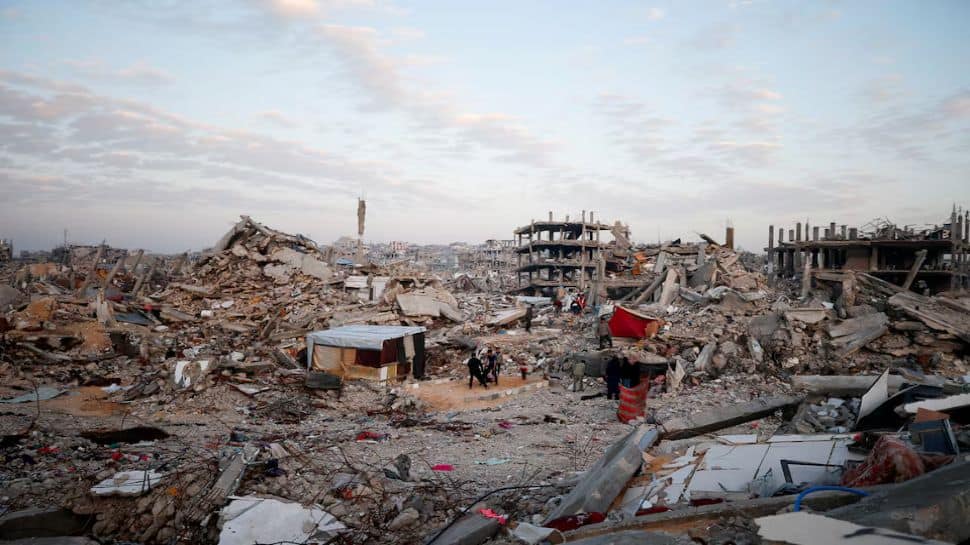
A stark division has emerged among Arab nations concerning the reconstruction of Gaza, with Qatar adopting a distinct approach from Saudi Arabia and the United Arab Emirates. The conflict over Gaza’s future is now an internal Arab dispute, highlighting differing strategic interests and priorities.
Saudi Arabia and the UAE are leveraging the crisis in Gaza for geopolitical advantage, aiming to reshape the regional power dynamics. Their conditional approach to aid is clear: reconstruction will only commence after Hamas relinquishes its arms and a new, internationally sanctioned administration is established. Without these preconditions, they refuse to allocate any financial resources.
Qatar has embraced a humanitarian mission in Gaza, providing critical support when others have hesitated. Doha is pushing for immediate rebuilding and relief efforts, emphasizing that delays only deepen the humanitarian crisis and amplify regional instability. This position is informed by Qatar’s historical engagement with Hamas and its strategic imperative to maintain positive relations with the United States.
Beyond humanitarian concerns, Saudi Arabia and the UAE are wary of investing heavily in a volatile territory. Public sentiment within these nations generally views Hamas negatively, perceiving the group as a source of conflict rather than a legitimate resistance. This public mood influences their cautious governmental policies.
Saudi officials have explicitly stated that reconstruction funds are contingent upon the transfer of authority in Gaza to the Palestinian Authority or another legitimate governing body. The UAE, actively involved in humanitarian work, has hinted at joining a multinational security force if Hamas disarms. Furthermore, Abu Dhabi desires reforms within the Palestinian Authority and a more significant advisory role.
Qatar’s established mediation role and hosting of Hamas leaders create a complex dynamic. Doha is keen to preserve its influence and insists that reconstruction must proceed without delay to avert further regional turmoil. This pragmatic stance has earned praise from some in Washington, who see Qatar as a key mediator. Even Israel acknowledges Doha’s potential role, despite reservations.
However, Saudi Arabia and the UAE remain unconvinced, fearing that Qatar’s strategy will bolster Hamas. This ideological clash was underscored by the absence of Saudi and Emirati delegates at a recent Egyptian summit. Gaza, once a symbol of Arab solidarity, has tragically become a focal point of Arab disunity, raising questions about whether a resolution to its plight can be found amidst these competing agendas.