

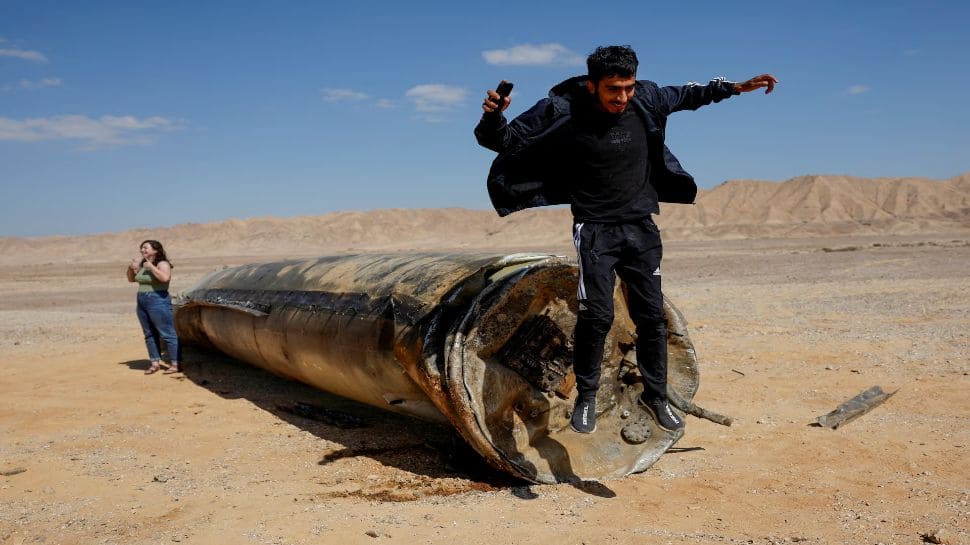
On the night of April 13, 2024, American pilots transformed into a crucial line of defense for Israel, thwarting a significant Iranian drone and missile offensive dubbed ‘Operation True Promise.’ This dramatic event followed an Israeli airstrike earlier that month on the Iranian embassy in Damascus, which resulted in the deaths of several senior Islamic Revolutionary Guard Corps (IRGC) officers, prompting Iran’s vow of retaliation.
While Iran portrayed the attack as a display of power, its military effectiveness was limited, with Israeli air defenses and crucial U.S. intervention neutralizing a substantial portion of the airborne threats. U.S. Central Command confirmed the destruction of over 80 Iranian drones and six ballistic missiles, underscoring the critical contribution of American airpower.
Details of this high-stakes operation are now emerging through the U.S. Air Force’s YouTube documentary, ‘Dangerous Game.’ This film offers an unflinching look at the challenges faced by F-15E Strike Eagle pilots, detailing the tactical complexities, psychological strain, and operational demands of the night.
The roots of the April confrontation can be traced to ongoing regional instability, intensified by the October 7th attacks by Hamas and subsequent actions by Hezbollah and the Houthis. The April 1st strike in Damascus, which eliminated IRGC commander Mohammad Reza Zahedi, was a direct catalyst for Iran’s response. Compounding the volatile situation was the January drone attack on ‘Tower 22’ in Jordan, which killed three U.S. soldiers, a tragedy that deeply motivated pilots. “After the Tower 22 attack, everything became personal,” stated Major Benjamin of the 494th Fighter Squadron. “The deaths of American soldiers were a huge shock. We knew we would be called to protect our comrades soon.”
Iran’s arsenal included the Shahid-136 drone, an inexpensive but effective weapon designed for mass deployment and radar evasion. Its low-altitude flight and speed made it a difficult target. Pilots innovated, using ground-based targeting systems to track the drones and minimizing communications to maintain focus. The phrase “Drone there” became a vital, repeated alert.
The documentary captures the sudden shift from a routine night watch to immediate combat readiness. Pilots were summoned to emergency duty, confronting an immediate and severe threat. F-15s scrambled, and the skies became a battleground. The activation of firing radar, signaled by ‘Focus Three,’ meant weapons were actively being deployed. Pilots recounted intense moments, including their first combat use of AIM-120 AMRAAM missiles and flying at dangerously low altitudes to engage targets. Initial attempts to destroy drones with laser-guided bombs were sometimes thwarted as the drones persisted.
As the drone threat receded, a new challenge emerged: incoming ballistic missiles. Pilots struggled to track the volleys, with some missiles being intercepted in mid-air and others finding their mark. A base-wide red alert was declared, initiating security protocols. The pace of operations during this crisis was extreme, with pilots performing rapid refueling, rearming, and aircraft checks in a fraction of the usual time. The return flight under threat and with dwindling fuel presented a final, perilous hurdle for these aviators.