

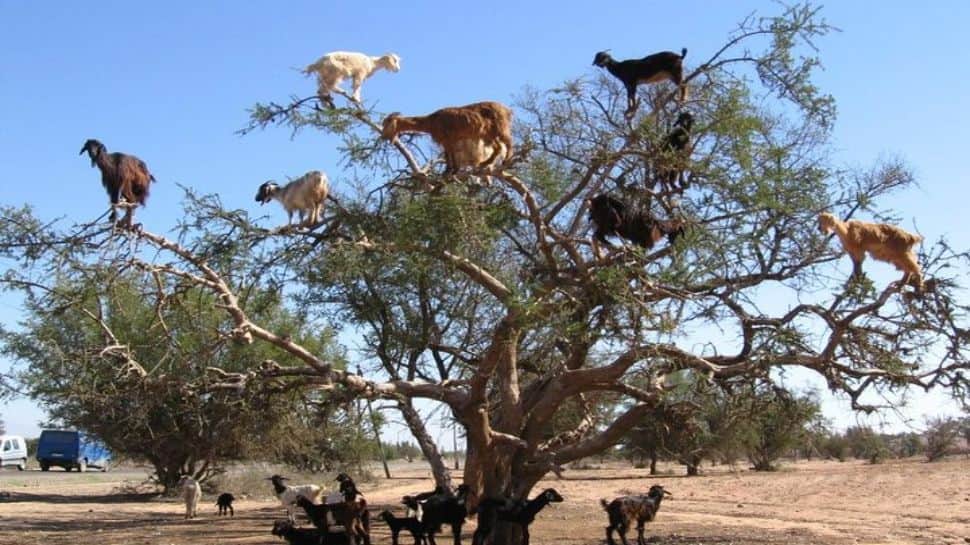
In the sun-drenched plains of Morocco, a truly unique spectacle unfolds daily: goats climbing trees. These nimble creatures have mastered the art of ascending argan trees, perching on slender branches to reach delicious fruits high above. Far from being a mere natural curiosity, this behavior is deeply rooted in survival and plays an unexpected yet vital role in preserving the rare argan forest.
The argan tree, endemic to Morocco’s Sous Valley, is the focus of this goat-driven phenomenon. Its branches are laden with small, olive-like fruits boasting a sweet and juicy pulp. During prolonged dry spells, when edible plants on the ground become scarce, the goats undertake their impressive climbs, reaching heights of up to ten meters. Their sure-footedness on the branches allows them to access this life-sustaining food.
Remarkably, the goats’ actions contribute to the very survival of the argan trees. Inside each argan fruit is a hard nut, containing the seed necessary for the tree’s reproduction. Since goats cannot digest these nuts, they either excrete them or drop them as they move through the trees. This dispersal mechanism provides the seeds with the opportunity to germinate and grow, fostering new generations of argan trees in the tough desert environment, positioning the goats as crucial ecological agents.
Moroccan farmers have long understood this natural cycle. After the goats have finished feeding and moved on, farmers collect the fallen nuts. These nuts are then meticulously processed to produce the world-famous argan oil, a staple in kitchens and beauty routines across the globe.