

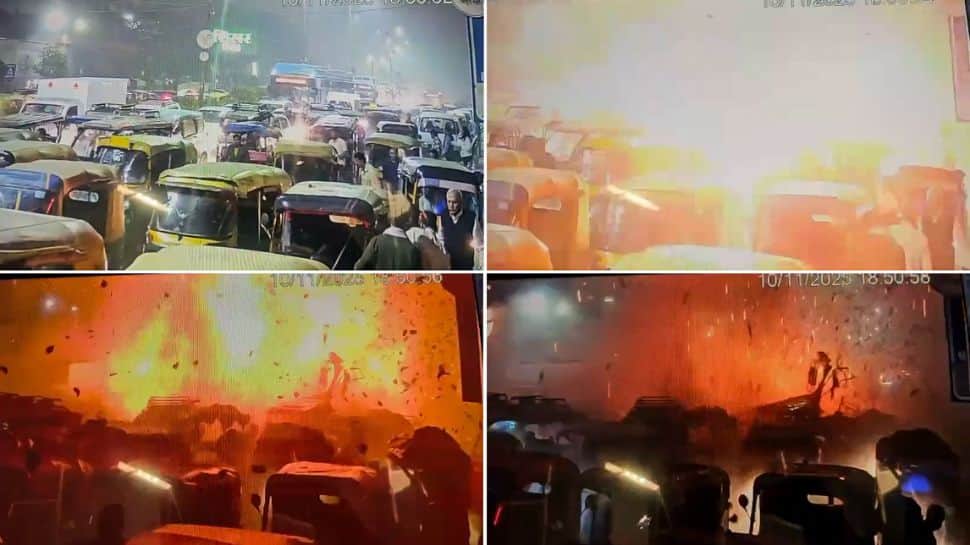
A catastrophic terror plot, potentially the deadliest in world history, has been thwarted in India, averting a disaster of unimaginable proportions. Intelligence agencies successfully dismantled a sophisticated operation poised to deploy 32 car bombs, each laden with approximately 100 kilograms of explosives, totaling a terrifying 3,200 kilograms. The coordinated blasts would have inflicted mass casualties and widespread devastation, far exceeding historical benchmarks for terror attacks.
The uncovered “white-collar” terror module demonstrated chilling precision and scale. The sheer volume of explosives stockpiled—3,200 kilograms of ammonium nitrate—was enough to level entire city blocks. Security officials were stunned by the planning involved, which utilized an array of vehicles as mobile bombs to strike simultaneously across the country. The potential impact of 32 such devices detonating concurrently paints a grim picture of the catastrophe India narrowly escaped.
Explosives experts have detailed the horrifying destructive power of the confiscated materials. A single 3,200-kilogram ammonium nitrate device is comparable to a 2.5-ton TNT explosion. Such a detonation would cause complete obliteration within a 50-meter radius. The resulting shockwaves, traveling at speeds exceeding 14,000 km/h, could instantly cause fatal internal injuries. In populated areas, this would translate to hundreds of immediate deaths, widespread structural collapse within 150 meters, shattered windows hundreds of meters away, and tremors felt nearly a kilometer from ground zero.
Historical parallels underscore the magnitude of this foiled threat. The Oklahoma City bombing, a devastating attack using 1,800 kilograms, resulted in 168 fatalities. The 1993 Mumbai bombings, with about 1,500 kilograms of explosives, killed 257 people. With 3,200 kilograms, the projected casualties could have easily surpassed 500 deaths and 2,800 injuries, establishing a grim new record for global terrorism.
However, the operation is not entirely complete. While a significant portion of the explosives, 2,900 kilograms, has been recovered, a concerning 300 kilograms are still missing. The search is also ongoing for 29 of the 32 planned vehicles. Only a Hyundai i20, an EcoSport, and a Brezza have been located. Identifying the remaining vehicles is crucial to fully dismantling the terror network and preventing any secondary threats.
This successful intervention highlights the critical role of intelligence and security agencies in safeguarding national security. India’s vigilance prevented a national crisis of unprecedented scale. The ongoing efforts to recover the remaining explosives and vehicles underscore the continuous battle against terrorism, demanding sustained alertness from all security apparatuses to preempt future attacks.