

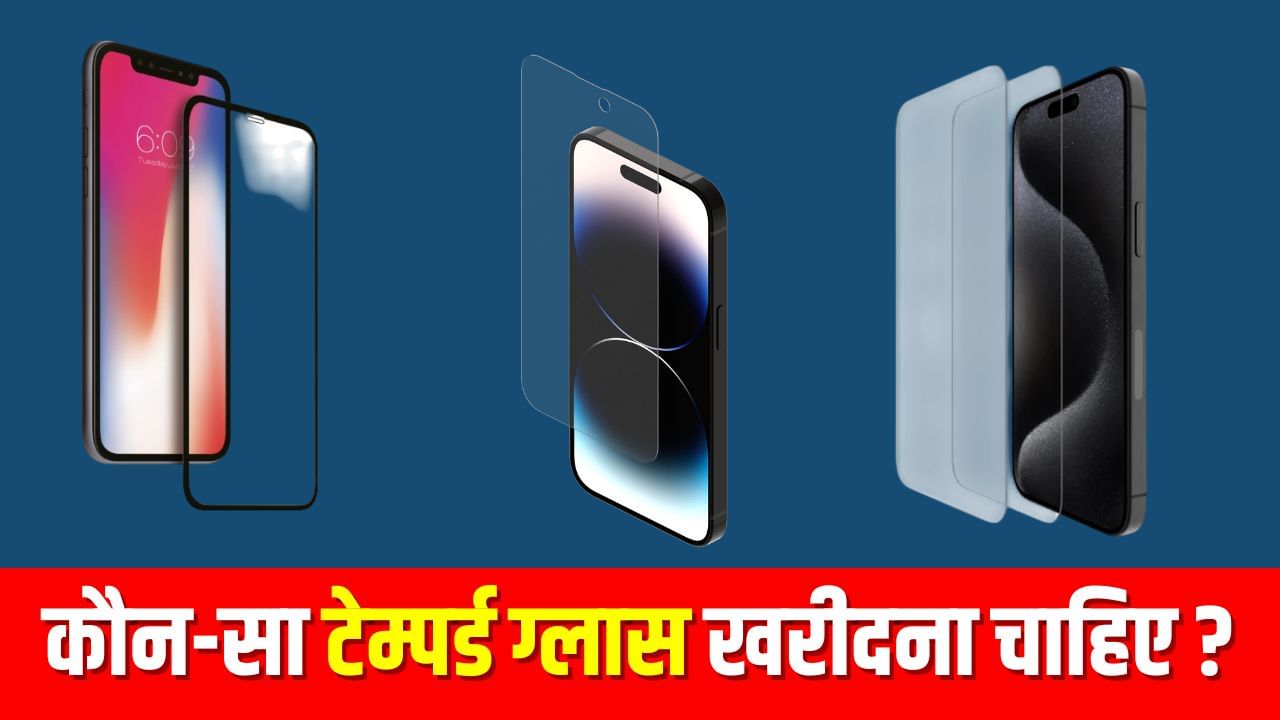
In today’s world, protecting your smartphone with tempered glass is a must. However, the variety available – 2D, 3D, 9H, and 11D – can be perplexing. Each tempered glass type has its own characteristics and levels of protection.
2D Tempered Glass: A Simple Solution
2D tempered glass is the most basic and budget-friendly option. It only covers the flat portion of the screen, leaving the edges unprotected. It is a good choice for phones with flat displays, but it isn’t as effective for those with curved screens, as it can easily detach and offers no edge protection.
3D Tempered Glass: Designed for Curved Screens
3D tempered glass is better suited for curved displays, as its edges are slightly curved. This design covers the edges of the screen, providing greater protection. It’s specifically made for smartphones with curved screens. It fits smoothly and gives a premium appearance.
11D Tempered Glass: Enhanced Protection
11D tempered glass is considered more advanced than 2D or 3D. However, terms like 4D, 5D, 9D or 11D are used to confuse customers and create a premium image. The perception that “D” relates to hardness, with more “D” indicating greater strength, has been exploited by companies through marketing tactics, offering glasses from 4D, 5D, 9D to 11D.
The reality is that the dimensional aspect only goes up to 3. The tempered glass marketed as 11D is actually 2.5D glass. The true measure of tempered glass strength is “H”, such as 9H hardness.
“9H” represents the hardness rating, indicating substantial protection against scratches and impacts. Everyday scratches from items like keys or coins generally don’t damage the screen.
Choosing the Right Tempered Glass
If your phone has a flat screen, 2D or 9H tempered glass is sufficient. For curved displays, 3D or 11D options are recommended. For those prioritizing durability and longevity, a slightly more expensive tempered glass may be a better choice. It doesn’t affect touch sensitivity and helps manage heat.