

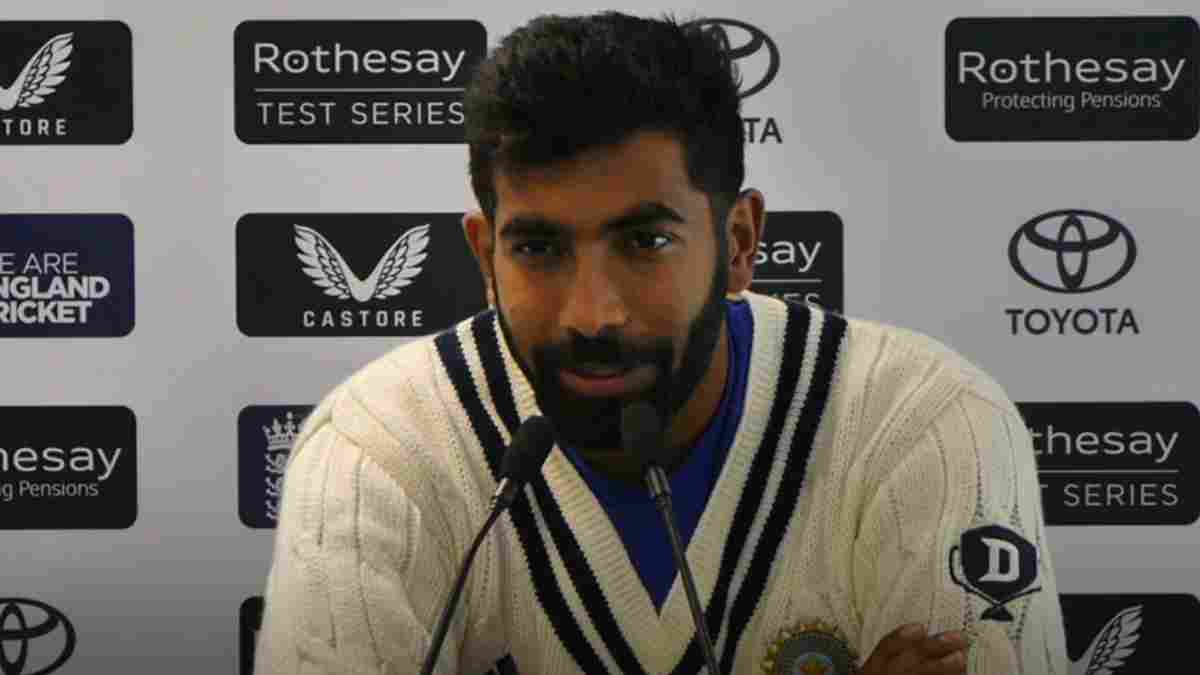
In the first Test against England, Jasprit Bumrah demonstrated his prowess, taking a five-wicket haul and dominating the English batsmen. His return to Test cricket followed a recovery period from an injury sustained during the Border-Gavaskar Trophy’s Sydney Test. The management of his workload involves playing only three Tests during the England tour.
During a press conference, Bumrah revealed that he doesn’t pay much attention to headlines, attributing their existence to viewership demands. He expressed his desire to represent India guided by his own convictions and approach to on-field situations.
“I can’t control what people write,” he mentioned. “Nor am I trying to teach people what to write and what not to write about me. Everybody is free to write what they want. I understand cricket is very popular in our country, and I understand that using my name in the headline boosts the viewership. But at the end of the day, it doesn’t matter to me. Because if I let it get into my head, I will start believing it. I need my beliefs and my ways to dictate how I go. Not the way others want me to play.”
“I always wanted to play for India. I played for India on my belief. I have played every format on my belief. I have always heard no from people. First they said you won’t be able to play, then they said you will last only six months, then they said you will last only eight months, and just like that I have spent 10 years in international cricket listening to all this. I have played the IPL for 12-13 years.”
“Even now people keep saying this injury will be it. Keep waiting, I will not think about that. I will keep doing my work. Every three-four months there will be headlines, but let’s see, I will play till it is in my destiny. I prepare my best, and leave the rest to god. Whatever barkat [abundance or good fortune] god has given me, I try to carry it forward, and try to take Indian cricket forward.”
On his in-match mindset, Bumrah stated, “You are there in the ground at that moment. You have to do a job. So at that moment I’m trying to assess the wicket. I’m trying to assess what is happening, what are my options, how is the wicket behaving, who’s the batter there, what is he thinking, how do I outsmart him or what do I do? I look at all of those things at that moment. I was not thinking about what will happen or how many games I will play. At this moment, focusing on the Test match. When the match is over, think about all these permutations and combinations.”