

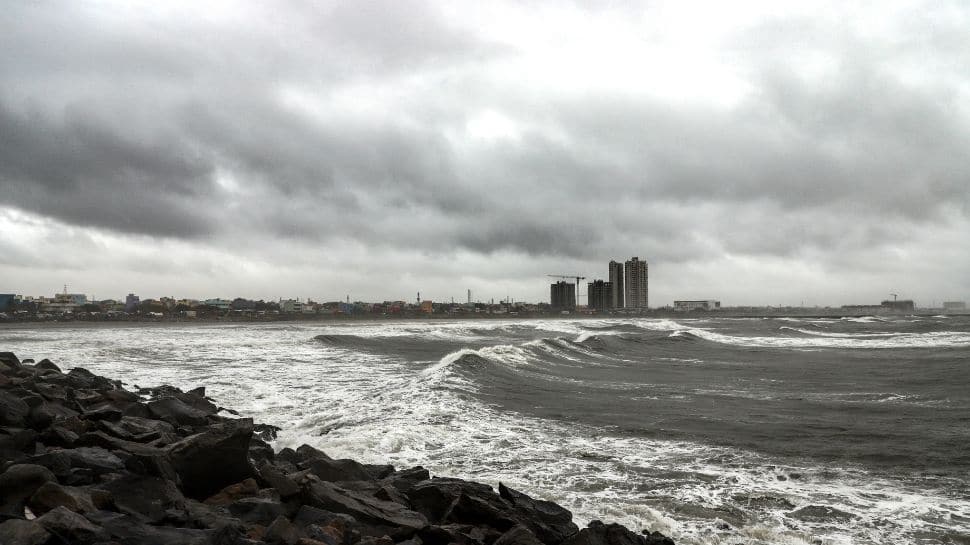
A formidable Cyclone Ditwah has rapidly developed in the Southwest Bay of Bengal, leading the India Meteorological Department (IMD) to issue critical advisories for coastal regions of Tamil Nadu, Puducherry, and South Andhra Pradesh. The storm’s formation on November 26, 2025, was preceded by a low-pressure area, which quickly transformed into a cyclonic storm due to a confluence of conducive meteorological factors.
Key drivers behind Ditwah’s swift intensification include elevated sea surface temperatures, approximately 28°C to 30°C, which supplied abundant heat energy. A supportive atmospheric environment, characterized by low vertical wind shear (10–15 knots), allowed for unimpeded cloud development. The influx of moist air from monsoonal winds further fueled its growth, enabling it to evolve from a depression to a cyclonic storm within 24 to 36 hours.
The unique name ‘Ditwah’ originates from Yemen and refers to the Detwah Lagoon, a significant natural landmark in Yemen’s Socotra Islands. This naming convention follows a systematic process managed by the WMO-ESCAP, where participating countries contribute names in rotation.
The most severe consequences of Cyclone Ditwah have been felt in Sri Lanka. The island nation has tragically recorded at least 410 fatalities and 336 disappearances. The eastern coast and the Kandy region have been particularly hard-hit by torrential rains, severe flooding, and landslides. Efforts are underway to rescue those affected, clear infrastructure, and restore power and communication lines. India has responded with substantial humanitarian assistance and relief materials, underscoring its commitment to regional disaster response.