

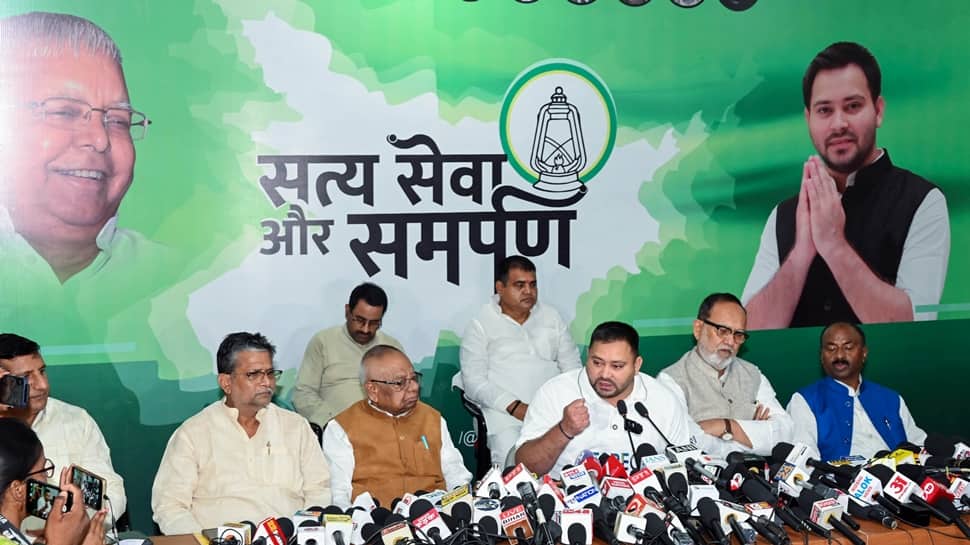
The upcoming Bihar assembly elections are buzzing with a groundbreaking promise from RJD leader Tejashwi Yadav: ensuring a government job for every family in Bihar that currently has no member in state service. This ambitious electoral strategy, presented as the ’20-20 formula’—promising legislation in 20 days and job delivery in 20 months—aims to tackle widespread unemployment and has positioned itself as a central theme of the Mahagathbandhan’s campaign.
Analyzing the numbers behind this pledge reveals immense challenges. Bihar has about 2.76 crore families, and with roughly 18 lakh individuals already in government jobs, an estimated 2.58 crore families would be eligible for this scheme. This necessitates the creation of over 2.5 crore new government positions. However, current official vacancies across Bihar’s departments are reported to be around 5 lakh, highlighting a vast deficit. The financial burden would be immense. A monthly salary of Rs 25,000 for 2.58 crore employees would result in an annual salary expenditure of approximately Rs 7.7 lakh crore. This figure dwarfs Bihar’s entire state budget of Rs 3.17 lakh crore, raising serious concerns about fiscal sustainability and the potential for economic collapse.
While some political figures have labeled the promise as unattainable, likening it to impossible feats, Yadav maintains it is backed by research. The appeal of government jobs in Bihar, often seen as a gateway to social prestige, stability, and financial security, is undeniable, especially among the youth. This makes Yadav’s pledge a potentially potent political tool. It could effectively dominate electoral discourse and sway younger demographics. The state government has countered by emphasizing its own job creation record. Nevertheless, the ‘one job per family’ pledge, while politically impactful, faces formidable questions regarding its practical implementation and economic viability.