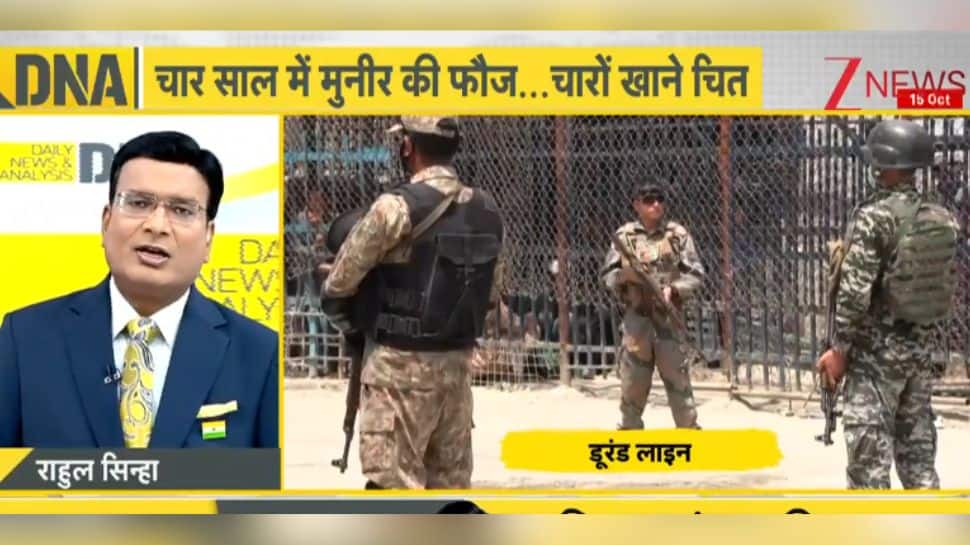
New fighting along the Afghanistan-Pakistan border has brought Pakistan’s military shortcomings into sharp focus, despite its substantial superiority in troop numbers and weaponry. Incidents at the Spin Boldak and Chaman border points led to significant loss of life and injuries. The Taliban has publicly denounced Pakistan’s actions, warning that continued aggression against civilians could lead to the rejection of the Durand Line, the internationally recognized border. Videos circulating online show Taliban fighters showcasing captured Pakistani military equipment and uniforms, a deeply embarrassing development for Pakistan’s defense establishment. While Pakistan commands a force of over a million soldiers, supported by a large arsenal of tanks and aircraft, compared to the Taliban’s estimated 110,000 fighters, the Afghan militia has managed to push back Pakistani troops on multiple occasions. Reports suggest that Army Chief Asim Munir is deeply concerned, having convened emergency discussions to understand why Taliban assaults were not foreseen. The presence and actions of the Tehrik-e-Taliban Pakistan (TTP), which has intensified its attacks and killed dozens of Pakistani soldiers recently, further complicate the security landscape. The Afghan Taliban regime has exhibited clear solidarity with the TTP, adding another layer of difficulty for Pakistan. The specter of Baloch insurgents potentially aligning with the Taliban, using porous border regions for their activities, looms large, threatening to escalate instability. This turn of events is particularly galling for Pakistan, as the Taliban, once viewed as a strategic asset, now poses a direct challenge to its sovereignty and regional standing.