

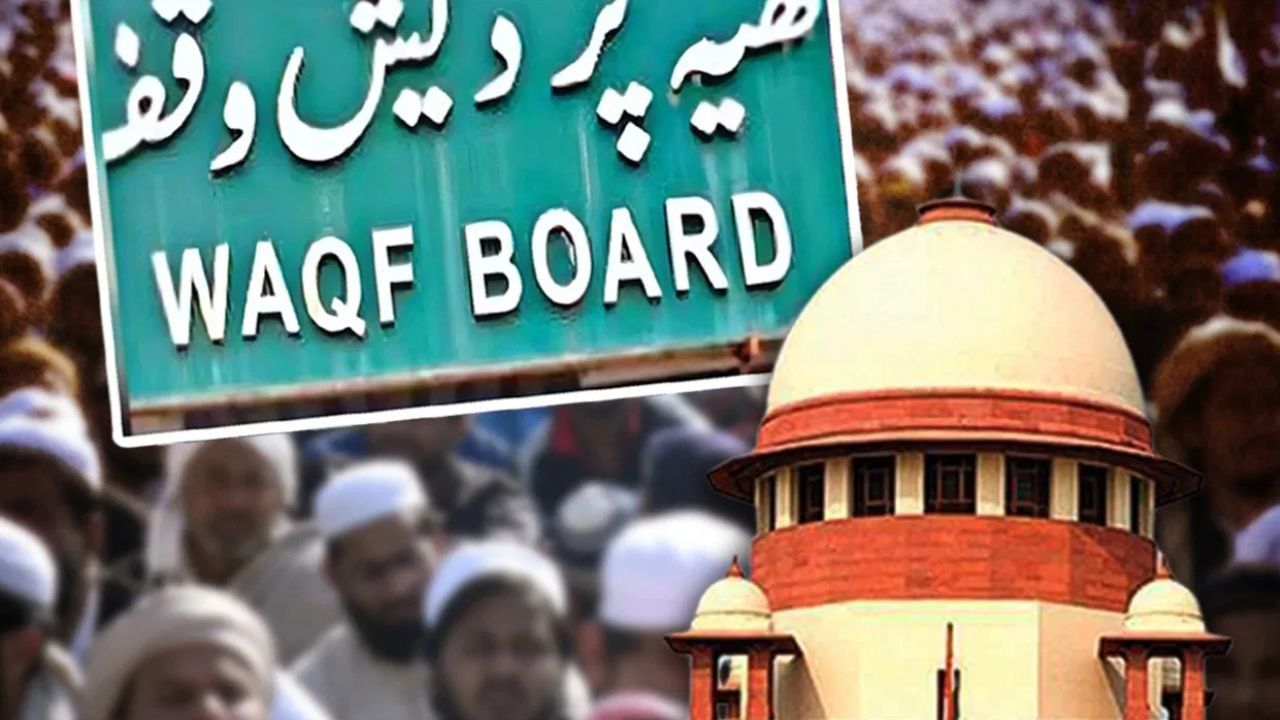
The Supreme Court is set to issue an interim order today, Monday, concerning the Waqf (Amendment) Act, 2025. The order will address challenges to the Act’s validity and focus on three primary issues. The core of the dispute centers on the power to remove properties from the Waqf, especially those designated as Waqf through court rulings, usage, or documentation.
The Supreme Court reserved its interim decision on May 22, following three days of arguments. A bench led by Chief Justice B.R. Gavai heard from both the petitioners and Solicitor General Tushar Mehta, representing the central government. The ruling follows.
Petitioners claim the amended law grants excessive power to remove properties from the Waqf. They also contest the structure of the State Waqf Board and the Central Waqf Council, arguing that membership should be restricted to Muslims, except for ex-officio positions.
A further point of contention relates to the District Collector’s power to reclassify properties. If the Collector determines that a Waqf property is, in fact, government land, the property would lose its Waqf status under the new law. Petitioners object to this clause.
The government maintains the Waqf is a secular concept, and the amended law should be seen as constitutional. Although rooted in Islamic tradition, the government claims the Waqf isn’t an essential aspect of religion, and shouldn’t be seen as a religious right.
Senior Advocate Kapil Sibal, representing the petitioners, stated the law goes against historical and constitutional principles. He claimed the Act intends to seize Waqf through non-judicial channels. The Ministry of Minority Affairs filed a 1,332-page affidavit on April 25, opposing a complete stay on the law.
The Waqf (Amendment) Act, 2025 was officially announced on April 8, after receiving presidential assent on April 5. The Lok Sabha and Rajya Sabha approved the Act on April 3 and April 4. Petitions were filed in the Supreme Court immediately following its passage through Parliament.
The Supreme Court bench heard arguments from lawyers opposing the amended law and the Solicitor General Tushar Mehta for three days before reserving its interim order.
Syed Qasim Rasool Ilyas, spokesperson for the AIMPLB, expressed optimism about the court’s interim ruling, hoping for relief on issues such as ‘Waqf by user’ and the appointment of non-Muslims to the Waqf Council. Stays have been requested for the Law of Limitation and for the UMEED portal. He hopes the Court will provide relief.