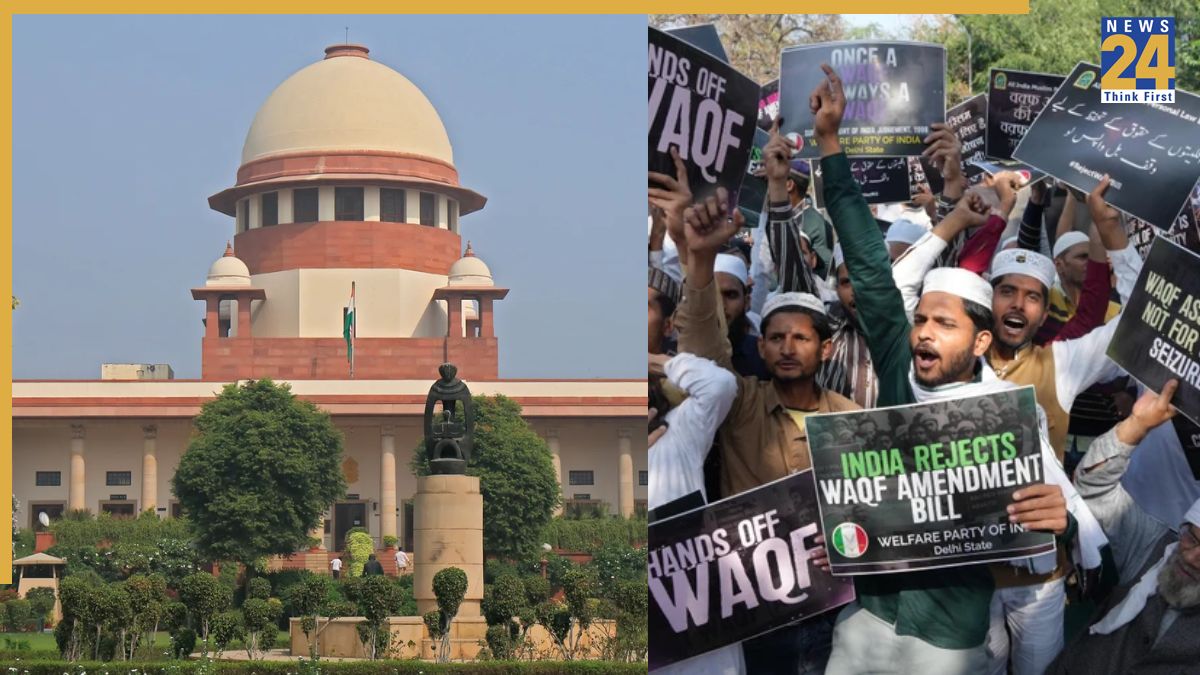
In a recent ruling, the Supreme Court partially stayed the Waqf Amendment Act, focusing on specific contentious clauses. The court halted the enforcement of the provision mandating a five-year practice of Islam to establish a Waqf. The court also restricted the number of non-Muslim members on the Waqf board, allowing no more than three individual members, with a total of four non-Muslims. The court clarified that the provision restricting who can create a Waqf will be on hold until the rules are framed to determine whether someone is a practitioner of Islam. The court also stayed the provision within the Waqf Act that authorized a Collector to decide if a property declared as Waqf is government property and issue orders. Chief Justice of India Justice BR Gavai emphasized that Collectors cannot be given the power to adjudicate on the rights of individuals, as this would violate the principle of separation of powers. Anas Tanweer, the advocate who initiated the challenge to the Waqf Act, commented that the Supreme Court found a preliminary case to halt some sections. The court has not stayed the entire Act, but several provisions have been suspended, like the five-year requirement, since there is no definitive procedure for determining compliance. Imran Pratapgarhi, a Congress MP, described the decision as positive, as it limits potential government overreach and addresses donor concerns. The Waqf (Amendment) Bill, 2025, was approved by President Droupadi Murmu on April 5, after being debated in Parliament. The Central government previously urged the court not to stay any part of the Act, stating that constitutional courts typically issue final decisions. The government stated that the amendments only concerned the secular administration of properties and did not affect religious liberties. Solicitor General Tushar Mehta, speaking for the Centre, mentioned that only the 2013 amendment offered non-Muslims such rights, while the 1923 law did not allow them to create Waqfs due to concerns about potential misuse.
Supreme Court Partially Suspends Waqf Amendment Act, Addressing Muslim Practice and Non-Muslim Board Membership