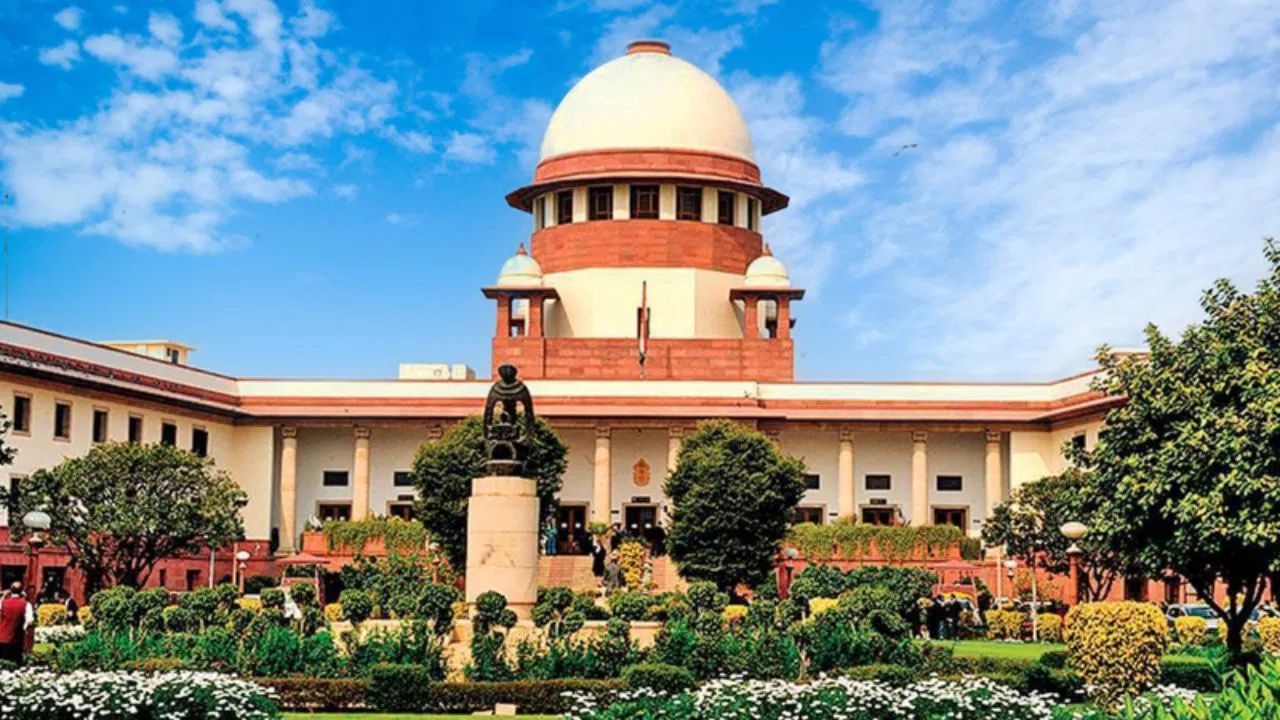
The Supreme Court has dismissed the National Commission for Protection of Child Rights (NCPCR)’s plea against the Punjab and Haryana High Court’s decision allowing the marriage of a 16-year-old Muslim girl. The court strongly criticized the NCPCR for its intervention, stating that the commission had no grounds to file the petition. The High Court’s original judgment, issued in 2022, had determined that a 16-year-old Muslim girl could legally marry a Muslim man and provided protection to the couple from potential threats. The Supreme Court bench, comprising Justices B.V. Nagarathna and R. Mahadevan, dismissed the Special Leave Petition filed by NCPCR. The court expressed its surprise at NCPCR’s decision to challenge the High Court’s ruling, especially considering the High Court had aimed to protect two minors. During a previous hearing, the Solicitor General highlighted the differing views among various High Courts on the matter. The CJI acknowledged the issue and assured a swift resolution. The court had previously considered that in Islam, nikah is permissible after sexual maturity, therefore, the POCSO Act and abduction charges were not applicable. The NCPCR’s challenge stemmed from the argument that the POCSO Act sets the age for physical relationships at 18. The High Court, however, did not agree with this view, as it did not prohibit the marriage of a 16-year-old. The High Court also stated that determining the girl’s age was the task of the trial court, and no relief was granted to the petitioner. In 2024, the minor provided statements before a magistrate, stating that she did not wish to live with her parents, leading to her placement in a children’s home. The petitioner stated that an ossification test conducted in January revealed the girl to be an adult. Haryana’s government presented school records showing the girl’s birth in March 2008, making her 15 years and 9 months old. The petitioner affirmed that the marriage was performed with the victim’s consent.
Supreme Court Dismisses NCPCR Plea Against Marriage of 16-Year-Old Muslim Girl
 By The Chhattisgarh2 Mins Read