

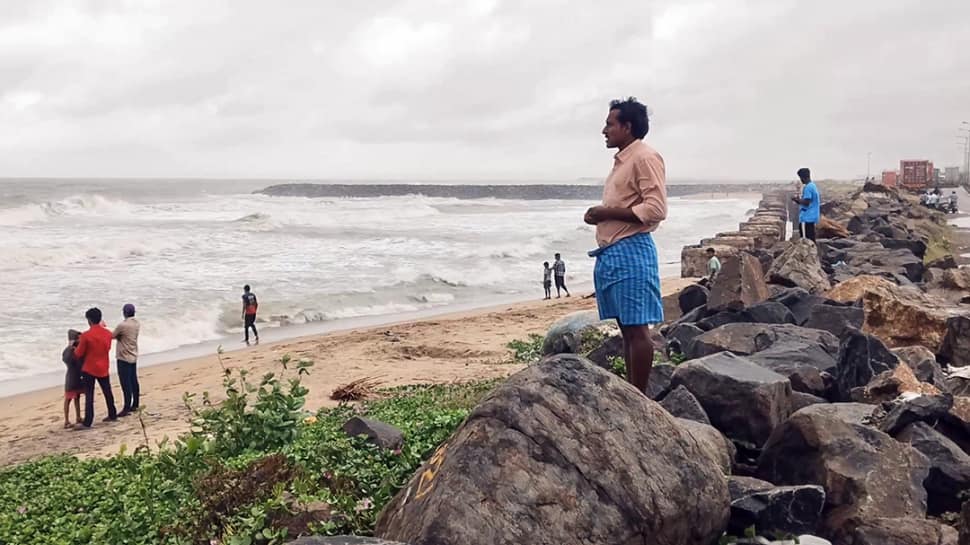
The devastating impact of Cyclone Ditwah is starkly evident in Sri Lanka, where the death toll has climbed to an alarming 334, with 370 individuals still reported missing. The cyclone, which initially posed a threat to parts of India, has significantly weakened into a deep depression over the Southwest Bay of Bengal. This shift in intensity has eased concerns for heavy rainfall in northern Tamil Nadu.
Sri Lanka is grappling with what its President, Anura Kumara Dissanayake, has termed the country’s most severe natural disaster. The government has committed to providing comprehensive state assistance for rehabilitation. A State of Public Emergency has been enacted, strictly for disaster relief operations, ensuring civil liberties remain unaffected. Efforts are actively underway to restore essential infrastructure, including power, water, and communication lines that have been critically damaged in numerous regions.
Rescue and relief operations are being bolstered by Indian teams working in collaboration with Sri Lankan authorities, including the Air Force, Navy, Army, and police. Evacuations and aid distribution are ongoing across the island. Despite these efforts, communication difficulties are hampering coordination in the most affected areas.
In India, while Chennai schools remain open, Puducherry has declared a holiday for all aided and private schools on Monday, December 1st. Schools in select districts of Andhra Pradesh, specifically Nellore and Annamayya, will also be closed. The weather system, now a deep depression, is tracking parallel to the Tamil Nadu coast and is forecast to dissipate further into a low-pressure area. Light to moderate rain and thunderstorms are anticipated across Tamil Nadu and Puducherry, with Chennai expecting cloudy conditions and scattered showers.