

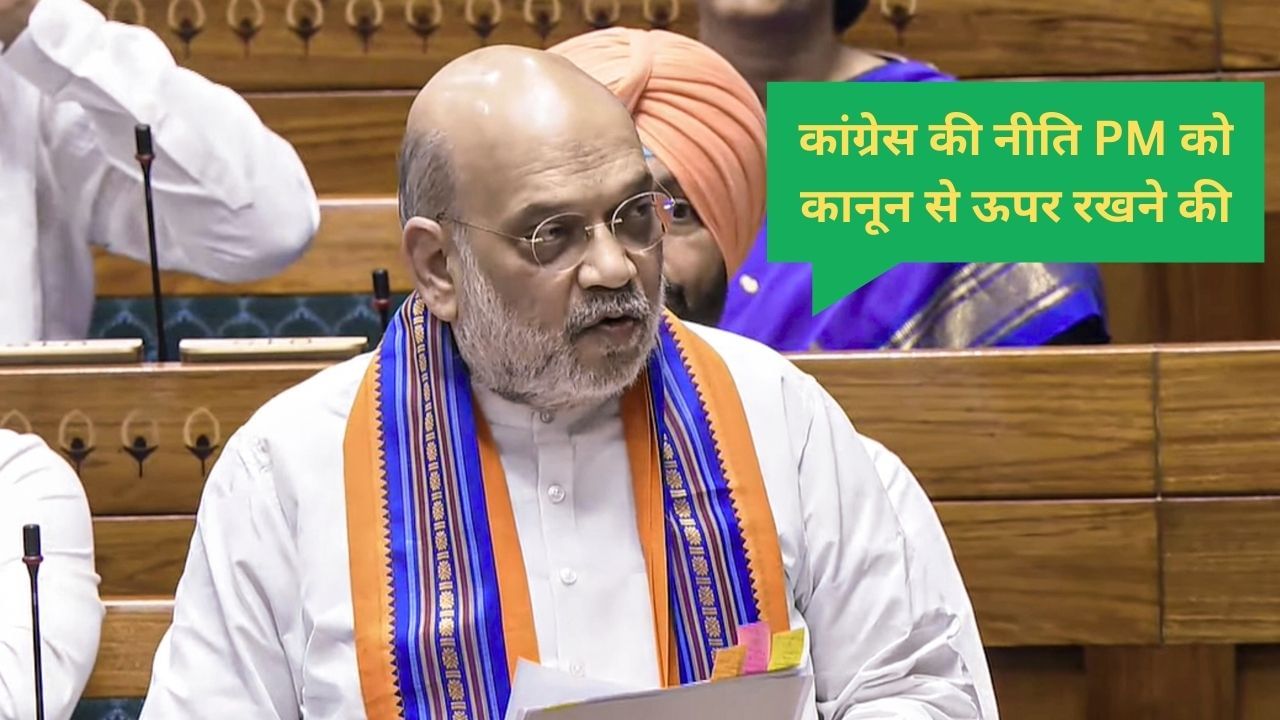
Amit Shah, the Union Home Minister, has accused the opposition of displaying a double standard regarding the 130th Amendment Bill, which seeks to ensure that individuals in jail cannot hold high constitutional offices. He drew a contrast between the Congress party’s alleged historical practice of protecting Prime Ministers from legal scrutiny and the BJP’s commitment to holding all leaders, including the Prime Minister, accountable under the law.
Shah stated that the opposition’s stance reveals a desire to circumvent legal processes and remain in power, even from behind bars. He referenced the past actions of Indira Gandhi, who had amended the constitution to protect herself from legal actions. Shah presented the amendment bills in the Lok Sabha. These bills propose that individuals arrested and imprisoned cannot serve as Prime Minister, Chief Minister, or a minister at the central or state level. The bills address the concern of leaders continuing in their positions even after being arrested, which was not anticipated by the constitution’s framers. The legislation also stipulates that if a leader is arrested, they must secure bail within 30 days, or they will be removed from office. Reinstatement is possible if bail is later granted.
Shah highlighted that Prime Minister Modi is aiming to be subject to the law through this amendment while the Congress-led opposition is opposing it to avoid legal accountability. He recalled the 39th Constitutional Amendment by Indira Gandhi, which provided special privileges to the Prime Minister. Addressing personal remarks, Shah clarified his own resignation prior to arrest in a case later dismissed as politically motivated. He asserted that he only held a constitutional position after being fully acquitted by the court.
He underscored that the BJP and the NDA have always supported ethical values, mentioning LK Advani’s resignation following allegations. Shah criticized the Congress for continuing what he viewed as unethical practices. He noted that even though the bill was proposed for detailed discussion in a joint parliamentary committee, the opposition’s resistance exposes their true intentions to the public.