

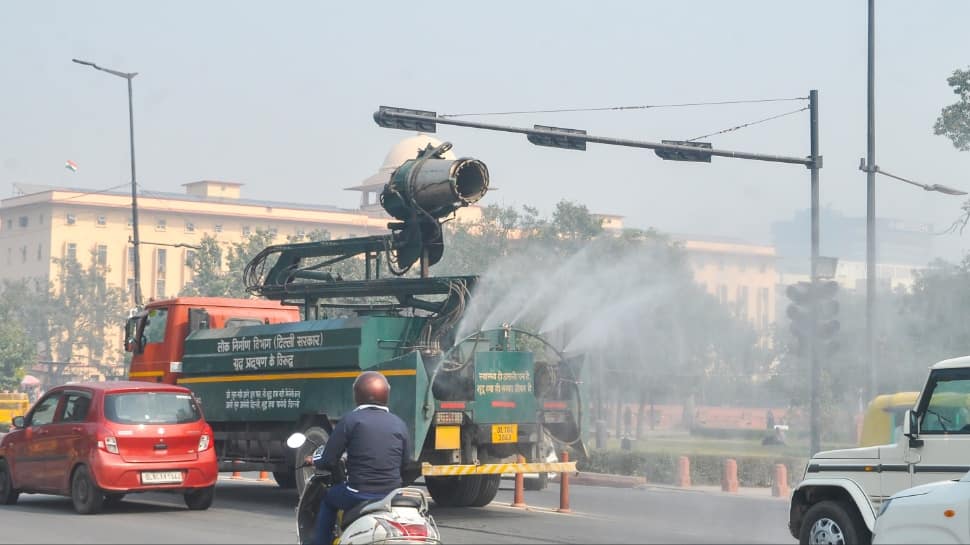
For the second day in a row, Delhi’s air quality remains in the ‘Severe’ category, registering an AQI of 418 on Wednesday. This level of pollution, only slightly better than Tuesday’s 428, makes Delhi the most polluted city nationally, alongside Jind in Haryana. In response to this escalating crisis, the Commission for Air Quality Management (CAQM) has implemented stricter measures under Stage III of the Graded Response Action Plan (GRAP).
The dominant factor contributing to the toxic haze is stubble burning in neighboring agricultural areas. On Wednesday, the share of farm fires in Delhi’s PM2.5 pollution reached its peak for the season at 22.5%. This elevated contribution significantly impacted the air quality, overshadowing pollution from local sources such as vehicle exhaust.
The trend of increasing stubble burning influence has been noticeable, climbing from 13.7% on Monday to 15.5% on Tuesday, culminating in Wednesday’s high. Meteorologists point to adverse weather patterns, including stagnant air, low temperatures, and a shallow boundary layer, which are trapping the pollutants near the surface. The air quality across the National Capital Region (NCR) is also critical, with Noida (408) and Rohtak (406) also reporting ‘Severe’ AQI.
Data from the Central Pollution Control Board’s (CPCB) Sameer app indicates that 32 out of 39 monitoring stations recorded ‘Severe’ air quality. Areas like Wazirpur, Chandni Chowk, and Bawana have AQI levels above 450, classifying them as ‘Severe-Plus’. The Air Quality Early Warning System (EWS) anticipates the AQI to remain in the ‘Very Poor’ category from Thursday through Saturday, offering minimal respite.