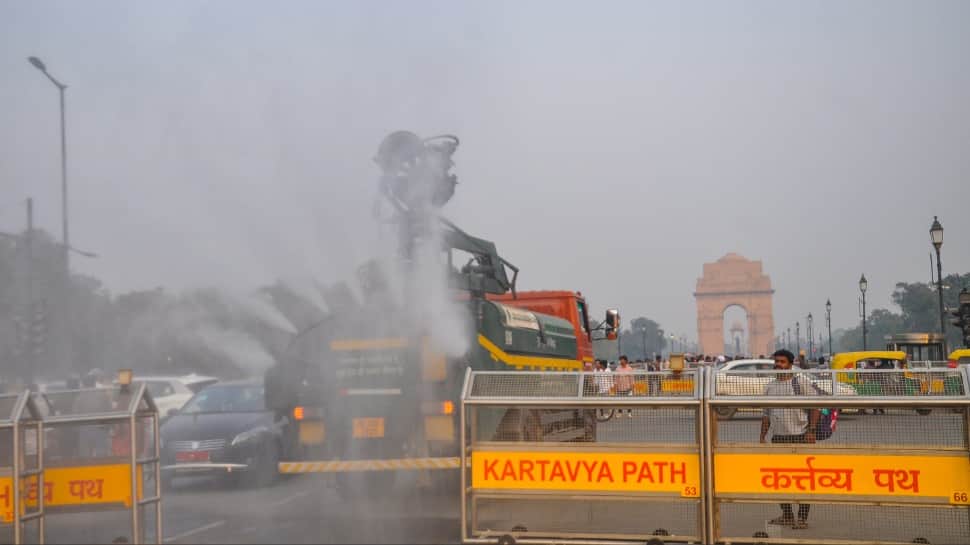
A dense smog enveloped Delhi on Saturday morning, plunging the city’s air quality into the ‘Severe’ category for many localities, even as authorities enforce Graded Response Action Plan (GRAP) Stage III measures. The Central Pollution Control Board reported Delhi’s overall AQI at 389, a precarious level just shy of the 401 mark indicative of severe conditions. This persistent pollution poses a grave health risk to all residents. The situation is particularly dire in hotspots like Wazirpur, which recorded an alarming AQI of 450. Other areas experiencing ‘Severe’ to ‘Very Poor’ air quality include Bawana (443), Rohini (426), Anand Vihar (426), Mundka (425), Jahangirpuri (423), Vivek Vihar (420), Chandani Chowk (420), Narela (419), and ITO (419). The ongoing accumulation of pollutants is attributed to a combination of factors, including transport emissions and stubble burning, which contributed 19.8% and 8.5% respectively to Friday’s pollution load. Judicial intervention, with the Supreme Court seeking reports from Punjab and Haryana on stubble burning mitigation efforts, highlights the regional nature of the crisis. Adverse meteorological conditions, characterized by sluggish wind speeds and dropping temperatures, are hindering the dispersion of airborne pollutants, trapping them close to the surface and intensifying the smog. With forecasts predicting even lower wind speeds, the elevated pollution levels are expected to persist.