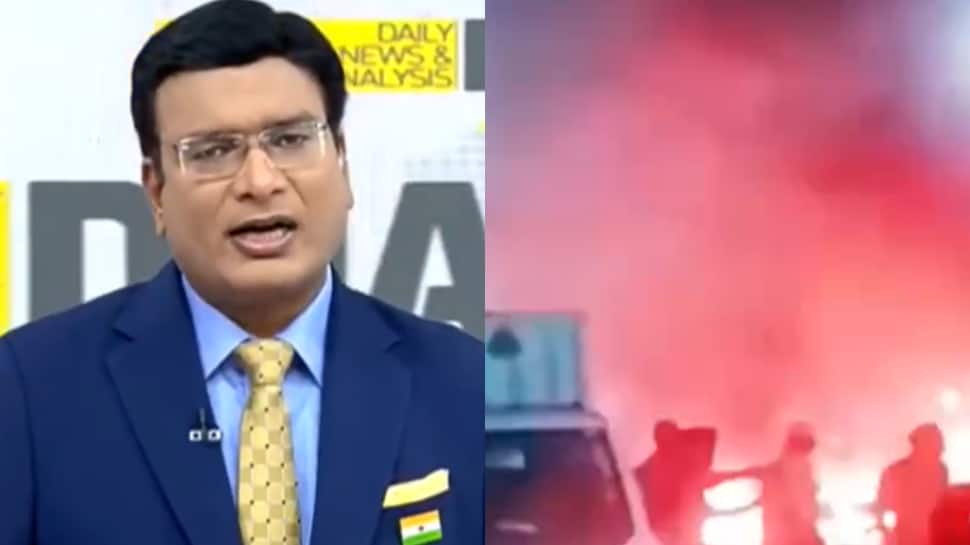
An explosion near the Red Fort metro station in Delhi has killed at least eight people and injured many more, igniting a high-level investigation into the incident. The National Investigation Agency (NIA) is now spearheading the probe, with the Home Minister urging a swift report. The nature of the blast has raised significant questions about evolving terror methodologies and possible foreign involvement, particularly from Pakistan. Key observations that deviate from typical explosions include the lack of a crater, a horizontal blast wave, intense fire, and a partially burnt vehicle. Experts suggest these characteristics are consistent with the use of ANFO (Ammonium Nitrate Fuel Oil), an explosive requiring sophisticated handling. This type of explosive has been historically linked to groups such as the LTTE, Afghan Taliban, and ISKP, an organization active in Pakistan. With the LTTE being inactive and the Afghan Taliban’s focus shifting, ISKP has emerged as a key suspect. Significant intelligence has emerged suggesting a deep connection between Pakistan’s ISI and ISKP. There are allegations that Pakistan’s military and ISI have been using ISKP’s knowledge of explosives, possibly in conjunction with groups like Jaish-e-Mohammed and Lashkar-e-Taiba. The arrest of highly educated doctors, a pattern seen in ISKP’s recruitment strategies, further strengthens this suspicion. Comparisons to the 2019 Sri Lanka bombings, which also featured educated perpetrators and fertilizer-based explosives, highlight a disturbing potential link to the same terror network. Recent intelligence from Pakistan indicates increased activity, including clandestine meetings involving the Pakistan Army, ISI, and various terror organizations in Pakistan-occupied Kashmir. The possibility that the Red Fort attack was conceived in these reactivated terror camps is a serious concern. The presence of Dr. Umar Nabi at the site for hours before the blast is also being investigated as a potential indicator of remote direction from across the border. The recent crackdown on terror modules in Faridabad and Jammu and Kashmir, leading to the arrest of several radicalized doctors, may have prompted an urgent and perhaps unplanned execution of the attack by Dr. Nabi.
Red Fort Metro Blast: Investigating Pakistan’s Role & New Terror Tactics
 By The Chhattisgarh2 Mins Read