

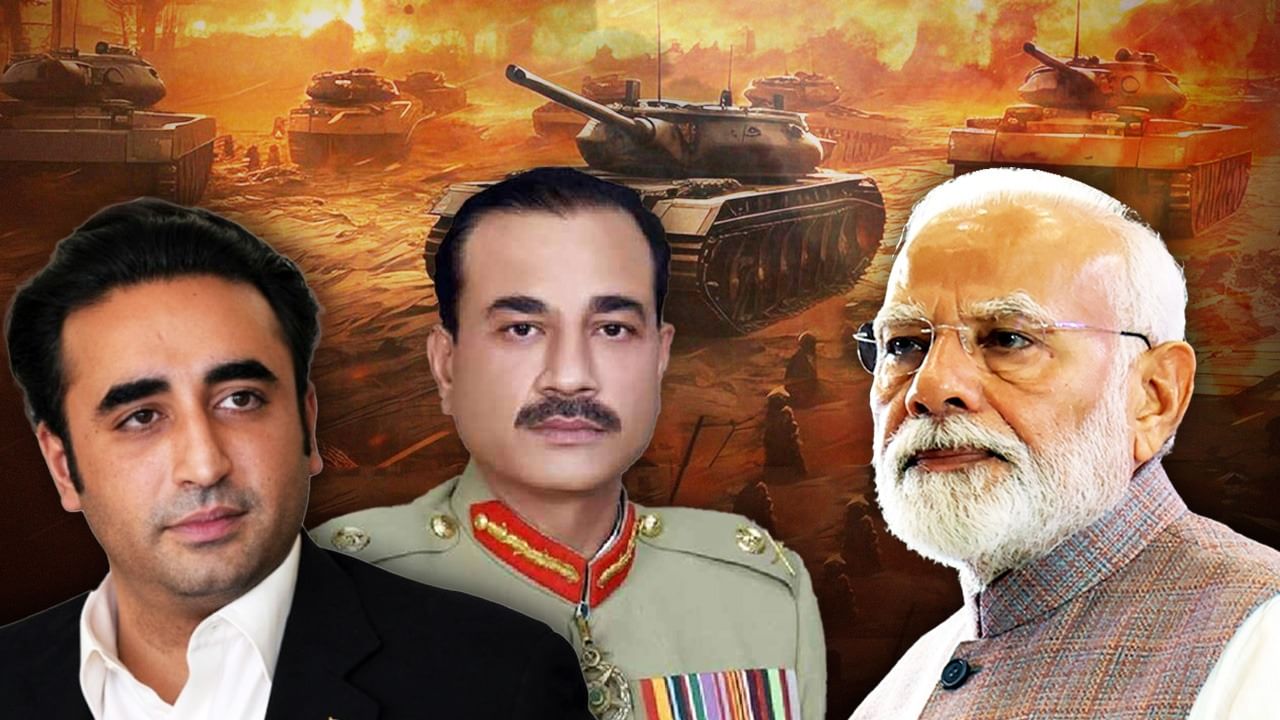
India’s decision to suspend the Indus Waters Treaty following the terrorist attack in Pahalgam, Jammu and Kashmir, has triggered a strong reaction from Pakistan. Pakistani leaders are expressing concern that this move could have dire consequences, potentially leading to economic collapse and famine. Pakistan is not only appealing to the international community but also issuing warnings that include military action.
India maintains its stance that water and conflict cannot coexist. It has disregarded Pakistan’s warnings and has cautioned that the ongoing ‘Operation Sindoor’ will continue. This situation has ignited speculation about a potential conflict between the two nations over the Indus Waters Treaty. This report analyzes the threats made by Pakistani authorities and outlines India’s strategic plans.
Pakistan’s Foreign Minister Bilawal Bhutto Zardari has threatened war if India suspends the treaty or builds dams. He views Prime Minister Narendra Modi’s announcement of water projects on the Indus River as a strategy to restrict Pakistan’s water supply. Zardari has been actively raising the issue of India’s water policies during his international visits.
Bhutto has emphasized the readiness of the people of Sindh to defend the Indus River and has warned that Pakistan has the capability to counter Modi in a war. He has also warned India that Pakistan might reclaim control over its six rivers if another war erupts. This isn’t Bhutto’s first time commenting on the Indus Waters Treaty.
In June, Bhutto stated that Pakistan would initiate war if India denied Pakistan its water share under the Indus Waters Treaty. He condemned India’s decision to suspend the agreement in a parliamentary speech and threatened to deprive India of its water supply.
Pakistani Army Chief Asim Munir, speaking to Pakistani immigrants in Tampa, Florida, stated that Pakistan would destroy Indian infrastructure if India interfered with the water flow. He highlighted Pakistan’s nuclear capability and implied a willingness to respond forcefully. He noted that the suspension of the Indus Waters Treaty puts 250 million people at risk of starvation and warned that Pakistan is prepared to target any Indian dams.
Prime Minister Modi discussed ‘Operation Sindoor’ in the Lok Sabha on July 29th, providing specifics on the government’s actions following the terrorist act in Pahalgam. Modi declared that his administration had ended the one-sided trade of terrorism and false hope, revoking Pakistan’s MFN status, enforcing visa restrictions, and closing the Attari-Wagah border.
Referring to the Indus Waters Treaty, Modi mentioned that the agreement, signed by a former Prime Minister, involved rivers historically significant to India. These rivers, originating in India, are essential to the citizens, especially farmers in Punjab and Jammu and Kashmir. The government has decided to temporarily suspend the Indus Waters Treaty, prioritizing national interests, and asserting that blood and water should not mix.
India is implementing plans to enhance its water extraction from the Indus River system. The primary focus is on the Chenab, Jhelum, and Indus rivers, which primarily supply water to Pakistan. A key part of this plan is to extend the Ranbir Canal on the Chenab River, a project from the 19th century. Currently 60 kilometers long, the government aims to extend it to 120 kilometers, increasing its water diversion capacity significantly.
In addition, India is considering more irrigation and hydropower projects that could reduce water availability downstream. Reports also suggest that a proposal to redirect water from the Indus, Jhelum, and Chenab rivers to northern Indian states is under review, further restricting water flow to Pakistan. These projects include the construction of dams with vast water storage capabilities.
The Indus Waters Treaty was agreed upon by then Indian Prime Minister Jawaharlal Nehru and then Pakistani President Ayub Khan. The World Bank facilitated the treaty in 1960, allocating water from six rivers between India and Pakistan. India controls the eastern rivers (Sutlej, Beas, and Ravi), while Pakistan controls the western rivers (Indus, Chenab, and Jhelum). The treaty allows India to use the western rivers for irrigation and hydropower projects but limits its actions to avoid impacting the water flow to Pakistan.