

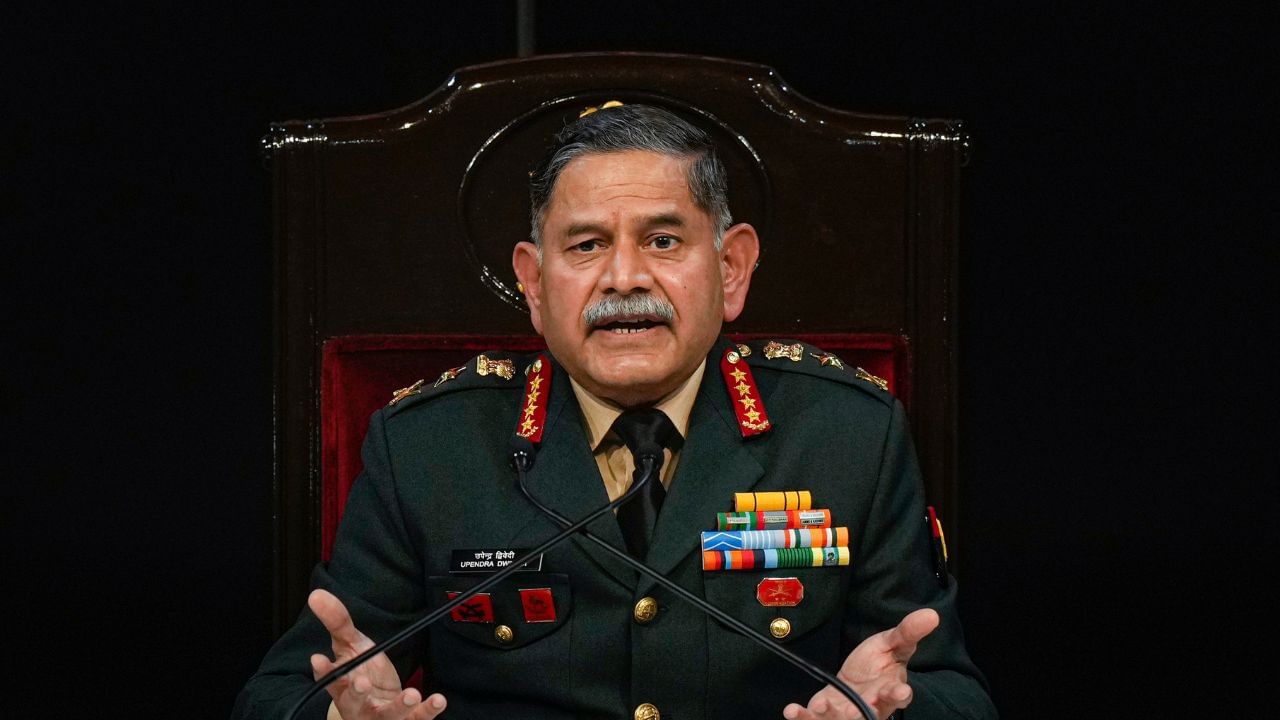
In the aftermath of a terrorist assault in Jammu and Kashmir’s Pahalgam region, India initiated Operation Sindoor, a strategic maneuver that resulted in significant gains against Pakistan. Army Chief General Upendra Dwivedi has characterized this operation as a complex chess game, emphasizing the strategic depth involved in its execution. Dwivedi described Operation Sindoor as a ‘grey zone’ mission, indicating its unique nature.
General Dwivedi stated that Operation Sindoor stood apart from other military undertakings due to the unpredictability of the enemy’s actions, making it a calculated game of chess. Despite the inherent uncertainty, India secured a definitive victory.
“During Operation Sindoor, we engaged in a chess match… We were unsure of the adversary’s next move or our subsequent actions. This is the essence of the grey zone,” the Army Chief elaborated. “The grey zone implies that we were not conducting conventional operations. Our approach was slightly less overt, involving intricate strategic maneuvers akin to chess. The opposing side responded in kind.”
At an event hosted by IIT Madras, he reflected on the operation, saying, “At times we were delivering checkmate, and at other times, we were willing to accept setbacks, even at the risk of our own safety, but that’s life.”
The Army operated with full autonomy during Operation Sindoor. Dwivedi explained that the operation, which began on May 7, was designed to retaliate against the Pahalgam terrorist attack, which resulted in the deaths of 26 tourists. He noted that the Army received complete support from the Defence Minister and the Prime Minister throughout the operation.
Dwivedi recalled a crucial meeting on April 23, held after the Pahalgam attack. The meeting concluded that a forceful response was necessary. The Army was given complete authority to decide on and implement the response, a rare instance of such broad delegation.
The name ‘Operation Sindoor’ also garnered attention, as General Dwivedi noted how the name united the nation and inspired widespread support. The operation’s progress was closely watched and discussed across the country. India’s triumph was achieved through a combination of military and scientific strategies, targeting terrorist hideouts in Pakistan-occupied Kashmir. In response, Pakistan initiated drone and missile attacks, which were effectively neutralized by India’s air defense systems. Military analysts concluded that the operation demonstrated India’s capacity for precise and coordinated military action, which successfully dismantled terrorist infrastructure.