

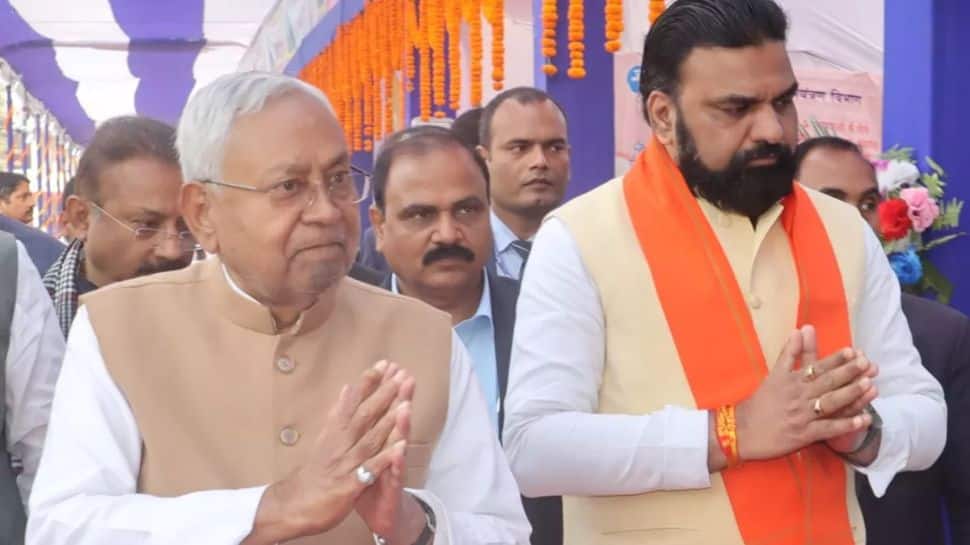
In a surprising turn of events in Bihar, Chief Minister Nitish Kumar has handed over the state’s Home Department to Deputy Chief Minister Samrat Choudhary. This marks the first time in two decades that the Chief Minister has not held this powerful portfolio, a move that has sent ripples through the state’s political circles.
The Bharatiya Janata Party (BJP), a key partner in the ruling NDA, now oversees law and order, internal security, and potentially immigration in border regions. In contrast, the JD(U) has been allocated Finance and Commercial Taxes. This strategic portfolio redistribution is seen by BJP leaders as a “rebalancing” to better reflect the alliance’s current strength, with the BJP significantly outnumbering the JD(U) in assembly seats.
While JD(U) maintains that Nitish Kumar’s leadership remains paramount and law and order is still their forte, political analysts interpret this as a dilution of the Chief Minister’s direct executive power. Under the new structure, Nitish Kumar’s oversight of the Home Department will be limited to escalations of disputes between the Home Secretary and Home Minister, meaning day-to-day decisions will be the prerogative of Choudhary.
This change is significant in the context of Bihar’s unique administrative setup, where magisterial and police powers are distinct. Previous efforts to integrate these powers, dating back to the tenure of Lalu Prasad Yadav and continuing through Nitish Kumar’s earlier terms, failed to gain traction due to resistance from the bureaucracy. The current arrangement means the dual flow of files to Nitish Kumar – as Chief Minister and Home Minister – has been significantly streamlined, with his involvement now reserved for contentious issues.
Nitish Kumar’s consistent retention of the Home Department for 20 years, even through turbulent political phases and alliances, made this transfer all the more unexpected. The election results have reshaped the political dynamics, leading to this unprecedented shift in ministerial responsibilities.