

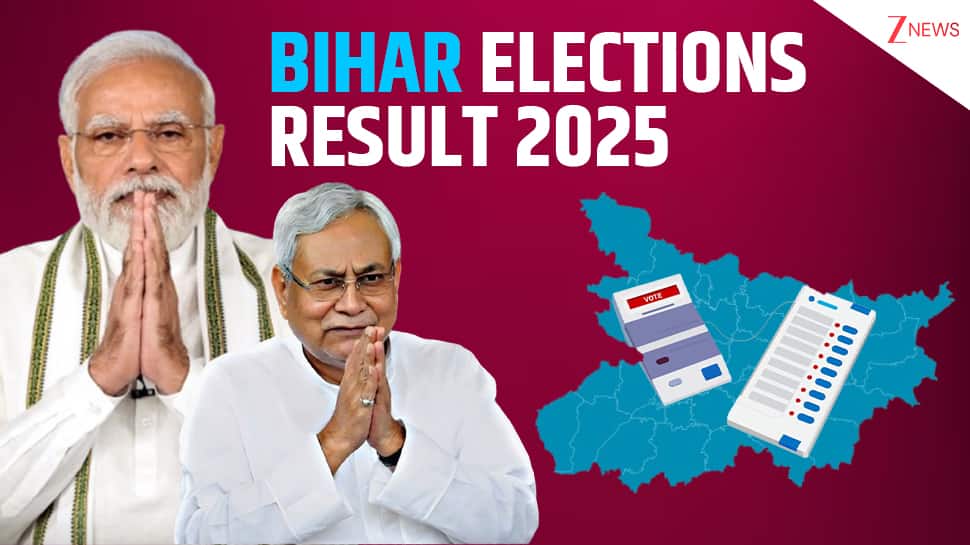
The National Democratic Alliance (NDA) has secured a commanding victory in Bihar, redrawing the state’s political map and causing a significant setback for the Rashtriya Janata Dal (RJD) and Congress alliance. This outcome defied expectations of a close contest, overturning the narrative of anti-incumbency against Nitish Kumar and leading to a rout for the Mahagathbandhan. The results highlight a broader political shift, with roots traced back to electoral battles fought months earlier in other states.
Unlike in 2020, the RJD-Congress alliance appeared more organized this time, with outreach programs led by Rahul Gandhi and Tejashwi Yadav projecting renewed confidence. Both leaders seemed better equipped to challenge the BJP-JD(U) alliance. However, their campaign ultimately failed to connect with a critical mass of voters.
A key point of contention was the Congress’s perceived hesitation in positioning Tejashwi Yadav as the clear chief ministerial candidate, which may have conveyed a lack of unity. Meanwhile, Prime Minister Narendra Modi successfully invoked past anxieties by warning of a return to the ‘Jungle Raj’ associated with Lalu Prasad Yadav’s tenure, a message that resonated with voters despite the RJD’s efforts to keep Lalu Prasad Yadav out of the campaign spotlight.
The underlying factors contributing to Bihar’s results were evident in earlier state elections. The BJP’s unexpected win in Haryana, where they were thought to be on the defensive, was an early signal. Critics pointed to the Congress’s missed opportunity in Haryana. This pattern of surprising NDA resurgence continued in Maharashtra, where the alliance secured a dominant share of seats in assembly elections just months after a weaker performance in the Lok Sabha polls. Similar unexpected wins for the NDA in Madhya Pradesh and Chhattisgarh underscored a developing electoral trend.
At the core of this trend is a potent electoral strategy: the implementation of targeted cash transfer schemes for women in the lead-up to elections. This tactic was effectively deployed in Madhya Pradesh with the ‘Ladli Behna Yojana,’ which saw significant financial benefits distributed to women just before voting. The scheme’s success, despite scrutiny, demonstrated its powerful influence on electoral outcomes.
In Bihar, the incumbent government’s announcement of a substantial cash transfer for women, coupled with improvements in electricity subsidies and pension amounts, significantly altered the electoral landscape. While the Mahagathbandhan proposed similar financial incentives, their promise of future benefits was overshadowed by the immediate relief offered by the ruling alliance. Women voters, in particular, appeared to prioritize tangible and immediate support.
The NDA also demonstrated a strategic advantage in its caste-based alliances. By bringing Chirag Paswan’s party and Upendra Kushwaha’s outfit into their fold, the NDA secured the support of crucial voting blocs. This consolidation proved more effective than the opposition’s attempts to build a broad caste coalition.
The outcome in Bihar marks a significant challenge for the opposition. The optimism generated by the BJP’s earlier Lok Sabha performance has dissipated. The opposition must now grapple with its inability to sustain momentum, formulate a coherent strategy, and adapt to the NDA’s increasingly effective electoral playbook. The series of state election results suggests the NDA has gained a strategic advantage in understanding and influencing the current electorate, while the opposition remains on the back foot.