

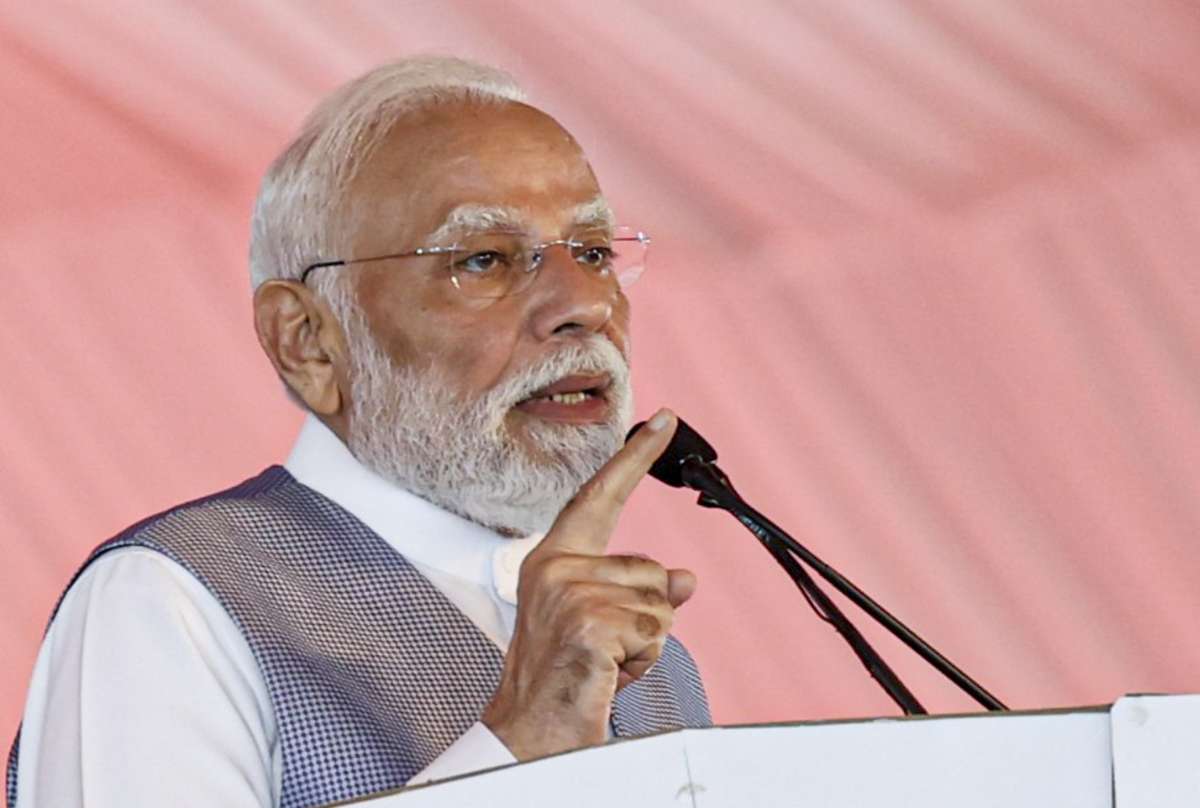
Prime Minister Narendra Modi asserted a strong new national security posture, stating that India no longer tolerates terror attacks in silence. He announced that the nation now retaliates with decisive measures, including surgical strikes, air strikes, and specific operations like ‘Operation Sindoor’. This marks a significant departure from past policies, signaling India’s commitment to a firm response against those who threaten its security.
Economically, Modi highlighted India’s impressive ascent over the last eleven years. The nation has dramatically improved its standing, moving from the ‘Fragile Five’ to secure a position among the world’s top five economies. This achievement is further validated by controlled inflation, hovering below 2%, and robust economic growth exceeding 7%. This economic vitality, Modi explained, fuels India’s self-reliance and burgeoning confidence across its entire industrial landscape.
Modi differentiated his government’s reform agenda, framing it as driven by conviction rather than compulsion. He claimed that his administration has successfully converted challenges and risks into reforms, fostering resilience that ultimately drives national progress. He further noted India’s unique position in the global economy, outperforming expectations as the fastest-growing economy amidst international turbulence.
The Prime Minister expressed confidence in India’s forward momentum, stating that 1.4 billion Indians are united in their drive towards progress. He contrasted current policies with historical ones, attributing past economic weaknesses to decisions like bank nationalization and advocating for democratization of institutions as a key driver for an ‘unstoppable India’. He concluded by emphasizing the strength of its citizens and India’s growing reputation as a reliable and opportunity-rich global player.